Photographer
El Lissitzky
El Lissitzky (1890–1941), born Lazar Markovich Lissitzky, was a Russian and Soviet artist whose polymathic practice spanned painting, graphic design, architecture, typography, and photography. He is best known as a key figure in the avant-garde movements of Suprematism and Constructivism, and his experimental approach to visual communication had a profound impact on twentieth-century art and design. Although often remembered for his abstract ‘Proun’ paintings and innovative typographic layouts, Lissitzky’s engagement with photography was equally pioneering, particularly through his photomontage and self-portraiture.
Lissitzky’s photographic work was characterized by a radical integration of the camera with graphic and spatial concerns. Rather than using photography as a straightforward documentary tool, he treated it as a medium for constructing new realities, often layering multiple exposures, angled viewpoints, and dynamic compositions. His 1924 self-portrait, sometimes titled ‘The Constructor’, exemplifies this approach: it merges six different exposures of his face and hand, symbolically uniting the roles of photographer (the eye) and image-builder (the hand). This strategy distinguished him from contemporaries who adhered to straight photography, aligning him more with the experimental photomontage practices of artists like Alexander Rodchenko, while retaining a distinctly Suprematist sense of geometry and abstraction.
One of Lissitzky’s most significant contributions to the medium is his photographic self-portrait, which MoMA describes as deriving from six exposures and merging his personae as photographer and constructor. This image, along with his photomontages for propaganda and exhibition design, represents his major photographic achievements. In the early 1920s, Lissitzky living in Germany and Switzerland, he collaborated with artists like Kurt Schwitters and Theo van Doesburg, producing works that bridged Russian avant-garde ideas with Western European movements. His famous ‘Proun’ series, though primarily paintings and prints, directly influenced his photographic thinking, as he sought to move beyond the picture plane into three-dimensional space.
Lissitzky’s historical significance lies in his ability to synthesize art, design, and politics. He believed art should serve revolutionary social purposes, a conviction that led him to create propaganda posters, exhibition installations, and book designs that utilized photography and typography to reach mass audiences. His work at the 1928 Pressa exhibition in Cologne, where he integrated photomontage with architectural structures, was a landmark in exhibition design. Over his career, Lissitzky influenced not only Soviet Constructivists but also the Bauhaus and De Stijl movements, and his typographic theories, such as in his essay ‘The Topography of Typography’, shaped modern graphic design.
For photo book collectors, Lissitzky’s works are compelling because they challenge the conventional boundaries of photography and bookmaking. His photomontages often appeared in avant-garde journals and propaganda booklets, where he carefully orchestrated the interplay of image, text, and page layout. A useful entry point is his collaboration on the children’s book ‘About Two Squares’, with its dynamic photo-typographic play, or the commemorative albums of Soviet exhibitions that feature his design. Collectors should note that original photographic prints by Lissitzky are rare, as his photographic output was relatively small and often produced as preparatory material for graphic works. Institutional collections, such as those at MoMA and the Getty, hold key examples, offering a tangible link to one of the most inventive minds of the early twentieth-century avant-garde.
〔PBL-BIO/2〕


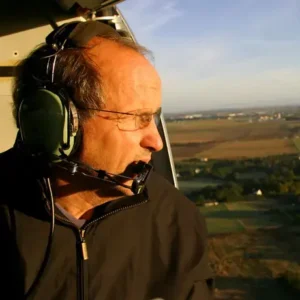
Alex MacLean
Shared publisher: Thames & Hudson, Yale University Press
12 photobook(s) in the library
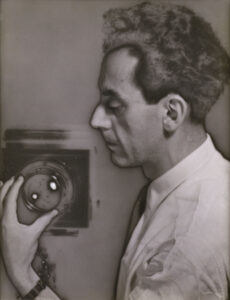
Man Ray
Shared publisher: Thames & Hudson, Yale University Press
8 photobook(s) in the library
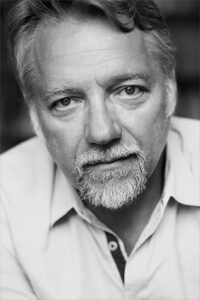
Edward Burtynsky
Shared publisher: Thames & Hudson, Yale University Press
6 photobook(s) in the library
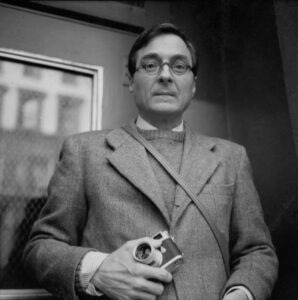
William Eggleston
Shared publisher: Yale University Press
26 photobook(s) in the library
COMMUNITY DISCUSSION
Discuss this entry
Share interpretations, reading notes, and source-aware questions. For catalog corrections, use the feedback form below.
No discussion yet. Start the first focused conversation.
Sign in to join the discussion.
Optionally receive a digest when related photobooks are added to the catalog.
See something incorrect? Sign in to suggest a correction or report an issue.