Photographer
Danny Lyon
Danny Lyon (born March 16, 1942) is an American photographer and filmmaker whose work has defined the participatory documentary tradition for over six decades. Growing up in Brooklyn, New York, he came of age during the civil rights era, a context that shaped his lifelong commitment to bearing witness from within. After studying at the University of Chicago, Lyon became the staff photographer for the Student Nonviolent Coordinating Committee (SNCC) in 1962, embedding himself in the Southern freedom movement. His close involvement with activists—rather than observing from a distance—established his signature method: immersion, empathy, and a collaborative relationship with his subjects. This approach set him apart from more detached photojournalists of the period.
Lyon’s visual language is raw, intimate, and often grainy, favoring natural light and close proximity. He rejected the conventional power dynamics of documentary photography, insisting that the photographer be part of the story. His early work with SNCC produced some of the most iconic images of the civil rights struggle, yet he refused to romanticize the movement, also capturing its fatigue, fear, and everyday humanity. This honesty extended to his later subjects: outlaw bikers, prisoners, and marginalized communities. Lyon’s photographs feel like fragments of lived experience, not staged tableaux, and his texts—often drawn from interviews and his own diaries—weave a personal, literary thread through his visual narratives.
Among his most significant bodies of work is The Bikeriders (1968), a study of the Chicago Outlaws motorcycle club that he joined as a participant rather than an observer. The book became a landmark of subjective documentary, influencing generations of photographers and filmmakers. Equally pivotal is Conversations with the Dead (1971), made while Lyon was incarcerated in Texas prisons; it remains a powerful meditation on confinement and justice, blending photographs, letters, and archival material. Later projects such as Knave of Hearts (1999) and the ongoing series of collages reflect his restless experimentation, while his films—including the acclaimed The Murder of Fred Hampton (1971)—extend his commitment to radical storytelling.
Lyon’s historical significance lies in his redefinition of documentary practice. He was a founding member of the publishing group Bleak Beauty, and his books are noted for their careful sequencing and integration of text and image. Major institutions, including the Art Institute of Chicago and numerous galleries, have exhibited his work, and his influence can be traced in the rise of immersive, first-person reportage. Yet his legacy is not without critics: some question the ethics of his deep involvement with subjects, while others view his romanticization of outlaw culture as problematic. Regardless, his insistence on personal accountability remains a touchstone for visual storytellers.
For photobook collectors, Lyon’s publications are essential not only for their historical weight but also for their crafted design. His collaborations with publishers—from the raw, tactile quality of the original Bikeriders to the limited, hand-assembled editions of later works—make each volume an object of art. A newcomer might begin with the 2014 reissue of The Bikeriders, which preserves the original layout while adding contemporary context. Lyon’s work invites collectors to consider photography as an embodied, ethical practice, where the book becomes a space for sustained empathy rather than mere documentation.
〔PBL-BIO/2〕


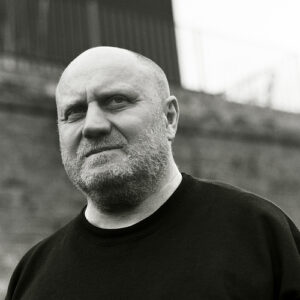
Nick Waplington
Shared publisher: Aperture, Damiani
18 photobook(s) in the library
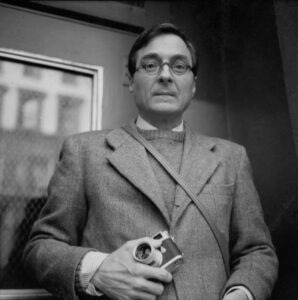
William Eggleston
Shared publisher: Aperture, Twin Palms Publishers
26 photobook(s) in the library
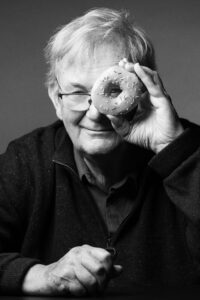
Martin Parr
Shared publisher: Aperture, Damiani
21 photobook(s) in the library
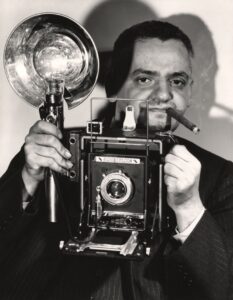
Weegee
Shared publisher: Aperture, Damiani
14 photobook(s) in the library
COMMUNITY DISCUSSION
Discuss this entry
Share interpretations, reading notes, and source-aware questions. For catalog corrections, use the feedback form below.
No discussion yet. Start the first focused conversation.
Sign in to join the discussion.
Optionally receive a digest when related photobooks are added to the catalog.
See something incorrect? Sign in to suggest a correction or report an issue.