Photographer
Sergio Larraín
Sergio Larraín (1931–2012) was a Chilean photographer whose brief yet extraordinary career established him as one of the most influential figures in 20th‑century street photography. Born in Santiago into a prominent artistic family, he initially studied forestry in the United States before dedicating himself fully to photography in the mid‑1950s.
His early images of street children in Santiago and Valparaíso revealed a bold visual language of shadows, diagonals, and off‑center compositions. In 1956, the Museum of Modern Art in New York acquired two of his photographs, validating his emergent vision. A 1958 grant from the British Council allowed him to create a series on London, and his images soon caught the attention of Henri Cartier‑Bresson, who invited him to join Magnum Photos. Larraín became an associate member in 1959 and a full member in 1961.
During the late 1950s and early 1960s he worked for the international press from Paris, producing some of his most celebrated photographs. His Paris images near Notre Dame inspired Julio Cortázar’s story “Las Babas del Diablo,” which later became the basis for Antonioni’s film Blow‑Up. Larraín’s work is widely credited with influencing subsequent generations, especially photographers associated with Japan’s Provoke movement.
In the late 1960s, Larraín began withdrawing from professional life after encountering the Bolivian mystic Óscar Ichazo. He retreated to rural northern Chile to pursue meditation, spiritual writing, calligraphy, and yoga, taking photographs only occasionally. Despite leaving the public sphere at the height of his success, his legacy grew steadily through reprints of his books—such as London 1958–59, Valparaíso, and Vagabond Photographer—and continued acclaim after his death in 2012.


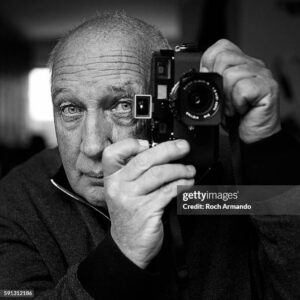
Raymond Depardon
Shared publisher: Aperture, Thames & Hudson
16 photobook(s) in the library
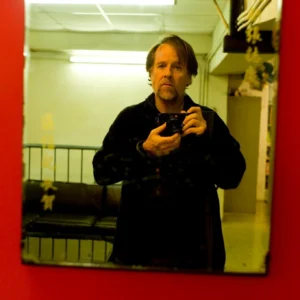
Alex Webb
Shared publisher: Aperture, Thames & Hudson
15 photobook(s) in the library
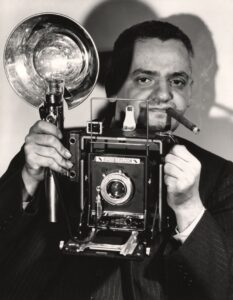
Weegee
Shared publisher: Aperture, Thames & Hudson
14 photobook(s) in the library
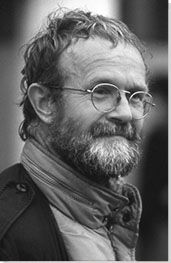
Josef Koudelka
Shared publisher: Aperture, Thames & Hudson
13 photobook(s) in the library
COMMUNITY DISCUSSION
Discuss this entry
Share interpretations, reading notes, and source-aware questions. For catalog corrections, use the feedback form below.
No discussion yet. Start the first focused conversation.
Sign in to join the discussion.
Optionally receive a digest when related photobooks are added to the catalog.
See something incorrect? Sign in to suggest a correction or report an issue.