Photographer
Robert Mapplethorpe
Robert Mapplethorpe (1946-1989) was an American photographer best known for his stark black-and-white portraits, nudes, and still lifes. Born in Queens, New York, he studied art and began making collages and mixed-media works before turning to photography in the early 1970s. His work emerged from the vibrant downtown Manhattan art scene, and he maintained a close personal and creative relationship with poet and musician Patti Smith, whose debut album cover he shot.
Mapplethorpe’s visual language is characterized by precise formalist compositions, dramatic lighting, and a classical sense of sculptural form. He treated the human body—particularly the male nude—with the same objectivity he brought to flowers and celebrity portraits, blurring boundaries between sexual explicitness and high-art elegance. His large-format photographs often rely on a controlled palette of black and white, giving his subjects an iconic, timeless quality. Unlike peers who favored documentary immediacy, Mapplethorpe favored studio control and stylized perfection.
Among his major bodies of work are his homoerotic portfolios such as the X Portfolio and Y Portfolio, which combined explicit sexual content with refined aesthetics, and his series of flower photographs, which function as meta-sexual still lifes. His 1986 book Black Book celebrated Black male beauty and was considered both groundbreaking and provocative. He also produced a series of iconic celebrity portraits, including images of Andy Warhol, Deborah Harry, and Louise Bourgeois, which demonstrated his ability to capture public personas with psychological depth.
Mapplethorpe’s historical significance lies in his refusal to separate artistic beauty from explicit sexual content. His 1989 retrospective The Perfect Moment, organized by the Contemporary Arts Center in Cincinnati, triggered a landmark obscenity trial that divided public opinion and ultimately helped clarify legal protections for art in the United States. The controversy and his untimely death from AIDS in 1989 cemented his legacy as both a martyr and a central figure in the culture wars of the 1980s. His work is held by major institutions including the Getty Museum and Tate, and continues to influence photographers exploring identity, desire, and formalism.
For photobook collectors, Mapplethorpe’s publications are notable for their lavish printing and careful sequencing, often produced with respected publishers such as Arena Editions and Stewart, Tabori & Chang. The 2005 edition of Mapplethorpe, compiled by the foundation, offers a broad overview, while limited editions of his X Portfolio remain benchmarks of erotic art photography. The Mapplethorpe Foundation, which manages his archives, has authorized numerous reprints, ensuring quality reproductions. Collectors should also consider his early self-portrait books, which trace his evolution from a young artist in New York to an internationally recognized figure, making his photobooks essential documents of late twentieth-century American art.
〔PBL-BIO/2〕


Robert Mapplethorpe: The Perfect Medium (opens a new site)
The Getty’s retrospective resource surveys Mapplethorpe’s career from the early 1970s through the culture wars of the 1990s, bringing together portraits, nudes, still lifes, the X Portfolio, and archival material. It emphasizes the relationship between studio practice, institutional controversy, and the foundation’s role in shaping his posthumous legacy.
Polaroids: Mapplethorpe (opens a new site)
The Whitney exhibition page surveys Mapplethorpe’s instant photographs from 1970 to 1975, including self-portraits, figure studies, still lifes, and portraits of friends and lovers. It presents these spontaneous and intimate works as evidence of a formative period preceding his more controlled studio images.
Implicit Tensions: Mapplethorpe Now (opens a new site)
The Guggenheim exhibition resource frames Mapplethorpe’s formal practice alongside questions of race, sexuality, agency, and artistic legacy. It presents the exhibition as a dialogue between his work and responses by later artists, including Glenn Ligon, Lyle Ashton Harris, Zanele Muholi, and Catherine Opie.
Gladstone Gallery — Robert Mapplethorpe (opens a new site)
The Robert Mapplethorpe Foundation’s presentation of Gladstone Gallery’s 2026 exhibition focuses on new monumental-scale editions and Mapplethorpe’s sustained concern with scale, printing, framing, and display. It connects the square-format photograph to painting and sculpture while surveying his recurring subjects, including flowers, portraits, nudes, sculpture, and self-representation.
Mapplethorpe nudes, the NEA and the birth of America’s culture wars (opens a new site)
The Art Newspaper interviews historian Isaac Butler about the Mapplethorpe controversy, the cancellation of The Perfect Moment at the Corcoran, and the resulting debates over censorship and public arts funding. The discussion uses that history to examine institutional self-censorship and the continuing political afterlife of the culture wars.
Does Mapplethorpe Still Matter? (opens a new site)
This Aperture review considers the Getty and LACMA retrospective as a combined reassessment of Mapplethorpe’s career, networks, and public image. It argues for reading his portraits, flowers, nudes, and explicit photographs through queer visibility, the AIDS crisis, formalism, friendship, and censorship rather than reducing the work to a simple fine-art-versus-pornography debate.
On Robert Mapplethorpe's Polaroids (opens a new site)
This Aperture essay revisits Arthur C. Danto’s account of Mapplethorpe’s Polaroids from 1970–1976, tracing his movement from collage-based “photographism” toward an independent photographic practice. It emphasizes how instant photography enabled intimate experiments with the body, eroticism, and bondage while revealing the refined visual sensibility already present in his early work.
Robert Mapplethorpe by Gary Indiana (opens a new site)
This 1988 conversation gives Mapplethorpe space to discuss censorship, portraiture, erotic vision, commercial work, color printing, photographic objects, and the ethics of working with sitters. His answers present a flexible but deliberate approach to exhibition-making and emphasize photography’s range as both image and object.
Implicit Tensions: Mapplethorpe Now (opens a new site)
An official Guggenheim exhibition video offering a visual introduction to Mapplethorpe’s holdings and the range of his subjects. It is intended as a concise installation-oriented entry point to the exhibition and its institutional context.
Robert Mapplethorpe, Self-Portrait, 1988 (opens a new site)
A Whitney Museum audio/video interpretation of Mapplethorpe’s 1988 self-portrait, examining its stark composition, mortality, AIDS-era context, and formal precision. The commentary also situates the image within the public controversy surrounding his sexually explicit work.

Nan Goldin
Shared publisher: 5 Continents Editions, Phaidon Press Limited
17 photobook(s) in the library

Steve McCurry
Shared publisher: Phaidon Press Limited, teNeues
18 photobook(s) in the library
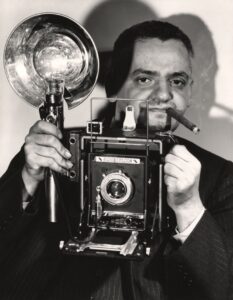
Weegee
Shared publisher: 5 Continents Editions, Getty Publications
14 photobook(s) in the library
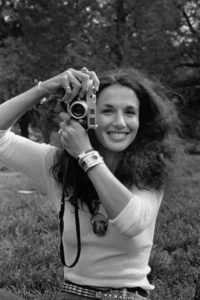
Mary Ellen Mark
Shared publisher: Getty Publications, Phaidon Press Limited
10 photobook(s) in the library
COMMUNITY DISCUSSION
Discuss this entry
Share interpretations, reading notes, and source-aware questions. For catalog corrections, use the feedback form below.
No discussion yet. Start the first focused conversation.
Sign in to join the discussion.
Optionally receive a digest when related photobooks are added to the catalog.
See something incorrect? Sign in to suggest a correction or report an issue.