Photographer
Charles Marville
Charles Marville, born Charles François Bossu in Paris in 1813, was a French photographer who devoted his career to documenting the architecture and urban fabric of his native city during a time of unprecedented transformation. Before turning to photography around 1850, he spent nearly twenty years as a book illustrator, a background that sharpened his compositional sense and informed the disciplined, painterly quality of his later images. His adoption of the pseudonym Marville allowed him to separate his new public role as an official city photographer from his earlier artistic career, a distinction that mirrored the layered identity of Paris itself under the Second Empire.
Marville’s visual language is characterized by great clarity, quiet tonal range, and a precise eye for structural detail. Using paper negatives and later albumen prints, he typically photographed streets, squares, and monuments from elevated or central viewpoints, producing images that feel calm and archival rather than dramatic. Unlike contemporaries who emphasized picturesque ruin or commercial views, Marville worked systematically, creating inventories that recorded both the gnarled, narrow lanes of medieval Paris and the broad, straight boulevards carved out by Baron Haussmann’s renovation projects. His photographs are less about human presence than about the physical shape of the city itself—an almost topographic neutrality that became a model for later documentary urbanism.
Two major bodies of work define his legacy. First, beginning in the 1850s and continuing into the 1860s, Marville photographed ancient quarters that were slated for demolition, preserving ghostly records of alleys, impasses, and houses that would vanish under Haussmann’s plan. Second, from 1862 onward, as official photographer of the city of Paris, he produced an extensive series of new streets, parks, and public improvements, including images of the Bois de Boulogne and early street lighting. Together these series form a before-and-after portrait of a city in metamorphosis, one that remains an essential resource for urban historians and photographers alike.
Marville’s significance extends far beyond nostalgia. His work is recognized as a foundational example of commissioned documentary photography, anticipating the systematic survey methods of later city recorders. In the twenty-first century, he received renewed attention through major exhibitions at institutions such as the Metropolitan Museum of Art (2014) and the National Gallery of Art, as well as the Clark Art Institute’s “A City Transformed” program. These shows not only introduced his œuvre to wider audiences but also prompted scholarly reassessment of his role within photographic and architectural history, elevating him from a merely commercial operator to a central figure.
For photobook collectors, Marville offers a rich field of study. While original prints are rare and typically held by museums, the catalogues accompanying recent major exhibitions—such as the Met’s Charles Marville: Photographer of Paris—provide carefully reproduced plates, contextual essays, and sequencing that approximate his systematic vision. A collector seeking an entry point would do well to acquire one of these scholarly volumes, which present the photographer’s methods and motifs with a rigor that matches his own. Understanding his life helps one appreciate not just pretty views, but the complex political and aesthetic negotiations embedded in every stone and shadow.
〔PBL-BIO/2〕


Dorothea Lange
Shared publisher: MACK, University of Chicago Press
8 photobook(s) in the library
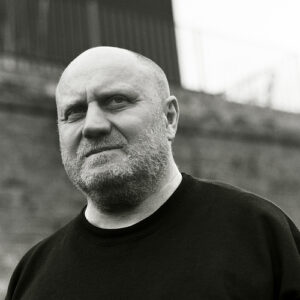
Nick Waplington
Shared publisher: MACK
18 photobook(s) in the library
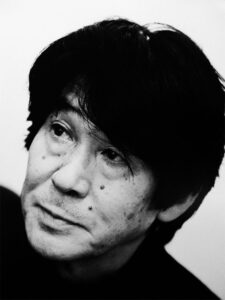
Daido Moriyama
Shared publisher: MACK
15 photobook(s) in the library
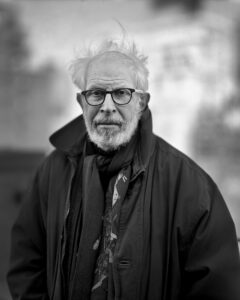
Stephen Shore
Shared publisher: MACK
14 photobook(s) in the library
COMMUNITY DISCUSSION
Discuss this entry
Share interpretations, reading notes, and source-aware questions. For catalog corrections, use the feedback form below.
No discussion yet. Start the first focused conversation.
Sign in to join the discussion.
Optionally receive a digest when related photobooks are added to the catalog.
See something incorrect? Sign in to suggest a correction or report an issue.