Photographer
Ralph Eugene Meatyard
Ralph Eugene Meatyard (born May 15, 1925, in Normal, Illinois; died May 7, 1972, in Lexington, Kentucky) was a towering figure in mid-twentieth-century American photography, a visionary conceptualist, and an intellectual master who completely redefined the psychological and symbolic boundaries of lens-based art. Raised in the American Midwest, Meatyard served in the United States Navy during World War II under the V-12 pre-midshipman program. Following the war, he trained as an optician and relocated to Lexington, Kentucky, in 1950 to join the firm Eyeglasses of Kentucky. This professional mastery of lenses, physical refraction, and optical distortion profoundly informed his approach to creative photography. Joining the Lexington Camera Club in 1954, he fell under the mentorship of legendary photography theorists Van Deren Coke and Cranston Ritchie, while building deep intellectual dialogues with a tight-knit community of Southern writers, philosophers, and monks, including Thomas Merton, Guy Davenport, and Wendell Berry.
Meatyard achieved immortal critical and institutional acclaim by utterly rejecting the prevailing, crisp straight documentary photojournalism championed by his contemporaries, choosing instead to treat the camera as an abstract, theatrical medium of existential and surrealist inquiry. Utilizing a mid-format Rolleiflex camera and a highly disciplined darkroom framework, his signature style pioneered intentional camera movement, radical motion blur, double exposures, and low-key lighting matrices. He achieved monumental structural success through his landmark, decade-long visual sequence, The Family Album of Lucybelle Crater. Completed shortly before his tragic death from cancer at age forty-six, this series featured his wife, children, and close friends posed in ordinary suburban backyards and decaying rural homesteads while wearing grotesque, mass-produced latex Halloween masks. This process-driven intervention systematically stripped away individual celebrity, domestic protection, and physical veneer to expose universal, haunting undercurrents of mortality, kinship, and the surreal nature of identity.
His immense visual, theatrical, and literary legacy has been preserved and promoted across generations, heavily supported by prominent national repositories and historical trusts. His creative blueprints heavily informed the evolution of postmodern staged photography, directly inspiring generations of visual storytellers like Cindy Sherman and Sally Mann. His photographic practice fluidly balanced eerie, symbolic portraits with his highly praised Zen-like abstract series, Light on Water and Motion-Blur Landscapes, which treated natural reflections as primal calligraphy. Meatyard was a celebrated member of the Society for Photographic Education. His definitive vintage master prints, original gelatin-silver contact sheets, and extensive negatives are permanently curated in the core collections of the world’s premier museums, including the Museum of Modern Art (MoMA) in New York, the Metropolitan Museum of Art, the J. Paul Getty Museum in Los Angeles, the San Francisco Museum of Modern Art (SFMOMA), the Smithsonian American Art Museum, and the Center for Creative Photography (CCP) in Tucson.


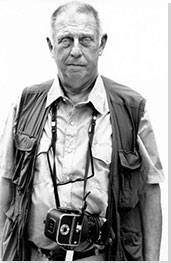
Lee Friedlander
Shared publisher: D.A.P. / Distributed Art Publishers, Radius Books
13 photobook(s) in the library
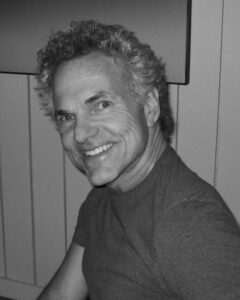
Richard Misrach
Shared publisher: Radius Books
18 photobook(s) in the library
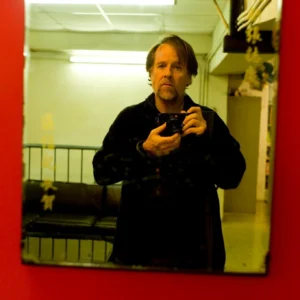
Alex Webb
Shared publisher: Radius Books
15 photobook(s) in the library
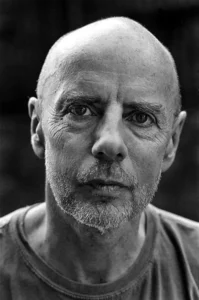
Eugene Richards
Shared publisher: D.A.P. / Distributed Art Publishers
10 photobook(s) in the library
COMMUNITY DISCUSSION
Discuss this entry
Share interpretations, reading notes, and source-aware questions. For catalog corrections, use the feedback form below.
No discussion yet. Start the first focused conversation.
Sign in to join the discussion.
Optionally receive a digest when related photobooks are added to the catalog.
See something incorrect? Sign in to suggest a correction or report an issue.