Photographer
Ray K. Metzker
Ray K. Metzker (September 10, 1931 – October 9, 2014) was an American photographer celebrated for his bold, experimental black-and-white photographs of urban landscapes. Over a career spanning five decades, he pushed the boundaries of photographic technique, creating dense, layered images that transformed the everyday chaos of city life into abstract, almost musical compositions. Though less widely known than some of his peers, he has been recognized as one of the great masters of American photography, with a legacy that continues to influence contemporary practitioners.
Metzker’s visual language was rooted in relentless experimentation. He employed multiple exposures, sandwiches of negatives, solarization, and composite printing to compress space and time into single frames. His subjects were often the gritty streets of Chicago, Philadelphia, and other metropolises, where he captured pedestrians, architecture, shadows, and light in startling juxtapositions. Unlike the documentary tradition of street photographers such as Lee Friedlander or Garry Winogrand, Metzker was less concerned with narrative or social reportage than with the formal possibilities of the medium itself. His pictures are constructed, almost painterly, inviting viewers to read them slowly.
Among his key bodies of work is the series ‘City Whispers’ (1980s), which used high-contrast negatives and extreme cropping to reduce the city to geometric patterns and silhouettes. Earlier, in the 1960s, he produced his famous ‘Pictus Interruptus’ series, where he overlaid multiple exposures of a single scene, fracturing the image into rhythmic fragments. His photobook ‘Sand Creatures’ (1971) took a different turn, documenting whimsical figures sculpted on the beach, showcasing his versatility. The book ‘Ray K. Metzker: Light Lines’ (2009) offers a comprehensive overview of his career. These projects demonstrate his sustained curiosity and his ability to reinvent his own methods across different subjects.
Metzker studied at the Institute of Design in Chicago under Harry Callahan and Aaron Siskind, both influential experimental photographers. This training grounded him in a rigorous, Bauhaus-inspired approach to visual design. He taught at several institutions and received numerous grants, including two Guggenheim Fellowships (1966 and 1974). His work has been exhibited extensively, including a major retrospective at the J. Paul Getty Museum in 2011–2012. Despite his critical recognition, he remained relatively undervalued in the wider art market during his lifetime, but his reputation has grown steadily since his death.
For photobook collectors, Metzker’s printed publications offer a rich field of engagement. His books are notable for their meticulous sequencing and high-quality reproductions, often collaborating closely with editors and designers. ‘Light Lines’ with its generous plate sections and scholarly essays serves as an excellent entry point, while earlier, rarer volumes like ‘Sand Creatures’ capture a playful side of his practice. Collectors value the way each book maps a distinct phase of his experiments, from urban abstraction to tactile, organic motifs. Owning his books allows a deep appreciation of how Metzker thought about seriality and the photobook as a cohesive artistic statement.
〔PBL-BIO/2〕


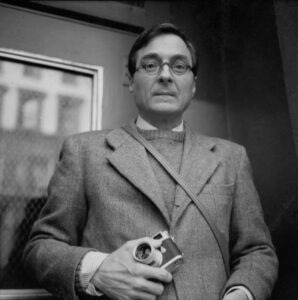
William Eggleston
Shared publisher: Aperture, Steidl
26 photobook(s) in the library
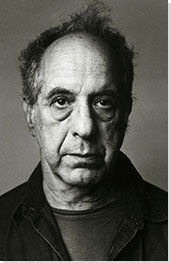
Robert Frank
Shared publisher: Aperture, Steidl
19 photobook(s) in the library
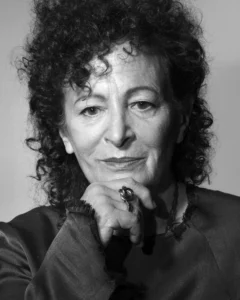
Nan Goldin
Shared publisher: Aperture, Steidl
17 photobook(s) in the library
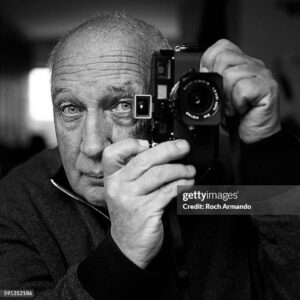
Raymond Depardon
Shared publisher: Aperture, Steidl
16 photobook(s) in the library
COMMUNITY DISCUSSION
Discuss this entry
Share interpretations, reading notes, and source-aware questions. For catalog corrections, use the feedback form below.
No discussion yet. Start the first focused conversation.
Sign in to join the discussion.
Optionally receive a digest when related photobooks are added to the catalog.
See something incorrect? Sign in to suggest a correction or report an issue.