Photographer
Wayne F. Miller
Wayne Forest Miller (1918–2013) was an American documentary photographer whose career moved between war photography, social documentation, and the postwar humanist tradition. Born in Chicago, he studied at the Art Center School before enlisting in the U.S. Navy. There, under Edward Steichen’s mentorship, he developed a direct and empathic visual language. His pictures are distinguished by close physical proximity, available light, and quiet intimacy. Rather than relying on spectacle, Miller often found historical meaning in ordinary gestures, domestic spaces, and the relationships between people. This approach gave his work both immediacy and an attentive, humane character.
His most important project, The Way of Life of the Northern Negro (1946–1948), documented the everyday existence of Black residents on Chicago’s South Side. Commissioned by the Bureau of Agricultural Economics and later supported by a Guggenheim fellowship, the project produced more than one hundred photographs. Miller portrayed work, family life, leisure, and neighborhood relationships with a nuance that was rarely extended to a Black community in mainstream photographic representation at the time. The series remains a landmark of social documentary: it records a particular place and period while also anticipating the sustained attention to race and daily life that would mark later civil-rights-era photography.
Miller’s wartime service also brought him to Hiroshima, where he made some of the earliest photographs of the aftermath of the atomic bomb, shortly after the attack. His earlier book Shore Leave (1945), published by E.P. Dutton, focused on sailors during periods of respite. Its photographs balance military machismo with tenderness, showing service members through moments of sociability, relaxation, and vulnerability. In 1958 Miller joined Magnum Photos and eventually became the organization’s first American president. His later work extended beyond war and urban documentary to include photographs of Brancusi’s studio, Longchamp racecourse, and his own family, demonstrating the breadth of his observational practice.
A major retrospective, Wayne F. Miller: Photographs 1942–1958, appeared in 2009. His South Side series was finally published as a complete book in 2000 by powerHouse Books, with an afterword by Gordon Parks. Miller’s work has been exhibited at institutions including the Museum of Modern Art and the Art Institute of Chicago. He died in 2013, leaving a body of work grounded in compassionate humanism but attentive to the historical pressures surrounding its subjects. Across its different settings, his photography asks how war, race, work, family, and ordinary social experience become visible through close observation.
For photobook collectors, Miller offers a compelling entry into mid-century American documentary photography. The 2000 powerHouse edition of The Way of Life of the Northern Negro is especially important: it presents his most significant series in book form and supplies the historical context needed to understand its achievement. Shore Leave remains a sought-after wartime classic, while the 2009 retrospective provides a curated overview of his range. Together, these books make it possible to follow Miller’s movement from military experience to social documentation and intimate observation, and to appreciate why his work remains relevant at the intersection of war, race, and everyday life.
〔PBL-BIO/2〕


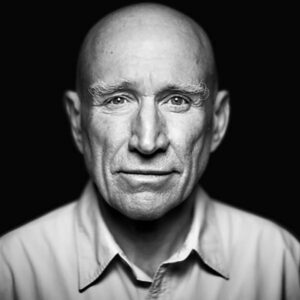
Sebastiao Salgado
Shared publisher: University of California Press
21 photobook(s) in the library

Richard Misrach
Shared publisher: PowerHouse Books
18 photobook(s) in the library
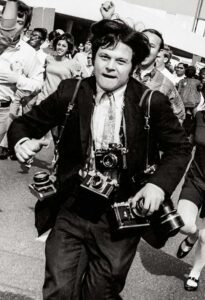
Steve Schapiro
Shared publisher: PowerHouse Books
8 photobook(s) in the library
Brian Finke
Shared publisher: PowerHouse Books
7 photobook(s) in the library
COMMUNITY DISCUSSION
Discuss this entry
Share interpretations, reading notes, and source-aware questions. For catalog corrections, use the feedback form below.
No discussion yet. Start the first focused conversation.
Sign in to join the discussion.
Optionally receive a digest when related photobooks are added to the catalog.
See something incorrect? Sign in to suggest a correction or report an issue.