Photographer
Viviane Sassen
Viviane Sassen (b. 1972, Netherlands) is a Dutch photographer known for her distinctive fusion of fashion, fine art, and abstraction. Having spent part of her childhood in Kenya, her work is deeply influenced by African landscapes, light, and cultural contexts, which continue to inform her visual language.
Sassen’s photography is characterized by bold color, sculptural use of light and shadow, and a tendency toward abstraction. She often fragments the human body, using pose, composition, and geometry to create images that blur the boundaries between figuration and abstraction.
Her photobooks, including Parasomnia and Umbra, are widely regarded for their innovative sequencing and strong visual coherence. In addition to her extensive editorial work for major fashion brands, Sassen has established herself as a major figure in contemporary art photography. For collectors, her work stands out for its unique aesthetic, cross-disciplinary relevance, and significant presence in photobook culture.
Viviane Sassen (born 1972) is a Dutch photographer known for her vibrant, often surreal images that blend fashion, portrait, and documentary work. Raised in Kenya until about age ten, her childhood in Africa has been a recurring influence. She studied at the Utrecht School of the Arts and later earned an MA at the Royal Academy of Fine Arts in Ghent. Sassen has exhibited internationally, including at the Stedelijk Museum, and has published multiple photobooks. She received the 2013 Infinity Award for Applied Photography from the International Center of Photography.

Viviane Sassen: Phosphor

Viviane Sassen: Self Portraits

Viviane Sassen & Emanuele Coccia: Modern Alchemy

Modern Alchemy (Artisans of the Wild: An Enchanting History, 2)

Viviane Sassen: Venus & Mercury

Hot Mirror

Roxane II

Of Mud and Lotus

Umbra

Pikin Slee

Viviane Sassen: Pikin Slee

Viviane Sassen: In and Out of Fashion

Roxane
Selected Works & Key Projects
A source-backed introduction to individual photographs and significant bodies of work.
Key projects

Project · 2004–2008
Flamboya
Flamboya is Sassen’s first monograph and brings together photographs made during several journeys in Africa between 2004 and 2008. The official project account characterizes many of its portraits as collaborative, moving between spontaneous encounter and performance; its book design also creates associations among images through pages of differing widths. This is a key selection because it establishes a sustained, book-based presentation of the artist’s African photographs rather than treating the pictures as isolated travel images. Its 2008–09 survey at Foam in Amsterdam further documents the project’s early institutional exhibition life.
View source ↗
Project · 2014
Pikin Slee
Pikin Slee is a 2014 project rooted in the Upper Suriname River village of the same name, which the artist first visited in summer 2012. The official account frames the work through the village’s Saramacca population, rainforest setting, and the artist’s perceived historical links to Africa and the Netherlands. Predominantly black-and-white, compact-format photographs turn people, vegetation, and everyday things into elusive abstract compositions. It merits selection because it redirects Sassen’s established interest in figure, object, and environment toward a specific community and a deliberately restrained monochrome vocabulary, foregrounding the sculptural potential of ordinary life.
View source ↗
Project · 2014
UMBRA
UMBRA, titled for the Latin word for “shadow,” was commissioned by the Nederlands Fotomuseum in Rotterdam. The project treats shadow as a metaphor connected by the artist to anxiety, desire, memory, expectation, imagination, and illusion. Its photographs use light, colour, cropping, and interventions on prints to keep realism and abstraction in tension, lending apparently ordinary objects and situations an unsettled quality. This is an essential project-level selection because it consolidates those formal concerns into an institutionally commissioned body of work, and its official checklist demonstrates that it extended beyond single prints to projection, sound, installations, hand-coloured photographs, and cut prints.
View source ↗Selected photographs
2007
Totem
Totem is a 2007 C-print from Flamboya, listed by the artist in editions measuring 150 × 120 cm and 125 × 100 cm. The visible image places two closely joined figures against a pale ground; their heads and bodies form a single compact, vertically oriented mass while extended arms complicate the outline. Selected as an individual work, it gives a concentrated example of the body-based, collaboratively made portraiture described for Flamboya. The photograph is especially useful within the larger project because its compressed pose makes figuration appear at once intimate, sculptural, and difficult to parse.
Work source ↗2013
Rorschach
Rorschach is a 2013 C-print from Pikin Slee, listed in a 45 × 30 cm format. The official preview presents a black-and-white standing portrait framed by dense foliage, with sharply patterned dress fabric producing a symmetrical, inkblot-like visual effect in the lower half of the image. It merits selection because its title and visible pattern make a perceptual test of symmetry central to a photograph of a person. In the predominantly black-and-white Pikin Slee project, it clearly exemplifies the series’ stated transformation of everyday subjects into abstract, elusive, and sculpturally charged compositions.
Work source ↗
2014
Axiom GB02
Axiom GB02 is a 2014 C-print from UMBRA, listed at 45 × 30 cm. A Museum of Contemporary Photography teaching resource identifies the work and explains that Sassen used a mirror placed in sand, a sheet of coloured plexiglass, and her own shadow to produce a sharply divided image of sky, desert texture, and geometric colour. That documented construction makes it an especially strong individual selection: the photograph openly records the artist’s intervention while pushing a desert view toward abstraction. It also offers a precise example of UMBRA’s stated exchange between realism, colour, shadow, and altered photographic surfaces.
Work source ↗-
1972
Career milestone
Born in Amsterdam
Viviane Sassen was born in Amsterdam, the Netherlands, in 1972. This establishes the biographical starting point for a Dutch artist whose later education and exhibition record are documented in the same professional CV.
Source: Viviane Sassen, CV Verified Sep 4, 2026
-
1990–1992
Education
Studies fashion design at Hogeschool voor de Kunsten Arnhem
Sassen studied fashion design at Hogeschool voor de Kunsten Arnhem in Arnhem from 1990 to 1992. This is a significant early stage because her CV documents formal training in fashion before her subsequent photography and fine-art education.
Source: Viviane Sassen, CV Verified Sep 4, 2026
-
1992–1996
Education
Studies photography at Hogeschool voor de Kunsten Utrecht
From 1992 to 1996, Sassen studied photography at Hogeschool voor de Kunsten Utrecht in Utrecht. The documented four-year course is a central training milestone, following her fashion-design studies and preceding her master’s-level fine-art education.
Source: Viviane Sassen, CV Verified Sep 4, 2026
-
1996–1997
Education
Completes master’s education at Ateliers Arnhem
Sassen undertook master’s education in fine arts at Ateliers Arnhem, Arnhem, from 1996 to 1997. Her official biography likewise identifies Ateliers Arnhem among the institutions where she studied after fashion design and photography.
Source: Viviane Sassen, CV Verified Sep 4, 2026
-
2007
Award
Receives the Prix de Rome
Sassen received the Prix de Rome in the Netherlands in 2007. Her official biography describes it as the Dutch art prize, making this a major early institutional recognition in her documented career.
Source: Viviane Sassen, Biography Verified Sep 4, 2026
-
2008
Series
Flamboya shown at FOAM photography museum
The solo exhibition Flamboya was presented at FOAM photography museum in Amsterdam in 2008. Sassen’s CV records this museum presentation among the early solo exhibitions of the series, making it a substantive project-level milestone in her exhibition history.
Source: Viviane Sassen, CV Verified Sep 4, 2026
-
2011
Award
Wins ICP Infinity Award for Applied/Fashion/Advertising Photography
The International Center of Photography named Sassen the 2011 Infinity Award recipient for Applied/Fashion/Advertising Photography. ICP’s recipient page records her as the honoree in that category; the award formally recognizes her work across applied, fashion, and advertising photography.
Source: International Center of Photography, “2011 Infinity Award: Applied/Fashion/Advertising” Verified Sep 4, 2026
-
2011
Exhibition
Included in MoMA’s New Photography
Sassen was included in New Photography at the Museum of Modern Art, New York City, in 2011. Her official biography identifies this museum group exhibition among her notable presentations, placing her work in MoMA’s New Photography exhibition program.
Source: Viviane Sassen, Biography Verified Sep 4, 2026
-
15 December 2012–17 March 2013
Exhibition
In and Out of Fashion opens at Huis Marseille
Huis Marseille Museum for Photography presented In and Out of Fashion from 15 December 2012 to 17 March 2013. The museum described it as the first presentation anywhere of the best of seventeen years of Sassen’s fashion work, and the exhibition was accompanied by a Prestel overview of that work.
Source: Huis Marseille, “Viviane Sassen: In and out of fashion” Verified Sep 4, 2026
-
2013
Exhibition
Included in The Encyclopedic Palace at the 55th Venice Biennale
Sassen was included in The Encyclopedic Palace, the main exhibition of the 55th Venice Biennale, in 2013. This is a significant international exhibition milestone because her official biography specifically identifies participation in the Biennale’s main exhibition rather than a collateral event.
Source: Viviane Sassen, Biography Verified Sep 4, 2026
-
2014
Exhibition
UMBRA presented at Nederlands Fotomuseum
Sassen’s solo exhibition Umbra was presented at Nederlands Fotomuseum in Rotterdam in 2014. The subsequent Museum of Contemporary Photography presentation characterized UMBRA as an exhibition of photography and multimedia works centered on light and shadow, a defining concern in Sassen’s work.
Source: Viviane Sassen, CV Verified Sep 4, 2026
-
2015
Award
Receives David Octavius Hill Medal; nominated for Deutsche Börse Photography Prize
In 2015, Sassen received the David Octavius Hill Medal from the German Photography Academy and was nominated for the Deutsche Börse Photography Prize for her exhibition Umbra. Together, these documented distinctions mark recognition of both her broader photographic practice and the Umbra exhibition.
Source: Viviane Sassen, Biography Verified Sep 4, 2026
Collection
Museum of Modern Art (MoMA)
The Museum of Modern Art holds a number of Viviane Sassen's photographs in its permanent collection, indicating international museological recognition of her work as significant contemporary photography.
Verified 2026-09-04Wikipedia
Collection
Stedelijk Museum Amsterdam
The Stedelijk Museum Amsterdam collects Sassen's photographs, reflecting her prominence in Dutch art and photography, and her work is part of the museum's ongoing engagement with contemporary visual culture.
Verified 2026-09-04Wikipedia
Collection
Centre Pompidou
The Centre Pompidou in Paris includes Sassen's photography in its collection, demonstrating her acceptance into major European art institutions and the transnational reach of her practice.
Verified 2026-09-04Wikipedia
Viviane Sassen: Hot Mirror (opens a new site)
The Hepworth Wakefield’s exhibition resource documents Hot Mirror, a 2018 survey of Sassen’s work. It explains that Sassen selected photographs from art series made over the preceding decade alongside new photographs and collages, arranging them as “image-poems” informed by Surrealist collage. The page also identifies the presentation of a new version of Totem (2014), an immersive film, and notes the accompanying Hot Mirror publication focused on her fine-art photography.
Viviane Sassen: Parasomnia (opens a new site)
Photographer and writer Aaron Schuman’s essay, originally published in Aperture no. 206 in spring 2012, considers the relation between Flamboya and Parasomnia. It attends to Sassen’s use of intense colour, deep shadow, obscured faces, and still life, while directly confronting questions of representation raised by photographs made in African settings. It is a useful critical resource because it describes both the formal strategies of the series and the ethical tensions its images can activate for viewers.
Dor Guez and Viviane Sassen: A Reading List (opens a new site)
Published by the Institute of Contemporary Arts to accompany its 2015 exhibitions, this reading list situates Sassen’s Pikin Slee within questions of national, racial, and individual identity in a postcolonial and globalised world. Its entry on Pikin Slee describes the project’s Upper Suriname River setting and its mixture of black-and-white and colour images. The resource is particularly helpful for readers seeking an institutional framework for discussing representation, place, and identity around the project.
Waking Dream: Viviane Sassen’s Fashion Photography (opens a new site)
TIME photo editor Myles Little profiles Sassen’s movement between fine-art and fashion photography. The article connects her early years in Kenya, her experience as a fashion model, and her interest in controlling the image to photographs shaped by dreams, found situations, obscured faces, colour, and shadow. It also discusses the contemporary-art reception of her African work and the 2012–13 Huis Marseille presentation In and Out of Fashion.
Viviane Sassen, SHE, Fondazione Sozzani – Galleria Carla Sozzani, Milan 2017 (opens a new site)
Published by Fondazione Sozzani, this exhibition film documents Viviane Sassen, SHE at Galleria Carla Sozzani in Milan. The page credits Ilvio Gallo for the video and gives the exhibition dates as 20 September to 12 November 2017. It is a visual record from the presenting institution, useful for studying the display context of SHE rather than for biographical interpretation or a general survey of Sassen’s career.
Photographers in Focus: Viviane Sassen (opens a new site)
NOWNESS’s short film profiles Sassen through the continuing importance of Kenya to her visual language. Its description links her early experience there to light and shadow, and identifies geometric forms and abstracted bodies as recurring characteristics of her images. It also addresses her work across fashion and art photography and introduces Pikin Slee as a 2014 photobook concerned with ordinary objects and arrangements. The film is a compact audiovisual introduction to recurring formal concerns across her practice.
Artist’s Talk: Viviane Sassen (opens a new site)
Recorded by the Institute of Contemporary Arts, this artist talk places Sassen in conversation with ICA curator Matt Williams about her work and the exhibition Viviane Sassen: Pikin Slee. The video description identifies the exhibition’s main focus as photographs made in Pikin Slee, Suriname, in 2013, and characterises Sassen as a photographer recognised in both fashion photography and contemporary visual art. It is a longer institutional discussion of the project than the ICA’s short exhibition interview.
Viviane Sassen: Pikin Slee (opens a new site)
In this ICA video interview, Sassen discusses her exhibition Pikin Slee. The ICA states that the exhibition principally concerned photographs she made in Pikin Slee, Suriname, in 2013. It identifies Pikin Slee as the second-largest village on the Upper Suriname River and describes the exhibition as comprising analogue-camera photographs in black and white and colour. The video offers a concise primary source tied directly to the project’s ICA presentation.

Sebastiao Salgado
Shared publisher: Aperture, Prestel
21 photobook(s) in the library
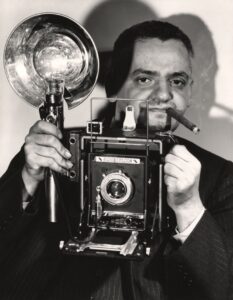
Weegee
Shared publisher: Aperture, Prestel
14 photobook(s) in the library

Alec Soth
Shared publisher: Aperture, Kominek
13 photobook(s) in the library
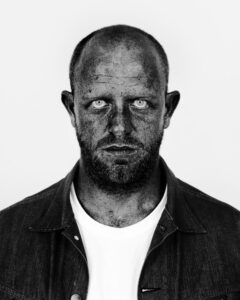
Pieter Hugo
Shared publisher: Aperture, Prestel
9 photobook(s) in the library
COMMUNITY DISCUSSION
Discuss this entry
Share interpretations, reading notes, and source-aware questions. For catalog corrections, use the feedback form below.
No discussion yet. Start the first focused conversation.
Sign in to join the discussion.
Optionally receive a digest when related photobooks are added to the catalog.
See something incorrect? Sign in to suggest a correction or report an issue.