Photographer
Laszlo Moholy-Nagy
László Moholy-Nagy (born July 20, 1895, in Bácsborsód, Hungary; died November 24, 1946, in Chicago, Illinois) was a monumental figure in twentieth-century modernism, a visionary theorist, and a legendary Bauhaus professor who completely redefined the technological, spatial, and material boundaries of lens-based media. Originally studying law in Budapest, Moholy-Nagy was drawn into creative practice while serving as an artillery officer for the Austro-Hungarian army during World War II, sketching raw battlefield dynamics on postcards. Moving to Berlin in 1920, he immersed himself in the international Dadaist and Constructivist circles. In 1923, Walter Gropius invited him to join the faculty of the Bauhaus in Weimar, where he took over the influential Preliminary Course and the Metal Workshop. Rather than using the camera to neutrally capture pre-existing reality, Moholy-Nagy famously weaponized photography as an instrument of the New Vision (Neues Sehen), proclaiming light itself to be a fluid, plastic medium for independent artistic creation.
Moholy-Nagy achieved immortal critical and institutional acclaim by bypassing traditional painterly representation to engineer pioneering, non-cameral lensless processes alongside dynamic architectural topographies. Working intensely with his first wife, Lucia Moholy, he developed the “photogram”—a technique of placing objects directly onto light-sensitive paper and exposing them to bare bulbs, treating the silver-gelatin surface as a conceptual space to capture shadows, transparency, and geometric kinetics in their purest form. When utilizing cameras, his signature style pioneered radical worm-eye views, extreme bird-eye angles, motion blurs, and negative-print permutations, structurally fracturing classical European perspective to force the human eye to perceive the modern industrial world anew. His brilliant conceptual blueprints reached global milestones through his design of the Light-Space Modulator (1930), one of the first kinetic light sculptures in history, and his standard-setting texts, including Painting, Photography, Film (1925) and The New Vision (1930).
Fleeing Nazi persecution, Moholy-Nagy relocated to the United States in 1937, where he served as an institutional titan of American industrial design education by founding and directing the highly influential New Bauhaus (later the Institute of Design) in Chicago, inspiring generations of postmodern visual storytellers. His immense material and theoretical legacy has been preserved and promoted across generations by the Moholy-Nagy Foundation, which actively collaborates with elite national repositories to curate historical retrospectives and distribute definitive monograph anthologies. His master vintage prints, photograms, typography exercises, and experimental films are permanently curated in the core collections of the world’s premier museums, including the Museum of Modern Art (MoMA) in New York, the Solomon R. Guggenheim Museum, the Art Institute of Chicago, the Tate Modern in London, and the George Eastman Museum in Rochester, establishing his legacy as one of the ultimate architects of modern visual culture.


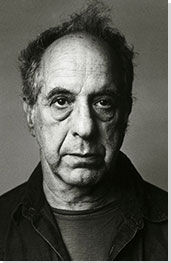
Robert Frank
Shared publisher: 5 Continents Editions, Pantheon
19 photobook(s) in the library
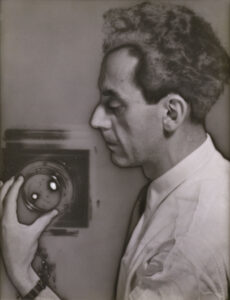
Man Ray
Shared publisher: 5 Continents Editions, Yale University Press
8 photobook(s) in the library
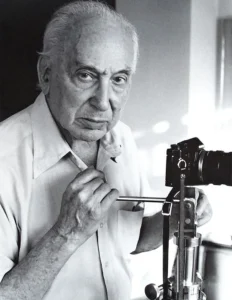
André Kertész
Shared publisher: 5 Continents Editions, Yale University Press
8 photobook(s) in the library
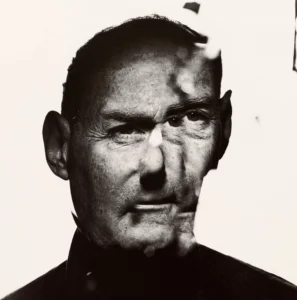
Irving Penn
Shared publisher: 5 Continents Editions, Yale University Press
7 photobook(s) in the library
COMMUNITY DISCUSSION
Discuss this entry
Share interpretations, reading notes, and source-aware questions. For catalog corrections, use the feedback form below.
No discussion yet. Start the first focused conversation.
Sign in to join the discussion.
Optionally receive a digest when related photobooks are added to the catalog.
See something incorrect? Sign in to suggest a correction or report an issue.