Photographer
Anton Corbijn
Anton Corbijn (born 1955 in Strijen, Netherlands) is a Dutch photographer, filmmaker, and visual director whose work has shaped the iconography of modern music and celebrity portraiture for more than four decades. Emerging in the mid‑1970s through his photographs of Dutch musician Herman Brood, Corbijn quickly became a defining visual voice for the post‑punk era. After relocating to London, he became a regular contributor to NME and The Face, producing stark, atmospheric black‑and‑white portraits characterized by grain, texture, and a raw emotional tone. His images of Joy Division, David Bowie, Siouxsie Sioux, Tom Waits, Miles Davis, Björk, and countless other cultural figures have become visual signatures of their eras.
Corbijn is perhaps best known for his decades‑long creative relationships with Depeche Mode and U2, serving as their visual director—photographing album covers, promotional campaigns, and directing music videos that defined their aesthetic identities. His music video work includes classics such as Depeche Mode’s “Enjoy the Silence,” U2’s “One,” Nirvana’s “Heart‑Shaped Box,” and Coldplay’s “Viva la Vida.” Moving seamlessly between still photography and motion pictures, Corbijn’s cinematic sensibility led him to direct several acclaimed feature films, including *Control* (2007), the black‑and‑white biopic of Ian Curtis; *The American* (2010) starring George Clooney; *A Most Wanted Man* (2014); and *Life* (2015), a portrait of photographer Dennis Stock and James Dean.
His work is widely exhibited and collected internationally, noted for its introspective, atmospheric mood and its ability to distill identity through minimal yet emotionally charged imagery. Corbijn continues to work across photography, cinema, music, and art direction, remaining one of the most influential visual artists to emerge from the late 20th century.
Anton Corbijn (born 20 May 1955) is a Dutch photographer and film director. He gained international recognition for his stark black-and-white portraits of musicians, especially his long-term collaborations with U2, Depeche Mode, and Joy Division. His early photograph of Joy Division singer Ian Curtis became a defining image of post-punk. Beyond photography, Corbijn directed the acclaimed 2007 film Control, a biopic about Curtis. His work has been exhibited in major institutions and he has published over fifty books, cementing his influence in both music photography and visual storytelling.


Selected Works & Key Projects
A source-backed introduction to individual photographs and significant bodies of work.
Key projects

Project · 1986–2023
Depeche Mode by Anton Corbijn
This long-running body of work is represented by TASCHEN as an illustrated history made in collaboration with Depeche Mode. Its more than 150 selected photographs range from formal and informal portraits made in Madrid, Hamburg, the California desert, Prague, and Marrakech to candid and live images from tours between 1988 and 2023. The publisher identifies Corbijn as the group’s de facto creative director from 1986 and records Dave Gahan’s acknowledgement of the visual identity he gave the band. It merits selection because it documents photography operating across portraiture, album imagery, videos, and a sustained band image rather than as isolated celebrity pictures.
View source ↗
Project · 1998–2000
Strippinggirls
Strippinggirls brought photographer Anton Corbijn and painter Marlene Dumas together for the first time in an exhibition at S.M.A.K. Their shared subject was the female body and striptease: Corbijn began from what the museum calls stark reality, then made subtle computer alterations whose oddities emerge on close viewing; Dumas used Polaroids as starting points for paintings. Corbijn stated that he did not intend either documentary or glamorous photography, and began working with participating dancers in Amsterdam clubs from October 1998. The project merits selection as a documented cross-medium dialogue that deliberately shifted his practice away from his established male-musician portraiture.
View source ↗
Project · 2022
Instanton: Phone Photos
Published by Hannibal in 2022, Instanton gathers Corbijn’s mobile-phone photographs, most of them previously unpublished. Rather than concentrating on the celebrated musicians, artists, actors, and models associated with his reputation, the book draws from private life and travel, bringing together images characterized by its publisher as spanning the profane and the profound. This project merits selection because it explicitly broadens the record of Corbijn’s photography beyond commissioned portraiture and music culture. It makes the portable, everyday camera central to a 288-page authorial sequence, offering a documented counterpoint to the formal black-and-white work for which he is best known.
View source ↗Selected photographs

1986
U2 The Joshua Tree
CAMUSAC, Cassino Museum of Contemporary Art, catalogues this as a 1986 photograph by Anton Corbijn, titled U2 The Joshua Tree. The museum record identifies it as a black-and-white photograph on photographic paper and gives an unusually panoramic 143 × 63 cm format. It merits selection because it is a formally catalogued museum object whose title directly joins Corbijn’s work to U2 and The Joshua Tree, a central association in accounts of his music photography. Within this record, its importance is specific: it demonstrates that an image connected to popular music also circulates as a large-scale photographic work in a contemporary-art collection.
Work source ↗
1982 · London, United Kingdom
James Brown, London
This 1982 portrait is catalogued as James Brown, London and is offered as a handprinted silver-gelatin photograph. The listed example measures 97 × 142 cm, is signed by the artist through a sticker label, and belongs to an edition of ten plus two artist’s proofs. It merits selection as an early, large-format instance of Corbijn’s musician portraiture: the work’s silhouetted profile and strongly graphic costume are visible in the source preview, while its handprinted silver-gelatin presentation confirms its status as a photographic print rather than merely editorial reproduction. The record provides a concrete example of his portrait practice entering limited-edition art circulation.
Work source ↗
1985
Miles Davis
Artsy records this 1985 Miles Davis portrait as a gelatin silver print by Anton Corbijn. The listed framed work measures 143 × 98 × 4 cm and is an edition of ten. The source preview foregrounds Davis’s face and hands in a close black-and-white composition, making the sitter’s direct gaze the image’s organizing device. It merits selection because it concentrates qualities associated with Corbijn’s portrait production—an artist subject, monochrome printing, and a large exhibition-scale format—within a clearly identified, limited edition. Rather than treating the image as a generic publicity shot, the listing documents it as a signed photographic object with a defined edition and material process.
Work source ↗
1993
Johnny Cash
Johnny Cash is catalogued as a 1993 gelatin silver print by Anton Corbijn, in an edition of twenty. The listed print measures 60 × 50 cm and is signed, numbered, and dated on the reverse of the mount. In the available preview, Cash is positioned frontally against a pale, marked background, with dark clothing and a restrained expression producing a spare black-and-white portrait. It merits selection because the record precisely documents a photographic object rather than an undifferentiated image: technique, size, edition, and verso inscription are all specified. These facts make it a useful representative of Corbijn’s sustained translation of musician portraiture into signed limited-edition prints.
Work source ↗
2012 · Beijing, China
Ai Weiwei, Beijing
This 2012 photograph is titled Ai Weiwei, Beijing and was listed for the Artists in Support of Human Rights Watch benefit auction. It is a pigment print on Hahnemühle Fine Art paper mounted on aluminium, with a listed 142 × 142 cm format and an edition of five plus two artist’s proofs. Corbijn described the image as showing a man within nature and later seeing him as imprisoned but serene and enduring. The picture merits selection because the source documents both its formal art-object status and the artist’s own interpretive emphasis on endurance, freedom, and nature, extending his portraiture beyond music subjects.
Work source ↗-
c. 1975
Career milestone
Begins a career in music photography
Corbijn’s music-photography career began in Groningen around 1975, after he photographed Dutch musician Herman Brood and his band performing in a café. The Science Museum Group records that these photographs increased Brood’s visibility while also bringing Corbijn exposure as a photographer.
Source: Science Museum Group Collection Verified Sep 4, 2026
-
1979
Career milestone
Moves to London to work for NME
Corbijn moved to London in 1979 to work for the music magazine NME as its principal staff photographer. This move placed his photographic practice within the London music press and followed his early work photographing local bands in the Netherlands.
Source: KYOTOGRAPHIE Kyoto International Photography Festival Verified Sep 4, 2026
-
1983
Career milestone
Directs his first music video
Corbijn directed his first music video in 1983, for the German new-wave group Palais Schaumberg. The Science Museum Group identifies this as the beginning of a parallel moving-image practice that eventually comprised 82 music videos made between 1983 and 2017.
Source: Science Museum Group Collection Verified Sep 4, 2026
-
1989
Photobook
Publishes FAMOUZ and begins colour portraiture
In 1989, Corbijn published FAMOUZ, his first book; Ludwig Museum describes it as a collection of exclusively black-and-white works made from 1976 to 1988. In the same year, he began working in colour, with his first colour portraits depicting Siouxsie Sioux.
Source: Ludwig Museum; Science Museum Group Collection Verified Sep 4, 2026
-
2000
Series
Collaborates with Marlene Dumas on strippinggirls
Corbijn’s strippinggirls, dated 2000, was a collaborative project with artist Marlene Dumas. Kunstmuseum Den Haag included the project in a dedicated display within its 2015 retrospective, presenting it alongside Corbijn’s fashion and writers’ photography.
Source: Kunstmuseum Den Haag Verified Sep 4, 2026
-
2007
Career milestone
Directs Control
Corbijn directed Control in 2007. Festival de Cannes lists him as the film’s director and records the film in its parallel sections with a Caméra d’Or Special Distinction that year. The feature marked his move from photography and music-video direction into feature filmmaking.
Source: Festival de Cannes Verified Sep 4, 2026
-
29 April–5 July 2009
Exhibition
Anton Corbijn—Work at Ludwig Museum
Ludwig Museum in Budapest presented Anton Corbijn—Work from 29 April to 5 July 2009. The retrospective surveyed roughly three decades of his output, from early video clips to recent portraits, formally situating his photographic and moving-image work together in a museum overview.
Source: Ludwig Museum Verified Sep 4, 2026
-
21 March–21 June 2015
Exhibition
HOLLANDS DEEP retrospective in The Hague
Kunstmuseum Den Haag organized HOLLANDS DEEP from 21 March to 21 June 2015 for Corbijn’s sixtieth birthday. The retrospective selected highlights from all his series, beginning with his grainy black-and-white musician photographs of the 1970s and 1980s and tracing later changes in subject matter, techniques, and materials.
Source: Kunstmuseum Den Haag Verified Sep 4, 2026
-
2025
Photobook
Corbijn, Anton… 1972–2024 catalogue published
The exhibition catalogue Corbijn, Anton… 1972–2024 was published by Hannibal in 2025. Rijksmuseum’s library catalogue identifies it as a showcase of Corbijn’s portraits of musicians, actors, and artists, issued in connection with a retrospective that opened at Fotografiska Stockholm on 13 June 2025.
Source: Rijksmuseum Research Library Verified Sep 4, 2026
Collection
National Portrait Gallery, London
The National Portrait Gallery holds Anton Corbijn's portraits of major figures in rock and pop music, captured in black-and-white film with a restrained, low-light aesthetic. Its formal acquisition of these images positions his music photography within the UK's national visual narrative. The museum's institutional authority reinforces Corbijn's role in shaping the public image of musicians during the late twentieth century, while also placing his portrait practice in dialogue with broader British social-documentary traditions. His work is thereby recognized not simply as entertainment industry imagery but as a meaningful contribution to portrait photography history.
Verified 2026-09-04National Portrait Gallery, London
Collection
Nederlands Fotomuseum, Rotterdam
The Nederlands Fotomuseum in Rotterdam has systematically collected Corbijn's photographic output from the 1980s onwards, including his images of Depeche Mode, U2 and other artists. As the principal Dutch institution for photography, its acquisition of his archive provides national recognition of his Dutch origins and artistic development. The museum's holdings document how his early practice in the Netherlands evolved into an international career in music photography, situating his black-and-white aesthetic within the history of Dutch photography rather than only within Anglo-American pop culture.
Verified 2026-09-04Nederlands Fotomuseum
Publishing relationship
TASCHEN
TASCHEN published the major monograph 'Anton Corbijn HP', a comprehensive overview of Corbijn's music, portrait and film-related photography from the early years of his career. This publication affirms the publisher's recognition of his importance as one of the defining visual chroniclers of rock music. The book brought his images to an international art-book audience, bridging music culture and fine-art publishing. Its scale and production value also established a lasting print record of his work, making it central to the photographer's documented legacy.
Verified 2026-09-04TASCHEN
Representation
Getty Images
Getty Images represents distribution of significant portions of Corbijn's music photography, making his images of major artists and live performances available across global editorial and commercial platforms. This representation has facilitated wide dissemination of his work within press, publishing and broadcasting, reinforcing his position as a leading photographer of the music industry. Getty's comprehensive archive management ensures continued accessibility to his images for licensing and editorial purposes, thereby connecting his photographic achievements to contemporary image distribution networks.
Verified 2026-09-04Getty Images
Anton Corbijn Interview: The Talks (opens a new site)
In this in-depth interview with The Talks, Anton Corbijn discusses his approach to photographing celebrities and musicians, emphasizing the importance of capturing authentic personal moments rather than staged clichés. He reflects on his transition from photography to filmmaking, his long-term collaborations with artists like U2, and how he maintains intimacy and trust with his subjects. The conversation offers direct insight into his creative philosophy and the practical challenges of a career spanning five decades.
Anton Corbijn – Wikipedia (opens a new site)
This Wikipedia article provides a comprehensive overview of Anton Corbijn's career, from his origins as a Dutch photographer to his international recognition for black-and-white portraits of musicians like U2 and Depeche Mode. It details his directorial work, particularly the 2007 film 'Control,' and lists major exhibitions and publications. The page synthesizes verified biographical facts and career milestones, making it a reliable reference for understanding his dual impact on music photography and cinema.
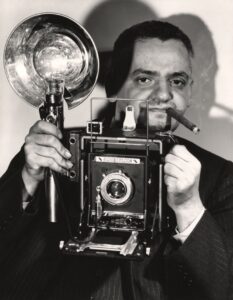
Weegee
Shared publisher: Schirmer/Mosel
14 photobook(s) in the library
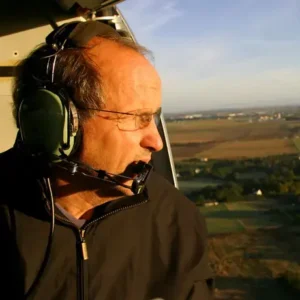
Alex MacLean
Shared publisher: Schirmer/Mosel
12 photobook(s) in the library
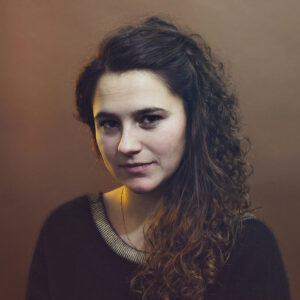
Bieke Depoorter
Shared publisher: Hannibal Books
7 photobook(s) in the library

Ellen von Unwerth
Shared publisher: Schirmer/Mosel
7 photobook(s) in the library
COMMUNITY DISCUSSION
Discuss this entry
Share interpretations, reading notes, and source-aware questions. For catalog corrections, use the feedback form below.
No discussion yet. Start the first focused conversation.
Sign in to join the discussion.
Optionally receive a digest when related photobooks are added to the catalog.
See something incorrect? Sign in to suggest a correction or report an issue.