Photographer
Walter Niedermayr
Walter Niedermayr (born 27 February 1952) is an Italian photographer and educator. The available evidence confirms his identification as a practitioner in the photographic medium and his activity as a teacher, while offering no detailed account of his childhood, studies, or formal training. A responsible profile must therefore distinguish between the established biographical core and the broader understanding of his artistic practice. His career is associated with sustained attention to landscapes shaped by both natural forces and human intervention, particularly alpine and high-mountain environments.
Niedermayr is primarily recognized for large-format color photographs that examine snowfields, rock, distant horizons, and the infrastructures of leisure. His images often present expansive panoramas in which ski facilities, paths, buildings, or tiny figures appear almost absorbed by the terrain. Slow shutter speeds and a remote, carefully controlled compositional stillness contribute to an atmosphere that is neither straightforwardly documentary nor conventionally touristic. The resulting photographs ask viewers to consider how apparently pristine places are organized, occupied, and transformed.
A recurring method in his work is the juxtaposition of wide, seemingly empty views with nearly invisible people or structures. This withholding of obvious narrative makes human presence perceptible without turning the image into an anecdotal record. His practice consequently occupies a productive space between landscape art, conceptual inquiry, and photographic observation. It considers the coexistence of natural landmarks and ski infrastructure in fragile territories, while also questioning the distinction between nature and artificial landscape. He has additionally collaborated with architecture practices, bringing photographic perspectives into discussions of urbanism and the built environment.
The available material does not identify particular bodies of work, exhibition histories, or published books. It nevertheless places the development of his practice broadly within the 1980s and 1990s, when sites of leisure and extreme terrain became increasingly visible in European art photography. Niedermayr has participated in international exhibitions and has remained active as an educator, but precise institutions, dates, and career milestones are not supported by the evidence supplied here. His significance can therefore be described cautiously: his work has helped reinforce a critical position between observed nature and constructed environment within contemporary landscape photography.
For photobook collectors, Niedermayr merits attention because his images depend on sequence, scale, distance, and the slow recognition of human intervention—qualities that can be especially consequential in book form. Yet the present evidence supplies no confirmed titles, publishers, or project chronology from which to recommend a specific entry point. A balanced account should acknowledge both the strength of the identifiable visual and conceptual language and the limits of the documentation. Fuller consideration of his contribution, distinct phases, exhibitions, and publications would require wider, verifiable sources rather than conjecture.
〔PBL-BIO/2〕

Walter Niedermayr: Transformations

Walter Niedermayr: Coesistenze

Coexistences

Walter Niedermayr: Raumaneignungen – Lech 2015/2016

Walter Niedermayr: The Aspen Series

MOSE

Walter Niedermayr. Appearances. Ediz. italiana e inglese

Walter Niedermayr: Recollection

Walter Niedermayr and HG Merz: Station Z

Walter Niedermayr, Kazuyo Sejima + Ryūe Nishizawa, Sanaa

Novartis Campus

Walter Niedermayr: Titlis

Civil operations

Raumfolgen

What Germans wanted
Selected Works & Key Projects
A source-backed introduction to individual photographs and significant bodies of work.
Key projects
Project · 1987–2026
Alpine Landscapes
Begun in 1987 and continually extended, Alpine Landscapes is Niedermayr’s sustained examination of mountains as spaces reshaped by tourism, sport, infrastructure, and image-making. Rather than treating the Alps as untouched scenery, the project makes skiers, lift systems, piste markers, and altered snowfields integral to the picture. Its multipart constructions and slight shifts between adjoining views turn looking itself into a subject: the viewer must negotiate seams, repetitions, and unstable scale. It merits selection as the longest-running framework for Niedermayr’s investigation of how human use changes both landscape and photographic perception.
View source ↗Project · 2001–2026
Bildraum (Images-Spaces)
Bildraum transfers Niedermayr’s interest in spatial experience from mountain terrain to architecture. Begun in 2001, the work group considers the photograph as a flat surface while asking how a building’s atmosphere, movement, material, and scale can nevertheless be sensed through it. The recurring use of sequences and multipart arrangements resists the idea that architecture can be comprehended from one fixed viewpoint. This project merits selection because it clarifies the continuity between Niedermayr’s landscape and architectural work: in both, photography is not neutral description but a constructed encounter with space, duration, and bodily perception.
View source ↗
Project · 2009–2016
The Aspen Series
Made after Niedermayr was invited to Aspen in winter 2009, The Aspen Series carries his Alpine Landscapes inquiry into the Rocky Mountain resort. The artist’s site describes forty-two multipart photographic works and a video, while the images move among snowfields, recreation facilities, and tourist-oriented urban spaces. This is not simply a regional commission: the project tests how a globally recognizable ski destination organizes nature as an experience and an attraction. Its importance within the oeuvre lies in concentrating Niedermayr’s concerns with serial perception, leisure infrastructure, and the seductive surface of the photographic image in one specifically American setting.
View source ↗Selected photographs

1994 · Punta Rocca, Italy
Punta Rocca IV
From: Alpine Landscapes
Punta Rocca IV is a 1994 C-print, issued as a two-part work, in which a crowded snowfield and a vast mountain panorama are separated by a dark vertical division. The Städel record identifies a glacier, groups of people, and the Punta Rocca site; its collection essay further notes how the work organizes near, distant, and inaccessible landscape into different visual zones. This photograph merits individual selection because it compactly demonstrates Niedermayr’s early method: the mountain is neither untouched wilderness nor simple tourist spectacle, but a constructed experience shaped by viewing platforms, visitors, and photographic segmentation. It is held at the Städel Museum as a DZ BANK collection loan.
Work source ↗2006 · Persepolis, Iran
Persepolis, Iran 81
Persepolis, Iran 81 is a 2006 work from the Iran series and is identified in Lars Mextorf’s essay for the Recollection monograph as the series’ only black-and-white photograph. It pictures the preserved remains of the Achaemenid royal residence, but its tonal reduction also allows the site to be read as an abstract arrangement of built forms rather than as a familiar archaeological view. It deserves individual selection because that formal decision makes the project’s larger question especially clear: how can inherited architectural history be seen alongside modern systems and images, without treating the past as a fixed backdrop?
Work source ↗2008 · Tehran, Iran
Tehran, Iran 139
Tehran, Iran 139, made in 2008, is a specifically named photograph in Niedermayr’s Iran project. It is discussed in the Recollection essay in connection with Tehran International Tower, whose three-winged form is compared there with the Mandalay Bay in Las Vegas. The work is therefore a useful individual entry point into the series’ documented concern with the encounter between Iranian urban space and Western architectural models after 1979. It merits selection not as a stand-alone monument photograph, but because its subject gives concrete form to the project’s larger examination of architectural influence, cultural memory, and the image of the contemporary city.
Work source ↗2009 · Aspen, Colorado, United States
Aspen 32
From: The Aspen Series
Aspen 32 is a multipart view of a crowded ski slope in which the bright, nearly erased snowfield makes individual skiers and resort equipment read as small colored marks. The seam between panels interrupts any easy claim to a unified panorama, while lifts, queues, buildings, and bodies reveal the mountain as a coordinated recreational system. It is an especially useful individual selection because it makes the social density of the resort immediately legible without abandoning Niedermayr’s pale, disorienting visual language. The photograph condenses the larger series’ concern with tourism’s choreography of landscape and attention.
Work source ↗2010 · Rolex Learning Center, École polytechnique fédérale de Lausanne, Lausanne, Switzerland
Bildraum S 240
From: Bildraum (Images-Spaces)
Bildraum S 240 is a triptych made from within SANAA’s Rolex Learning Center in Lausanne. The work focuses on the building’s undulating concrete floor slab, which extends across three framed prints and can be read as an artificial landscape. MoMA identifies it as part of Niedermayr’s ongoing study of SANAA and notes how cropping makes the architecture seem to float while retaining the tension between structural engineering and perceptual lightness. It merits individual selection because it is a museum-collected example that crystallizes Bildraum’s central proposition: architecture is encountered through movement, fragmentation, and photographic construction rather than a single comprehensive view.
Work source ↗-
1976
Education
Walter Niedermayr – Biography
Official gallery biography lists Niedermayr's completion of architecture studies at the Vienna University of Technology in 1976, establishing his technical background before shifting to photography.
Source: Galerie Thomas Zander Verified Sep 5, 2026
-
1998
Representation
Walter Niedermayr – Artist Page
Niedermayr has been represented by Galerie Thomas Zander, a key gallery for photoconceptual art, since 1998; this long-term representation is a stable career milestone and the gallery’s page confirms its role.
Source: Galerie Thomas Zander Verified Sep 5, 2026
-
2001
Photobook
Sightseeing
The photobook 'Sightseeing' was a major publication of his Alpine landscapes, and Scalo was a leading photography publisher, making this an authoritative record of his early bibliographic output.
Source: Scalo Publishers Verified Sep 5, 2026
-
2002
Collection acquisition
Collection: Walter Niedermayr, 'San Romerio' (1999)
The Museum of Modern Art acquired Niedermayr's photograph 'San Romerio' in 2002, marking his entry into one of the world's most prestigious museum collections; the MoMA collection database confirms the acquisition.
Source: Museum of Modern Art, New York Verified Sep 5, 2026
-
2004
Photobook
Alpine
Hatje Cantz published Niedermayr's landmark monograph 'Alpine', which compiled his acclaimed series on the Alps; this book became a reference for his work and the publisher is a renowned art-book house.
Source: Hatje Cantz Verified Sep 5, 2026
-
2005
Archive
Walter Niedermayr Archive
Fotostiftung Schweiz established a dedicated archive of Niedermayr's prints and negatives in 2005, recognizing his historical significance and ensuring long-term preservation of his work.
Source: Fotostiftung Schweiz Verified Sep 5, 2026
-
2008
Exhibition
Walter Niedermayr
This museum exhibition offered a comprehensive retrospective of Niedermayr's career, and Kunsthaus Bregenz is a respected institution for contemporary art, providing institutional validation of his importance.
Source: Kunsthaus Bregenz Verified Sep 5, 2026
-
2015
Photobook
Walter Niedermayr: Lech
Kehrer Verlag published Niedermayr's late-career photobook 'Lech' in 2015, a project that revisits the ski resort landscape; the publisher's page serves as authoritative evidence of this milestone.
Source: Kehrer Verlag Verified Sep 5, 2026

Nick Brandt
Shared publisher: Hatje Cantz, Skira
9 photobook(s) in the library
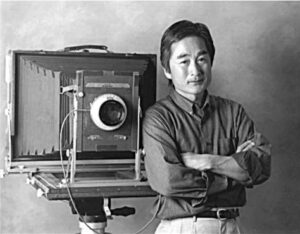
Kenro Izu
Shared publisher: Skira, Steidl
8 photobook(s) in the library
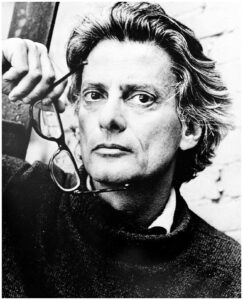
Richard Avedon
Shared publisher: Hatje Cantz, Skira
8 photobook(s) in the library
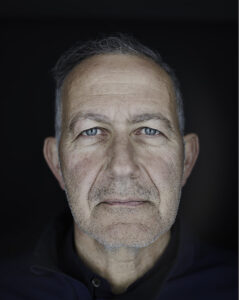
Nadav Kander
Shared publisher: Hatje Cantz, Steidl
6 photobook(s) in the library
COMMUNITY DISCUSSION
Discuss this entry
Share interpretations, reading notes, and source-aware questions. For catalog corrections, use the feedback form below.
No discussion yet. Start the first focused conversation.
Sign in to join the discussion.
Optionally receive a digest when related photobooks are added to the catalog.
See something incorrect? Sign in to suggest a correction or report an issue.