Photographer
Arnold Odermatt
Arnold Odermatt (1925–2021) was a Swiss police photographer whose quiet, meticulously composed black‑and‑white photographs transformed the visual language of documentary and forensic imagery. Originally trained as a baker, he joined the Nidwalden cantonal police in 1948, where he spent more than four decades documenting accident scenes, traffic incidents, and daily police life. Working with a Rolleiflex camera and a simple technical setup, he developed a sober, carefully framed photographic style that rendered scenes of wreckage with unexpected elegance, clarity, and dark humor. His images—free of victims but rich in visual detail—elevated the mundane and the tragic into surreal, sculptural compositions.
Though created for official police reports, Odermatt’s photographs remained largely unknown outside his department until the early 1990s, when his son, film director Urs Odermatt, discovered thousands of negatives in the family attic. Their artistic significance quickly attracted international attention. His work was subsequently exhibited at the 49th Venice Biennale (2001), the Art Institute of Chicago (2002), and Fotomuseum Winterthur (2004), among other major institutions. Key series such as *Karambolage*, *Im Dienst*, *Meine Welt*, and *In Zivil* highlight both the poetic strangeness and the human context of Swiss everyday life in the mid‑20th century.
Today Odermatt is recognized as a pioneering figure in 20th‑century European photography—an artist who brought emotional resonance and visual rigor to scenes typically perceived only through their utilitarian function. His archive remains an essential contribution to both police photography and contemporary art, underscoring the power of observation and craft in revealing beauty and meaning in the most unexpected places.


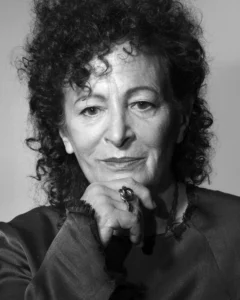
Nan Goldin
Shared publisher: Hartmann Books, Steidl
17 photobook(s) in the library

Robert Adams
Shared publisher: Hartmann Books, Steidl
14 photobook(s) in the library
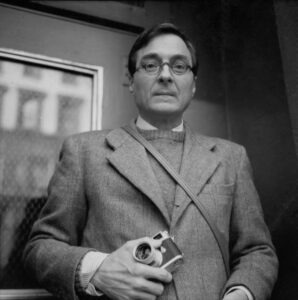
William Eggleston
Shared publisher: Steidl
26 photobook(s) in the library
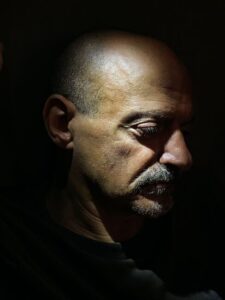
Antoine D'Agata
Shared publisher: Steidl
22 photobook(s) in the library
COMMUNITY DISCUSSION
Discuss this entry
Share interpretations, reading notes, and source-aware questions. For catalog corrections, use the feedback form below.
No discussion yet. Start the first focused conversation.
Sign in to join the discussion.
Optionally receive a digest when related photobooks are added to the catalog.
See something incorrect? Sign in to suggest a correction or report an issue.