Photographer
Helga Paris
Helga Paris (1938–2024) was a German photographer celebrated for her sensitive and humanistic documentation of everyday life in East Germany. Largely self‑taught, she developed a nuanced visual language rooted in observation, closeness, and an empathetic engagement with ordinary people. Her images — almost exclusively in black and white — capture working‑class communities, factory workers, street scenes, and urban environments with a combination of intimacy, dignity, and quiet political insight.
Born in Gollnow and raised in Zossen after her family fled at the end of the Second World War, Paris studied fashion design before working in theatre costume and commercial graphic design. She began photographing seriously in the late 1960s and joined the East German Association of Visual Artists in 1972, a crucial step in gaining recognition within the GDR art world. Early series such as *Garbage Collectors* (1974), *Berliner Kneipen* (1975), and *Leipzig Hauptbahnhof* (1981) established her as a major documentary voice. Her portraits and street scenes balance spontaneity with quiet compositional rigor, often capturing fleeting gestures, introspective expressions, and the texture of lived experience.
One of her most significant undertakings was her documentation of the city of Halle in the mid‑1980s, a project that paired portraits of residents with photographs of decaying architecture. The resulting exhibition, *Häuser und Gesichter von Halle*, was censored and cancelled by the GDR authorities in 1986 for portraying a reality deemed too bleak. After German reunification, the series was finally shown and received widespread acclaim as an essential historical record.
Over decades of work, Paris photographed theatre productions, workers’ lives, fashion factory employees, neighbourhood culture, and self‑portraits, building a multifaceted portrait of East German society. Following reunification, her work gained increasing international recognition and was exhibited in major museums and institutions. She is now regarded as one of the defining photographers of the GDR era, known for her subtlety, deep humanity, and commitment to documenting everyday life without embellishment or propaganda.



Christopher Anderson
Shared publisher: Hatje Cantz, Kehrer Verlag
5 photobook(s) in the library

Frank Horvat
Shared publisher: Hatje Cantz, Kehrer Verlag
2 photobook(s) in the library
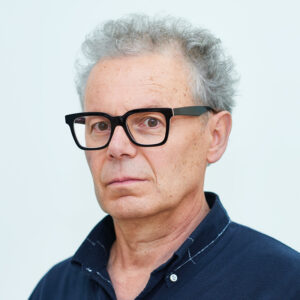
Walter Niedermayr
Shared publisher: Hatje Cantz
15 photobook(s) in the library

Nick Brandt
Shared publisher: Hatje Cantz
9 photobook(s) in the library
COMMUNITY DISCUSSION
Discuss this entry
Share interpretations, reading notes, and source-aware questions. For catalog corrections, use the feedback form below.
No discussion yet. Start the first focused conversation.
Sign in to join the discussion.
Optionally receive a digest when related photobooks are added to the catalog.
See something incorrect? Sign in to suggest a correction or report an issue.