Photographer
Jack Pierson
Born in 1960 in Plymouth, Massachusetts, Jack Pierson is an American artist whose practice spans photography, collage, drawing, and sculpture. He graduated from the Massachusetts College of Art in Boston in 1984, where he became part of a loose network of artists later identified as the Boston School. This group, active in the 1980s, was known for using snapshot aesthetics to capture intimate moments and subcultural life, often informed by queer experience. Pierson lives and works in New York and California, and he maintains a studio practice that has been represented by galleries such as Lisson Gallery, Cheim & Read, and Xavier Hufkens.
Pierson’s visual language is immediately recognizable for its emotional tone, blending a sense of nostalgia, desire, and melancholy. He has photographed friends, lovers, strangers, and landscapes, often with a casual, diaristic quality that belies careful formal control. Beyond photography, he is widely known for “word sculptures” constructed from salvaged or found letters, arranging phrases such as loneliness or desire into physical forms. These works, together with his photomontages and mixed-media pieces, investigate how language and image carry memory and feeling, often questioning the boundaries between public icon and private experience.
Within his photographic output, Pierson has produced several recurring modes: intimate portraits, self-portraits, street scenes, and abstract or folded prints. A notable recent example is Boston #1 (2023), a folded pigment print exhibited through Lisson Gallery. This piece, like much of his later work, plays with materiality and the photographic surface, suggesting that the final image is as much about process and objecthood as it is about the scene depicted. His exhibitions have included solo presentations at international galleries, and his images have appeared on magazine covers, including a 2024 Artforum cover, indicating his continued relevance in contemporary art discourse.
Pierson’s historical significance lies in his ability to merge deeply personal content with conceptual gestures. While often associated with the Boston School’s documentary intimacy, he moved beyond pure reportage into more sculptural and text-based territory, making him difficult to pigeonhole. His word sculptures in particular became markers of a generation’s lexicon, and his work is held in major collections and shown in contexts ranging from art fairs to institutional surveys. He is also a gallerist, adding another layer to his understanding of how art circulates.
For photobook collectors, Pierson is compelling because his photographic series and individual prints function as both images and objects. His commitment to printing—whether folded, mounted, or rendered in traditional formats—invites careful attention to physical qualities. Collectors looking for an entry point might start with his folded pigment prints (which challenge assumptions about the photograph) or his more conventional portrait work, which carries the emotional depth of a larger autobiographical narrative. His association with established galleries ensures provenance and scholarly context, while his constant reinvention keeps his output fresh and engaging for those interested in the interplay of photography, text, and memory.
〔PBL-BIO/2〕


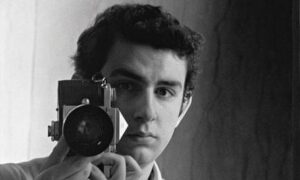
Danny Lyon
Shared publisher: Damiani, Twin Palms Publishers
6 photobook(s) in the library
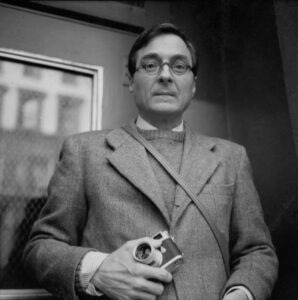
William Eggleston
Shared publisher: Twin Palms Publishers
26 photobook(s) in the library
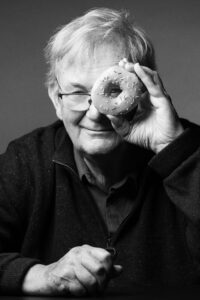
Martin Parr
Shared publisher: Damiani
21 photobook(s) in the library
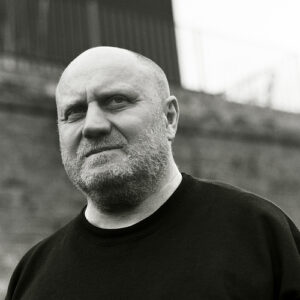
Nick Waplington
Shared publisher: Damiani
18 photobook(s) in the library
COMMUNITY DISCUSSION
Discuss this entry
Share interpretations, reading notes, and source-aware questions. For catalog corrections, use the feedback form below.
No discussion yet. Start the first focused conversation.
Sign in to join the discussion.
Optionally receive a digest when related photobooks are added to the catalog.
See something incorrect? Sign in to suggest a correction or report an issue.