Photographer
David Plowden
David Plowden (1932–2026) was an American photographer whose nearly seventy-five-year career documented the transformation of the United States through the lens of its fading industrial and rural landscapes. He is best known for powerful, elegiac black-and-white images of steam locomotives, small towns, and structures that once defined American enterprise. Active from 1956 until about 2011, Plowden often said he stayed “one step ahead of the wrecking ball,” a phrase that captures both his urgency and his intent to preserve a visual record of a way of life that was rapidly disappearing.
Plowden’s visual language is marked by a quiet, deliberate formalism. He favored large-format cameras and printed with meticulous attention to tonal range, producing images that feel both documentary and deeply personal. Unlike many contemporaries who turned toward street photography or social realism, Plowden focused on the built environment – railways, bridges, grain elevators, cityscapes, and the countryside – treating them with a reverence usually reserved for portraiture. His work is often compared to that of Walker Evans and Wright Morris, yet Plowden’s approach is less concerned with human figures than with the material traces of industry and community, creating a sense of absence and memory even while the subjects were still present.
Among his most significant bodies of work are his railroad photographs, notably gathered in the book *Requiem for Steam* (1971), which chronicled the twilight of the steam locomotive era with both technical precision and emotional resonance. Another important project is his 2023–24 exhibition *David Plowden: Portraits of America* at the Middlebury College Museum of Art, which surveyed his long career and underscored his role as a chronicler of American places. Throughout his career he published more than a dozen books, often pairing his images with his own reflective writings, thereby strengthening the narrative and archival value of each volume.
Plowden’s historical significance extends beyond his photography. He was a professor at the Institute of Design at the Illinois Institute of Technology, where he influenced younger generations of documentarians. His works are held in major museums, including the Joslyn Art Museum, which honored him at his passing, and his films and television appearances, such as the PBS documentary *David Plowden: Light, Shadow and Form*, brought his vision to a wider public. Yet Plowden always positioned himself as an observer rather than an activist, letting the authenticity of the places he documented speak for itself.
For photobook collectors, Plowden represents an enduring intersection of documentary purpose and artistic craft. His books are notable for their thoughtful sequencing and integration of text and image, often designed to lead the viewer through a narrative arc of loss and resilience. A useful entry point is *Requiem for Steam*, which remains a landmark in railroad photography, or the retrospective catalogues associated with his later exhibitions. These volumes offer not just photographs but a historical record of twentieth-century America, making them compelling additions to collections focused on social landscape, industrial heritage, and the evolution of photographic publishing.
〔PBL-BIO/2〕



Elliott Erwitt
Shared publisher: W W Norton & Company Incorporated
8 photobook(s) in the library

Henry Horenstein
Shared publisher: W. W. Norton & Company
5 photobook(s) in the library
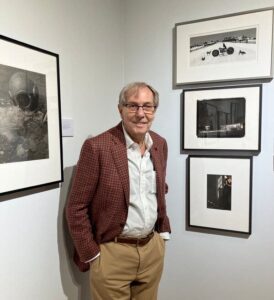
George Tice
Shared publisher: W W Norton & Company Incorporated
4 photobook(s) in the library
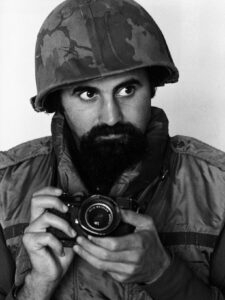
Abbas
Shared publisher: W W Norton & Company Incorporated
4 photobook(s) in the library
COMMUNITY DISCUSSION
Discuss this entry
Share interpretations, reading notes, and source-aware questions. For catalog corrections, use the feedback form below.
No discussion yet. Start the first focused conversation.
Sign in to join the discussion.
Optionally receive a digest when related photobooks are added to the catalog.
See something incorrect? Sign in to suggest a correction or report an issue.