Photographer
Robert Doisneau
Robert Doisneau (1912–1994) was a pioneering French photographer celebrated for his poetic, humorous, and deeply humanistic approach to street photography. Born in Gentilly near Paris, he studied engraving and lithography at the École Estienne, graduating in 1929, and began photographing as a teenager. His early influences included the streets of his working-class neighborhood and the avant‑garde artists he met while working for photographer André Vigneau.
In the 1930s, Doisneau worked as an industrial photographer for the Renault factory while also publishing street images in magazines such as Excelsior. After losing his job in 1939, he joined the Rapho agency and became a freelance photographer. During World War II, he joined the French Resistance, using his technical skills to forge documents and record both the occupation and liberation of Paris.
After the war, Doisneau returned to editorial and fashion photography. From 1949 to 1951 he worked under contract for Vogue, while continuing his personal work documenting Parisian life. His gently ironic images of Paris—children playing, café regulars, shop windows, and eccentric city dwellers—made him one of the central figures of French humanist photography. In 1950 he created his most iconic image, “Le baiser de l’hôtel de ville,” a symbol of spontaneous Parisian romance.
Doisneau published more than twenty books, including “La Banlieue de Paris” (1949), and participated in Group XV to promote technical excellence in photography. Over his long career he received major honors, including the Chevalier of the Legion of Honour in 1984. His work remains celebrated worldwide for its warmth, empathy, and lyrical depiction of everyday life in Paris.
Robert Doisneau (1912–1994) was a French photographer known for his humanist approach to Parisian street life. He trained as an engraver and worked as an industrial photographer for Renault before joining the Rapho agency. His work was characterized by empathetic observation and a subtle sense of humor, capturing everyday moments with a Rolleiflex camera. His iconic photograph ‘Le Baiser de l’Hôtel de Ville’ (The Kiss at City Hall, 1950) became world-famous, but his broader legacy rests on a vast body documenting the complexities and charms of French society.
Doisneau started as a photographer for the advertising industry and later became a staff photographer at Renault, covering industrial and factory life. After being fired in 1939, he became an independent photographer, joining the agency Rapho in 1946. His work focused on ordinary people in public spaces, often with tenderness and irony. He also did fashion and advertising work, but his street photography remains his most celebrated. He was awarded the Prix Nadar in 1956 and received the Grand Prix National de la Photographie in 1986.


Selected Works & Key Projects
A source-backed introduction to individual photographs and significant bodies of work.
Key projects

Project · 1933–1979
Paris: les Halles
This long-term body of work follows Les Halles from 1933 to 1979, the year the Forum des Halles opened. The Atelier Robert Doisneau describes the market as a source of inspiration for more than fifty years and presents photographs of its workers, trades, faces, market life, and changing architecture. It merits selection because its extended chronology makes it more than a group of Paris scenes: it records the transformation of a historic market district across several decades, including images made in color and photographs described by the Atelier as previously unpublished.
View source ↗
Project · 1940–1980
Robert Doisneau, Gentilly
This project gathers photographs of Gentilly, the Paris suburb where Doisneau was born, from images made in the 1940s through photographs from the 1980s. The Atelier frames the town as a biographical, emotional, and artistic anchor rather than merely a suburban subject, and states that the photographs document profound change in this working-class commune. It merits selection because it joins the photographer’s personal point of origin to a sustained civic record. A book and exhibition were planned in 1992 but remained unrealized when Doisneau died in 1994.
View source ↗
Project · 1960
Palm Springs 1960
Palm Springs 1960 is a color series made for Fortune magazine. Its assigned subject was the construction of golf courses in Palm Springs, described by the Atelier Robert Doisneau as a Colorado Desert refuge for wealthy American retirees. The project merits selection because it is a clearly documented magazine commission outside the Paris-centered work for which Doisneau is often known, and because the exhibition source identifies thirty prints from the color series. It broadens the account of his practice through a specific American commission, color photography, leisure development, and wealth.
View source ↗Selected photographs

1950 · Place de l'Hôtel de Ville, Paris, France
The Kiss by the Town Hall
This photograph portrays a young couple kissing on Paris’s Place de l’Hôtel de Ville while pedestrians and traffic continue around them. The Atelier Robert Doisneau identifies it as one of the world’s best-known photographs; another Atelier exhibition account states that Life published it in 1950 and that it immediately became a symbol of an era and generation. It merits selection because the documented publication and reception explain its exceptional public reach: an image of a brief urban gesture became inseparable from widely circulated ideas of postwar Paris.
Work source ↗1952 · Vallauris, France
The Breads of Picasso, Vallauris
The Atelier Robert Doisneau catalogues this 1952 photograph as “Les pains de Picasso, Vallauris” in its thematic portfolio devoted to painters and sculptors. It merits selection as a concentrated example of the artist-portrait material within Doisneau’s archive: the image is organized around Picasso and is preserved alongside photographs of Utrillo, Foujita, Dubuffet, Braque, Léger, Giacometti, and other artists. Its value at project level is therefore its place within a documented photographic engagement with modern artists, rather than as an isolated Paris street scene.
Work source ↗1950
Picasso
MoMA records this work simply as “Picasso,” dated circa 1950, and classifies its collection object as a gelatin silver print. The museum received the print as a gift of the artist in 1959 and lists it in its Photography department. It merits selection because this institutional record establishes a distinct, early museum-held Picasso photograph by Doisneau, separate from his broader portfolio of artist images. The work also provides a concise entry point to the portrait strand of his practice through the direct identification of its subject and medium.
Work source ↗1950 · Near Les Halles, Paris, France
Accordionist Playing in a Bistro near Les Halles, Paris
MoMA identifies this photograph as “Accordionist Playing in a Bistro near Les Halles, Paris,” dated circa 1950, and records it as a gelatin silver print purchased by the museum in 1958. The work was subsequently identified in two MoMA exhibition contexts, including “Photographs from the Museum Collection” in 1958–59 and a photography collection rotation in 2006. It merits selection because its precise title locates music, interior sociability, and the market district within one image, while its early acquisition and later display document sustained museum attention.
Work source ↗1949
L'Innocent
MoMA records L’Innocent as a 1949 gelatin silver print by Robert Doisneau. The print entered the museum as a gift of Mr. and Mrs. James Hunter and is catalogued in MoMA’s Photography department under object number 396.1992.9. It merits selection because it is a specifically dated, accessioned museum work from the immediate postwar period, offering a securely documented example beyond the photographer’s most reproduced images. Its inclusion also shows the breadth of works through which a major museum represents Doisneau’s 1940s practice.
Work source ↗-
1929
Education
Training at École Estienne
In 1929, Doisneau began instruction in engraving and lithography at the École Estienne in Paris, a technical school founded for the printing arts. This formal training in printmaking techniques preceded his later shift to photography and gave him an early understanding of image reproduction.
Source: Wikipedia Verified Sep 4, 2026
-
1934–1939
Career milestone
Staff photographer at Renault
From 1934 to 1939, Doisneau worked as a staff photographer for the French automaker Renault, producing industrial and promotional photographs. This employment exposed him to the daily life of factory workers and the industrial landscape, which sharpened his observational skills and later influenced his humanist approach.
Source: Wikipedia Verified Sep 4, 2026
-
1946
Representation
Joined the Rapho agency
In 1946, Doisneau became a member of the Rapho agency, a Paris-based photo agency that managed his rights and distributed his work to magazines and publications. The association provided him with editorial assignments and helped establish his international reputation in the postwar period.
Source: Wikipedia Verified Sep 4, 2026
-
1949
Photobook
Publication of 'La Banlieue de Paris'
In 1949, Doisneau published 'La Banlieue de Paris' (The Suburbs of Paris), a photographic book featuring his images of the working-class communities on the city's outskirts, with accompanying text by writer Blaise Cendrars. This work solidified his reputation as a chronicler of Parisian life beyond the postcard-perfect center.
Source: Wikipedia Verified Sep 4, 2026
-
1955
Exhibition
Featured in 'The Family of Man'
In 1955, Doisneau's photographs were included in 'The Family of Man', a major exhibition curated by Edward Steichen at the Museum of Modern Art in New York. The show gathered work from photographers worldwide and became a landmark in photographic history, giving Doisneau's Parisian street scenes a wide international audience.
Source: Wikipedia Verified Sep 4, 2026
-
1956
Award
Received the Prix Niépce
In 1956, Doisneau was awarded the Prix Niépce, a prestigious annual prize in French photography. The award recognized his overall contribution to the field, particularly his postwar documentation of Parisian daily life and his role in the humanist photography movement.
Source: Wikipedia Verified Sep 4, 2026
-
1983
Award
Awarded the Grand Prix National de la Photographie
In 1983, Doisneau received the Grand Prix National de la Photographie, a major French state award for photography. He was honored for a lifetime of achievements that had shaped both documentary practice and the public image of urban France.
Source: Wikipedia Verified Sep 4, 2026
Representation
Rapho
Robert Doisneau joined the Rapho photographic agency in 1946, which represented him for most of his career and distributed his work internationally. Rapho was a cooperative that supported humanist street photographers, and Doisneau remained closely associated with it throughout his life.
Verified 2026-09-04Wikipedia – Robert Doisneau
Other institution
Groupe des XV
Doisneau was a founding member of the Groupe des XV, established in 1946, a collective of French photographers dedicated to promoting documentary and humanist photography. The group organized exhibitions and publications that helped define post-war French visual culture.
Verified 2026-09-04Wikipedia – Groupe des XV
Estate
Atelier Robert Doisneau
After Doisneau's death in 1994, his family established the Atelier Robert Doisneau to manage his copyright, prints, and legacy. The studio oversees the authentication of his works, licensing, and exhibitions, serving as the official estate for the photographer.
Verified 2026-09-04Wikipedia – Robert Doisneau
Robert Doisneau – Wikipedia (opens a new site)
This Wikipedia article offers a comprehensive and sourced overview of Robert Doisneau’s life, his development as a photographer, his most recognized images (such as Le Baiser de l'hôtel de ville), and his broader legacy in French humanist photography. It traces his early work in industry and advertising, his role during the Resistance, and his post-war projects, grounding his reputation through references to exhibitions and books. The page is a reliable starting point for understanding factual milestones and the canon of his photographs.
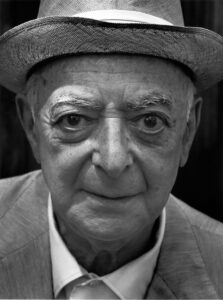
Brassaï
Shared publisher: Flammarion, Taschen
5 photobook(s) in the library
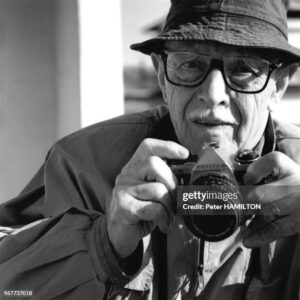
Willy Ronis
Shared publisher: Flammarion, Taschen
4 photobook(s) in the library

Michael Kenna
Shared publisher: TREVILLE
22 photobook(s) in the library
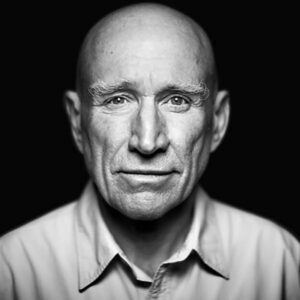
Sebastiao Salgado
Shared publisher: Taschen
21 photobook(s) in the library
COMMUNITY DISCUSSION
Discuss this entry
Share interpretations, reading notes, and source-aware questions. For catalog corrections, use the feedback form below.
No discussion yet. Start the first focused conversation.
Sign in to join the discussion.
Optionally receive a digest when related photobooks are added to the catalog.
See something incorrect? Sign in to suggest a correction or report an issue.