Photographer
Tony Ray-Jones
Tony Ray-Jones (7 June 1941 – 13 March 1972) was an English photographer best known for his candid, often humorous observations of everyday life in Britain during the 1960s. Born in the English countryside, he studied graphic design at the London School of Printing before moving to the United States, where he broadened his photographic vision at Yale University under the influence of contemporary American documentary photography. His time in the US exposed him to the work of Robert Frank and other street photographers, shaping the direct, observant style that would later define his mature output.
Ray-Jones returned to Britain in the mid-1960s with a clear goal: to record the peculiarities of British culture before they disappeared under rapid modernisation. He spent several summers and weekends travelling to seaside resorts, racecourses, parks, and holiday towns, photographing people at leisure with a mixture of affection and gentle satire. His images capture crowded beaches, tea dances, and street scenes, revealing the absurdity and charm of British social rituals. Unlike the more solemn documentary tradition of the era, he approached his subjects with wit and a precise sense of composition, creating pictures that feel both spontaneous and deliberately framed.
His major body of work, often grouped under the title A Day Off, was assembled posthumously and published in 1974 after his death. The book, with an introduction by the critic Ainslie Ellis, became a landmark visual study of English identity and influenced a generation of photographers, including Martin Parr, who has repeatedly acknowledged Ray-Jones as a key precursor. The photographs within show a nation caught between tradition and change, mixing old-fashioned seaside entertainments with new consumer goods and youth culture. Another significant project, the unfinished work on British life, was left incomplete when his life was cut short.
Ray-Jones died of leukemia in 1972 at the age of 30, leaving behind a modest but concentrated body of prints and negatives. His work gained recognition after his death, and he is now regarded as a pivotal figure in British documentary photography. Exhibitions at institutions such as the Photographers’ Gallery in London have helped secure his legacy, and his prints are held in major public collections. His approach—at once observational and interpretive—helped shift British documentary practice away from social reportage toward a more personal, imaginative mode.
For photobook collectors, A Day Off remains an essential entry point. The book, designed with care and printed in duotone, presents a sequence that mirrors the rhythm of a day out, balancing crowd scenes with quieter, more introspective moments. The 1974 edition, issued by the publisher of the same name (A Day Off, published by Studiocoat in London), is highly regarded for its fine printing and editorial coherence. Coming later editions by smaller publishers have made the photographs accessible, but the original book retains a special place in the canon of twentieth-century British photography. Collectors seeking to understand the transition between post-war English realism and the more satirical colour photography of the 1980s will find Ray-Jones an essential bridge.
〔PBL-BIO/2〕


Selected Works & Key Projects
A source-backed introduction to individual photographs and significant bodies of work.
Key projects

Project · 1969–1970
England by the Sea
England by the Sea survives as a photographer-made book maquette rather than as a later curatorial category. Ray-Jones assembled its 37 photographs, hand-drawn title page, and dummy text in a 54-page spiral-bound sketchbook, giving unusually direct evidence of how he conceived a coastal sequence. Beaches, piers, holiday camps, and seaside rituals become a connected study of public leisure and social behavior. It merits selection because the maquette records Ray-Jones not only as an alert maker of individual pictures, but also as an editor shaping a sustained photographic book.
View source ↗Selected photographs

1966 · Brighton, West Sussex
Brighton Beach, West Sussex
From: England by the Sea
Brighton Beach, West Sussex turns a crowded beach into a tightly layered social field. Deckchairs, bodies, children, a dog, and a deep sand excavation each retain their separate activity while pressing against one another in the frame. The picture demonstrates a defining achievement of Ray-Jones’s mature British work: finding visual order in busy public situations without making them look staged. It merits selection because it establishes, early in his seaside photographs, the dense framing and attention to ordinary ritual that later made this strand of his work central to accounts of postwar British documentary photography.
Work source ↗
1967 · Glyndebourne
Glyndebourne
From: England by the Sea
Glyndebourne places an outdoor picnic beside grazing cattle and sheep, making cultivated leisure and the pastoral setting share one deliberately awkward frame. The photograph is important for showing Ray-Jones’s ability to make social observation through spatial juxtaposition rather than explanation: the diners’ portable table, formal clothing, and picnic objects quietly conflict with the field around them. It merits selection as a compact example of his British leisure photographs beyond the seaside, where a sharply timed arrangement reveals class, ritual, and comedy without reducing the people pictured to caricature.
Work source ↗
1967 · Blackpool
Blackpool
From: England by the Sea
In Blackpool, Ray-Jones photographs a man asleep in a deckchair on the beach, isolating a moment of rest within the structured space of the resort. The image’s quiet humor comes from its ordinary subject and the firm geometry that holds him in place, rather than from an overt joke. Its documented significance is especially clear: this 1967 vintage print was reproduced as plate 50 in A Day Off: An English Journal, published posthumously in 1974. It merits selection as a published touchstone for Ray-Jones’s nuanced account of British holiday life.
Work source ↗
1967 · Margate
Margate
From: England by the Sea
Margate uses the broad expanse of beach to distribute several small, simultaneous dramas: children play, an adult digs, figures sit apart, and the distant seafront measures the open ground. Ray-Jones makes a holiday beach feel both communal and oddly dispersed, drawing meaning from the relations among gestures rather than from a single decisive subject. It merits selection because the picture was included in the England by the Sea maquette and has also been issued as an authenticated limited-edition print through the Martin Parr Foundation in partnership with the National Science and Media Museum, confirming its sustained visibility within the archive.
Work source ↗
1968 · Broadstairs
Punch and Judy man, Broadstairs
From: England by the Sea
Punch and Judy man, Broadstairs focuses on the performer associated with a traditional British seaside entertainment, placing a familiar popular custom at the center of Ray-Jones’s observation. The work matters not simply as a record of a local attraction, but as part of his broader attention to the ceremonies, occupations, and spectatorship that animate public leisure. The National Science Museum Group records that this 1968 print was reproduced as plate 23 in A Day Off: An English Journal (1974). It merits selection because that publication gave this strand of his work a durable photographic-book afterlife.
Work source ↗-
1960
Education
Holroyd Anthony Ray-Jones
Ray-Jones received a scholarship enabling study at Yale University School of Art in the early 1960s; 1960 is the supportable start year corroborated by the Hyman Collection biography. This is a pivotal formative milestone because Yale provided his advanced art-and-design training and American photographic context. The Science Museum Group is especially authoritative because it preserves his extensive archive.
Source: Science Museum Group Collection Verified Sep 5, 2026
-
1963
Career milestone
Holroyd Anthony Ray-Jones
He received assignments from Car and Driver and The Saturday Evening Post in 1963, an early professional breakthrough that established magazine work alongside his artistic development. The Science Museum Group’s archival artist record is authoritative because its collection includes Ray-Jones’s professional papers, publications, and photographic materials.
Source: Science Museum Group Collection Verified Sep 5, 2026
-
1966–1969
Series
Photographs England from a Volkswagen Camper Van
Ray-Jones and his wife Anna travelled around England in a Volkswagen camper van, photographing seaside leisure, Morris dancing, picnics, and other aspects of everyday life.
Source: National Science and Media Museum Verified Sep 5, 2026
-
1969
Exhibition
Materials relating to exhibitions by Tony Ray-Jones
The archive documents The English Seen at London’s Institute of Contemporary Arts in 1969, including installation/opening materials and an original print shown at the ICA. This was a landmark institutional exhibition for his English-leisure work. The source is authoritative primary archival evidence held by the Science Museum Group rather than a later exhibition list.
Source: Science Museum Group Collection Verified Sep 5, 2026
-
1974
Photobook
A Day Off: An English Journal
The first edition of A Day Off: An English Journal was published posthumously by Thames & Hudson in London in 1974, containing 120 black-and-white images. It is the major photobook consolidation of Ray-Jones’s English work and central to his posthumous reputation. The source is authoritative because it is the National Media Museum’s object-level catalogue record for the first-edition book.
Source: Science Museum Group Collection Verified Sep 5, 2026
-
1990
Collection acquisition
Blackpool Acquired by SFMOMA
SFMOMA acquired Ray-Jones’s gelatin silver print Blackpool, made circa 1967, through the Bequest of Helen Johnston.
Source: San Francisco Museum of Modern Art Verified Sep 5, 2026
-
1994
Archive
Tony Ray-Jones Archive Acquired by the National Science and Media Museum
The National Science and Media Museum acquired the Tony Ray-Jones archive, which includes contact sheets, prints, negatives, diaries, and other ephemera.
Source: National Science and Media Museum Verified Sep 5, 2026
-
21 September 2013
Exhibition
Only in England: Photographs by Tony Ray-Jones and Martin Parr Opens
Only in England: Photographs by Tony Ray-Jones and Martin Parr opened at Media Space in London, presenting Ray-Jones’s work alongside Martin Parr’s.
Source: National Science and Media Museum Verified Sep 5, 2026
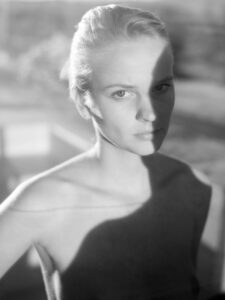
Mona Kuhn
Shared publisher: MACK, Thames & Hudson
9 photobook(s) in the library
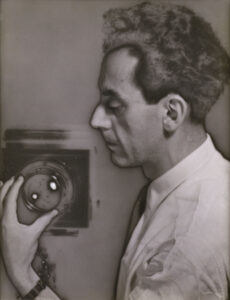
Man Ray
Shared publisher: MACK, Thames & Hudson
8 photobook(s) in the library
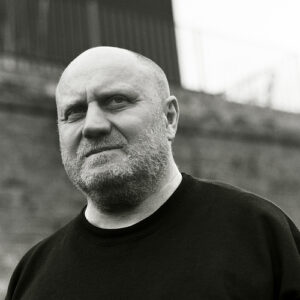
Nick Waplington
Shared publisher: MACK
18 photobook(s) in the library
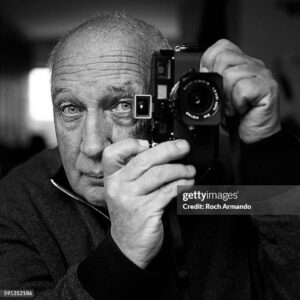
Raymond Depardon
Shared publisher: Thames & Hudson
16 photobook(s) in the library
COMMUNITY DISCUSSION
Discuss this entry
Share interpretations, reading notes, and source-aware questions. For catalog corrections, use the feedback form below.
No discussion yet. Start the first focused conversation.
Sign in to join the discussion.
Optionally receive a digest when related photobooks are added to the catalog.
See something incorrect? Sign in to suggest a correction or report an issue.