Photographer
Judith Joy Ross
Judith Joy Ross (born 1946 in Hazleton, Pennsylvania) is an American photographer known for empathetic, large-format portraits of people encountered in public places. Educated first in art education and later in photography, she emerged during the 1970s and 1980s, when documentary portraiture was being reimagined by artists seeking greater intimacy and directness. While some contemporaries turned toward staged or conceptual methods, Ross developed a patient, observational practice centered on the unguarded moment. Her pictures approach strangers with attentiveness rather than spectacle, allowing ordinary encounters to acquire emotional and social weight.
Her visual language is defined by the view camera, often an 8×10, whose detailed negatives give faces and bodies a powerful physical presence. Ross usually works in series, placing her tripod in locations such as schools, parks, political rallies, or military facilities, and photographing strangers who pause for her. The process is restrained and free of theatrical artifice. She engages her sitters with quiet respect, and the resulting portraits can disclose vulnerability, dignity, uncertainty, and inner complexity. Critics have described the work as a record of compassion, emphasizing Ross’s ability to look beyond surface appearance without reducing her subjects to symbols.
Her major bodies of work include portraits of children made in public schools in the mid-1980s, Contemporaries, published in 1995 and focused on ordinary Americans, and Protest the War (2006–7), which records people of different ages and backgrounds demonstrating against U.S. involvement in Iraq. Her books, including Contemporaries (1995), Portraits (1996), and Portraits of the Hazleton, associated with her Pennsylvania hometown, occupy an important place in photobook history. Their sequencing and tonal depth make the books more than containers for individual images: they create a sustained rhythm of encounters. The retrospective Judith Joy Ross: Photographs 1978–2015 traveled to major institutions and was accompanied by a comprehensive catalog.
Ross has been exhibited widely, including at the Museum of Modern Art, the San Francisco Museum of Modern Art, and the Philadelphia Museum of Art. She received a Lucie Award for Achievement in 2017. Within the history of American documentary portraiture, her work extends traditions associated with Walker Evans and Diane Arbus while establishing a distinctive voice grounded in empathy and respect. Her photographs connect private presence with public life, showing how a brief meeting can hold social as well as personal meaning. She lives and works in New York.
For photobook collectors, Ross’s books are essential for their restrained design, high-quality duotone reproduction, and thoughtful sequencing, which mirrors the rhythm of her encounters. Portraits offers an accessible entry point, presenting a concise survey of recurring subjects, while Photographs 1978–2015 provides broader context. Collectors also value the tactile quality of the editions: their paper, printing, and ordered progression reinforce the material seriousness of Ross’s practice. Together, these qualities reveal her commitment not only to photographing people but also to shaping the experience of looking through the book.
〔PBL-BIO/2〕


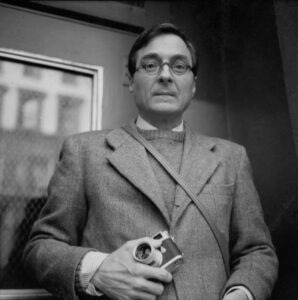
William Eggleston
Shared publisher: Museum of Modern Art, Yale University Press
26 photobook(s) in the library
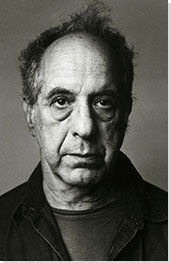
Robert Frank
Shared publisher: Museum of Modern Art, Yale University Press
19 photobook(s) in the library

Stephen Shore
Shared publisher: Museum of Modern Art
14 photobook(s) in the library
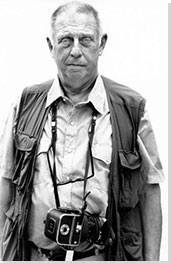
Lee Friedlander
Shared publisher: Museum of Modern Art
13 photobook(s) in the library
COMMUNITY DISCUSSION
Discuss this entry
Share interpretations, reading notes, and source-aware questions. For catalog corrections, use the feedback form below.
No discussion yet. Start the first focused conversation.
Sign in to join the discussion.
Optionally receive a digest when related photobooks are added to the catalog.
See something incorrect? Sign in to suggest a correction or report an issue.