Photographer
Issei Suda
Japanese photographer known for black-and-white work combining street observation and cultural rituals.
English-language encyclopedia entry on Issei Suda (24 April 1940 – 7 March 2019), the Japanese photographer known for black-and-white pictures that move between street observation and vernacular ritual. It sets out the basic biographical frame: birth in Tokyo, training at the Tokyo College of Photography, early studio and editorial work, and the role of stage photographer for Shūji Terayama’s Tenjō Sajiki company. It also lists the photobooks that built his reputation, including Fūshi Kaden (1978), and notes his teaching and the wider recognition his work received late in life. Used here only as a general orientation to his life, books and standing.
Japanese-language encyclopedia entry giving the fullest chronology of Suda’s career found in reference sources: birth in Tokyo, graduation from the Tokyo College of Photography, work as an assistant to the photographer Shōji Ōtake, and photography for the Tenjō Sajiki theatre troupe. It records his major publications, including Fūshi Kaden and later series of books, his awards, and the sequence of solo and group exhibitions in Japan and abroad, together with his death on 7 March 2019. Useful as a dated timeline of milestones and for verifying book titles and institutional affiliations.


Selected Works & Key Projects
A source-backed introduction to individual photographs and significant bodies of work.
Key projects
Project · 1971–1977
Fushi Kaden
Fushi Kaden is Suda’s sustained 1971–77 photographic project, later published as a book in 1978. Museum records identify individual gelatin-silver photographs from the series in places including Shizuoka, Tokyo, Gunma, Akita, Yamagata, and Tochigi. The project matters because it earned Suda the Photographic Society of Japan Newcomer’s Award and became a central, repeatedly collected body of work: Tokyo Photographic Art Museum specifically names it among works acquired for priority collection. It merits selection as the clearest institutionalized expression of Suda’s travel-based engagement with Japanese festivals, places, and people.
View source ↗Project · 1996
Human Memory (Ningen no Kioku)
Human Memory is the title of Suda’s 1996 monograph, from which Miyako Yoshinaga selected approximately twenty-five monochrome prints for a 2020 memorial exhibition. The gallery states that the book won the Ken Domon Award. Its significance is project-level rather than tied to one image: the selected photographs frame Suda’s recurring attention to strangers and everyday scenes, and the exhibition text connects his photographs to fragmentary, emotionally charged memory in people, materials, and nature. It merits selection because an award-winning monograph and a posthumous exhibition together document its major place in assessing Suda’s legacy.
View source ↗Selected photographs
1976 · Ginzan Onsen, Yamagata, Japan
Ginzan Onsen, Yamagata, from the series Fushi Kaden
Ginzan Onsen, Yamagata is a 1976 gelatin-silver print from Fushi Kaden in SFMOMA’s collection. The museum records its acquisition in 2011 through the gift of Daniel Greenberg and Susan Steinhauser. It merits selection because its exact title identifies a specific Yamagata destination within the geographically wide-ranging project, allowing the catalogue to register the series as a body of individual encounters rather than a generic account of travel. The work also has documented institutional visibility beyond this object page: the National Museum of Modern Art, Tokyo included a Ginzan Onsen photograph from Fushi Kaden in a collection presentation.
Work source ↗1977 · Yanaka, Taito-ku, Tokyo, Japan
Yanaka, Taito-ku, Tokyo, from the series The Memory of Man (Ningen no Kioku)
SFMOMA identifies this as a 1977 gelatin-silver photograph from The Memory of Man (Ningen no Kioku), acquired in 2015 through the Accessions Committee Fund. It merits selection because it supplies a dated, place-specific object for a project otherwise known through Suda’s 1996 award-winning Human Memory monograph. The individual record establishes that the series includes an image made in Yanaka, Taito-ku, Tokyo, while the project’s later book and memorial exhibition frame Suda’s attention to strangers and ordinary scenes as a sustained concern. The work therefore links a single Tokyo photograph to a larger, institutionally recognized body of images.
Work source ↗-
1940
Career milestone
Born in Tokyo
Issei Suda was born in Tokyo on 24 April 1940. His childhood coincided with war, defeat, occupation and the beginning of Japan's rapid economic growth, circumstances that shaped the ordinary streets, festivals and rituals he would later photograph throughout a five-decade career.
Source: Wikipedia (English) Verified Sep 29, 2026
-
1962
Education
Graduates from Tokyo College of Photography
Suda completed his studies at Tokyo College of Photography (Tokyo Sogo Shashin Senmon Gakko) in 1962. The school's practical, craft-oriented training gave him a technical grounding in black-and-white printing that remained visible in the dense, carefully toned prints of his mature work.
Source: Wikipedia (English) Verified Sep 29, 2026
-
1967–1970
Career milestone
Photographer for Terayama Shuji's theatre company Tenjo Sajiki
From 1967 to 1970 Suda served as chief photographer for Tenjo Sajiki, the avant-garde theatre company of Terayama Shuji. Recording rehearsals and performances placed him inside Japan's experimental counterculture and taught him to work fast, in available light, among performers and spectators rather than at a safe distance.
Source: Wikipedia (English) Verified Sep 29, 2026
-
1971
Career milestone
Becomes an independent photographer
After leaving the theatre company, Suda began working independently around 1971, supporting himself partly through commercial and editorial assignments while pursuing his own projects. This independence allowed him to choose his own subjects: provincial festivals, small-town streets and the ambiguous encounters that define his personal work.
Source: Wikipedia (English) Verified Sep 29, 2026
-
1976
Exhibition
'Fushi Kaden' presented at Ginza Nikon Salon
In 1976 Suda presented the series Fushi Kaden at the Nikon Salon in Ginza. Photographed largely in the Tohoku region, the pictures follow itinerant performers and rural festivals, treating folk custom as living theatre rather than folklore documentation. The presentation established the subject matter and the detached, quietly strange gaze that define his reputation.
Source: Wikipedia (Japanese) Verified Sep 29, 2026
-
1977
Award
Japan Photographic Society Newcomer Award
Suda received the Japan Photographic Society's Newcomer Award in 1977 for the work shown as Fushi Kaden. The prize confirmed his standing within the Japanese photography establishment at a moment when documentary and personal expression were being renegotiated, and it helped secure publishers and exhibition venues for the series.
Source: Wikipedia (Japanese) Verified Sep 29, 2026
-
1978
Photobook
'Fushi Kaden' published by Asahi Sonorama
Asahi Sonorama issued the photobook Fushi Kaden in 1978, turning the earlier presentation into a sequence lasting beyond the individual frame. The book is the principal reason the project is remembered: it demonstrated how Suda's ritual photographs gain meaning through editing and order, and it became a reference point for later Japanese photographers drawn to folk subject matter.
Source: Wikipedia (Japanese) Verified Sep 29, 2026
-
1996
Photobook
'Human Memory' (Ningen no Kioku) published
In 1996 Suda published Human Memory, a body of work made in the mid-1990s that turns away from festival performance toward ordinary urban life. Anonymous passers-by, shopfronts and passing gestures are photographed so that everyday scenes acquire the charged, slightly estranged quality of memory. It marks the mature phase of his practice and shows his method applied to the contemporary city.
Source: Wikipedia (Japanese) Verified Sep 29, 2026
-
1996
Award
Ina Nobuo Award for 'Human Memory'
Suda received the Ina Nobuo Award, given in honour of the critic Ina Nobuo, for Human Memory. The award recognised a photographer already two decades into his career, and it helped reposition his quiet, observational work as a serious critical achievement rather than a specialist pursuit of folk subject matter.
Source: Wikipedia (Japanese) Verified Sep 29, 2026
-
2019
Career milestone
Dies at 78
Suda died on 7 March 2019 at the age of 78. By then his long-neglected early and middle-period work had been reissued and exhibited internationally, and his photographs of festivals, streets and strangers were widely discussed as a bridge between Japanese folk tradition and the restless energy of the modern city.
Source: Wikipedia (English) Verified Sep 29, 2026
Collection
San Francisco Museum of Modern Art (SFMOMA)
SFMOMA’s artist record lists seventeen works by Issei Suda in its collection. The holdings include photographs from Fushi Kaden, The Memory of Man (Ningen no Kioku), and Monogusa Shui, with dated entries ranging from 1971 to 1981.
Verified 2026-09-29SFMOMA — Issei Suda
Collection
Museum of Fine Arts, Houston
The Museum of Fine Arts, Houston collection database returns seven photographs by Suda in its Photography department. The listed works include Miura Peninsula, Kanagawa Prefecture; Nishimonai, Akita Prefecture; Annaka, Gunma Prefecture; Ginzan Onsen, Obanazawa, Yamagata Pref.; two Chiba Prefecture photographs; and Trance.
Verified 2026-09-29The MFAH Collections — Suda Issei
Collection
The National Museum of Modern Art, Tokyo
The National Museum of Modern Art, Tokyo records Suda’s 1975 gelatin-silver print Kanda, Tokyo from Fushi Kaden as collection object Ph1072. Its linked artist list also identifies additional Fushi Kaden photographs in the museum’s holdings, including images made in Shizuoka, Tokyo, Kanagawa, Gunma, Gifu, Saitama, and Yamanashi.
Verified 2026-09-29National Museum of Art, Japan — Kanda, Tokyo from Fushi Kaden
Collection
Tokyo Photographic Art Museum
Tokyo Photographic Art Museum’s collection search records an untitled 1981 gelatin-silver print by Suda from the series Monogusa Syui. The object is catalogued as a domestic photographic work and carries accession number 10107847.
Verified 2026-09-29Tokyo Photographic Art Museum — Collection Search
Collection
Smithsonian’s National Museum of Asian Art
The Smithsonian’s National Museum of Asian Art documents eight Suda gelatin-silver prints purchased in 2017 with funds provided by the Friends of the Freer and Sackler Galleries. The named works span 1971–1979 and include photographs from SINGLE TRACK, Cries, at Ueno Park, Clipped, My Tokyo, Minyo Sanga, and Human Memory.
Verified 2026-09-29Smithsonian’s National Museum of Asian Art — Suda Issei
Collection
Yokohama Museum of Art
Yokohama Museum of Art’s collection database records Suda’s 1977 gelatin-silver print My Tokyo: Higashi-mukojima. The work entered the museum by purchase and is catalogued under photography and moving-image works by Japanese artists, with collection number 2003-PHJ-025.
Verified 2026-09-29Yokohama Museum of Art Collection Search — My Tokyo: Higashi-mukojima
Other institution
PGI
PGI maintains an artist page for Suda, presents works from Sparrow Island and Fushi Kaden there, and lists two PGI exhibitions: Temptation (September 4–October 5, 2013) and Sparrow Island (September 1–October 29, 2011). The page identifies PGI as a gallery.
Verified 2026-09-29PGI — Issei Suda
Other institution
Experimental Theatre Laboratory Tenjo Sajiki
PGI’s biographical note states that Suda worked as the exclusive photographer for Experimental Theatre Laboratory Tenjo Sajiki, the troupe led by Shuji Terayama, from 1967 through 1970. This is a documented early professional connection between his photographic practice and the theatre group.
Verified 2026-09-29PGI — Issei Suda
Suda Issei (opens a new site)
This Smithsonian National Museum of Asian Art collection feature introduces six gelatin silver prints made in Japan from 1971 to 1978. It characterizes Suda’s work through off-kilter portraits, close attention to pattern, and lighting that can produce mystery or surprise. Individual collection entries identify works from Cries, at Ueno Park, SINGLE TRACK, Clipped, My Tokyo, and Minyo Sanga.
Issei Suda: My Japan (opens a new site)
FOMU’s archive for its 2021 exhibition presents the museum’s first retrospective of Suda outside Japan. It situates his nearly sixty-year oeuvre in rural festivals and Tokyo street life, noting his use of square formats and high-contrast black-and-white printing. The record also identifies Fushi Kaden as his first photobook, published in 1978.
Suda Issei: nagi no hira — fragments of calm (opens a new site)
The Tokyo Metropolitan Museum of Photography’s exhibition record surveys fifty years of Suda’s practice. It identifies Fushi Kaden, Monogusa Syui, and Tokyo kei among works acquired or prioritized for the museum collection, and describes photographs that move between ordinary life and an uncanny, alternate-feeling space. The page also records exhibition lectures involving Suda.
In Memory of Issei Suda (opens a new site)
Zen Foto Gallery publisher Mark Pearson recalls accompanying Suda while he photographed Kamagasaki for Kamagasaki Magic Lantern. The essay documents later book projects including Tokyokei and The Mechanical Retina on My Fingertips, describing the latter as Suda’s final book and noting that it drew on more than 700 images printed from Minox negatives.
Issei Suda’s Theater of the Everyday (opens a new site)
Marco Bohr’s TIME essay examines Suda’s transformation of ordinary public encounters into staged-looking photographic situations. It links the deliberate square-format black-and-white pictures to his early work as a theatre photographer and discusses Fushi Kaden as a project engaging traditional Japanese performance through festival imagery and everyday street scenes.

Raymond Meeks
Shared publisher: Chose Commune, MACK
7 photobook(s) in the library
Irina Rozovsky
Shared publisher: Chose Commune, MACK
3 photobook(s) in the library

Nick Waplington
Shared publisher: MACK
18 photobook(s) in the library
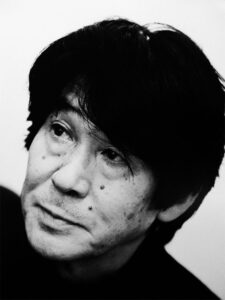
Daido Moriyama
Shared publisher: MACK
15 photobook(s) in the library
COMMUNITY DISCUSSION
Discuss this entry
Share interpretations, reading notes, and source-aware questions. For catalog corrections, use the feedback form below.
No discussion yet. Start the first focused conversation.
Sign in to join the discussion.
Optionally receive a digest when related photobooks are added to the catalog.
See something incorrect? Sign in to suggest a correction or report an issue.