Photographer
Kikuji Kawada
Kikuji Kawada (born 1933 in Ibaraki Prefecture, Japan) is a Japanese photographer whose atmospheric, symbolically charged images have become touchstones of postwar Japanese visual culture. He did not train in an art academy; he graduated from Rikkyo University’s Faculty of Economics and joined the publisher Shinchosha in 1955. That route through the commercial and editorial world gave his photography a literary consciousness and a feeling for sequence that later distinguished him from peers who approached the medium primarily as document or spontaneous street record.
Kawada’s visual language turns from transparency toward density. Rather than explaining an event, his photographs allow emblems—walls, stains, skies, maps, fragments of national memory—to accumulate meaning through juxtaposition and sequencing. The approach is often described as poetic and symbolically charged, and it shares with other postwar Japanese photographers a desire to reckon with history rather than simply record surfaces. What sets his work apart is its patience and inwardness: images become less like evidence than like half-remembered dreams, drawing the viewer into a slow negotiation with memory and loss.
His defining work is Chizu / The Map, begun in 1960 and published in 1965 after five years of labor. It is a landmark photobook and a searing humanitarian statement about the profound effects of the nuclear bombings and the larger traumas of wartime and postwar Japan. An earlier version of the series was shown in a solo exhibition in late 1961. The book mixes fragmentary textures, shadows, surfaces, and symbolic residues of the atomic landscape, and it is often cited as one of the most influential works in modern Japanese photography. The Museum of Fine Arts, Boston, has acquired materials related to Chizu, underscoring its standing as a foundational object rather than a transient exhibition project.
Kawada’s long career connects him to a cohort of like-minded Japanese photographers who helped redefine what photography could be from the 1950s onward. He participated in a generational shift away from simple pictorialism or photojournalism toward a more subjective, conceptual, and book-based practice. His work came to attention through gallery exhibitions and later through international presentations, with Aperture discussing the arc of his career and the making of The Map. Galleries such as PGI in Tokyo and Michael Hoppen Gallery in London have continued to present his photographs, while archives preserve early series, negatives, and contact sheets that trace how his images were made and edited.
For photobook collectors, Kawada matters because The Map is not simply a collection of pictures but a carefully constructed argument in book form. Its sequencing, pacing, and refusal of easy narrative make it a reference point for understanding the photobook as an art medium. Later essays, conversations, and museum acquisitions have reinforced its historical importance, yet the work remains compelling precisely because its symbolism stays open rather than didactic. A useful entry point is to begin with Chizu / The Map, then consult the interviews and exhibition histories that clarify how its deceptively quiet images carry an enormous charge of national memory, mourning, and transformation.
〔PBL-BIO/2〕
Kikuji Kawada (born 1933) is a Japanese photographer associated with the VIVO cooperative. He began his career as a photojournalist and later became known for his 1965 photobook ‘The Map’ (Chizu), which merged documentary and abstract imagery to address the trauma of Hiroshima and Nagasaki. The book, characterized by heavy grain, burns, and scratches on prints, is widely regarded as a landmark in postwar Japanese photography.


Selected Works & Key Projects
A source-backed introduction to individual photographs and significant bodies of work.
Key projects

Project · 1960–1965
The Map
Completed as photographs from 1960–65 and published as a photobook in 1965, The Map assembles evidence of war and its afterlife: the Hiroshima Atomic Bomb Dome, military structures around Tokyo Bay, soldiers’ possessions, and other charged remnants. Its achievement lies in replacing a linear account with metaphorical sequencing and abstraction. The book’s deliberately layered design, made with designer Kōhei Sugiura, directs attention from nuclear destruction to its continuing legacy. It received intense attention on publication, established Kawada’s reputation, and became a major reference point in postwar photobook history.
View source ↗Project · 1971
Sacré Atavism
Sacré Atavism is a major early Kawada project issued in book form in 1971 after work made during journeys in Europe and Southeast Asia in the later 1960s. MoMA’s 1974 catalogue characterizes the resulting photographs as an exploration of the grotesque, distinguishing the project from the historically specific postwar materials of The Map. Its selection is warranted by its place as Kawada’s second named book in that museum catalogue and by its earlier solo exhibition history. Individual prints from the series are preserved by the Tokyo Photographic Art Museum, confirming its continuing institutional presence.
View source ↗
Project · 1972
Los Caprichos
Los Caprichos is an ongoing body of work whose title first appeared in photographs published in Camera Mainichi in 1972. Its title acknowledges Francisco de Goya’s socially critical print series; Kawada subsequently continued the project through Japanese photography magazines, with its first dedicated exhibition at PGI in Tokyo in 1986. In 1998 it was placed beside The Last Cosmology and Car Maniac in The Globe Theater, identified as Kawada’s Catastrophe Trilogy. Recent installments extend the project into photographs of city scenes, clouds, and the moon, demonstrating how Kawada has kept revisiting social unease through new photographic circumstances.
View source ↗Selected photographs

1960
The Japanese National Flag
This gelatin silver print, dated 1960–65, is held in MoMA’s Photography collection as one of the institution’s ten Kawada works available online. MoMA included it among the works associated with Kawada’s presence in New Japanese Photography in 1974. The title identifies a national emblem, and that direct motif makes the photograph a particularly useful single-work entry for approaching Kawada’s sustained engagement with postwar Japanese memory. Its selection is supported by its museum collection status, its exhibition record, and its placement within his concentrated early-1960s output.
Work source ↗
1960 · Atomic Bomb Memorial Dome, Hiroshima, Japan
Ceiling, Atomic Bomb Memorial Dome
MoMA catalogues this 1960–65 gelatin silver print as Ceiling, Atomic Bomb Memorial Dome and records it as a gift of the artist to its Photography collection. The image belongs to the group of Kawada works identified in MoMA’s 1974 New Japanese Photography exhibition. It merits individual selection because the Atomic Bomb Dome is explicitly named in the title and because ceiling stains from the building were central to the construction of The Map in PGI’s account. The photograph therefore offers a concentrated view of the material trace through which the larger project addresses war memory.
Work source ↗
1960 · Tokyo Bay, Japan
Ruin of a Stronghold, Tokyo Bay
Ruin of a Stronghold, Tokyo Bay is a 1960–65 gelatin silver print in MoMA’s Photography collection. Its title specifies a military ruin at Tokyo Bay, while the museum’s collection history identifies the work with Kawada’s 1974 appearance in New Japanese Photography. The photograph merits selection because it supplies a distinct architectural and military register within Kawada’s early work, rather than repeating the Hiroshima-centered motif represented by other Map photographs. In the larger project context, the ruined stronghold belongs to the material traces of war that Kawada juxtaposed against other postwar signs and relics.
Work source ↗
1960 · Atomic Bomb Memorial Dome, Hiroshima, Japan
Tourists' Scribblings, Atomic Bomb Memorial Dome
MoMA records Tourists' Scribblings, Atomic Bomb Memorial Dome as a 1960–65 gelatin silver print in its Photography collection and identifies it with the 1974 New Japanese Photography exhibition. The title is significant: it locates the photograph not simply at an atomic-bomb memorial but at the surface where later visitors left marks. This makes the work especially useful for considering Kawada’s attention to how historical sites accumulate subsequent human traces. Within the Map material, it complements the photographs of structural damage by making the memorial’s continuing public encounter part of the photographic subject.
Work source ↗1969 · Tokyo, Japan
Artificial Moon Trail, Tokyo
Artificial Moon Trail, Tokyo is a gelatin silver print made in 1969 and printed in 1989, held by The Metropolitan Museum of Art. The Met’s record gives Tokyo in the title, identifies the work as a photograph, and notes that it entered the collection through the Twentieth-Century Photography Fund in 2015. It merits selection as a readily identifiable museum-held work from immediately after Kawada’s early-1960s output: its title shifts attention to an urban, artificial celestial phenomenon. The print also demonstrates that major collections preserve Kawada photographs beyond the material represented in The Map.
Work source ↗-
1955
Education
Graduated from Rikkyo University
Kawada graduated from the Department of Economics at Rikkyo University in 1955. This documented educational milestone immediately preceded his professional entry into photography at the publisher Shinchosha.
Source: PGI — Kikuji Kawada CV Verified Sep 4, 2026
-
1955–1959
Career milestone
Staff photographer at Shinchosha
Kawada worked as a staff photographer for Shinchosha from 1955 to 1959. His departure from the publisher in 1959 marked the move to freelance practice recorded by the Kyoto City KYOCERA Museum of Art.
Source: Kyoto City KYOCERA Museum of Art — Kikuji Kawada The Map / Visions of the Invisible Verified Sep 4, 2026
-
1959–1961
Career milestone
Co-founded the VIVO photographic collective
In 1959, Kawada became a freelance photographer and co-founded the VIVO collective with Eikoh Hosoe, Ikko Narahara, Shomei Tomatsu, Akira Sato, and Akira Tanno. The museum identifies VIVO as active from 1959 to 1961, placing Kawada within a defined postwar collaborative formation.
Source: Kyoto City KYOCERA Museum of Art — Kikuji Kawada The Map / Visions of the Invisible Verified Sep 4, 2026
-
August 6, 1965
Photobook
Published Chizu / The Map
Kawada published Chizu / The Map on August 6, 1965, twenty years after Hiroshima’s destruction. The MFA describes it as a humanitarian statement on the effects of nuclear bombings and notes that it brought together 87 photographs. The book became the central early work through which Kawada addressed war’s scars and memories.
Source: Museum of Fine Arts, Boston — Acquisition press release Verified Sep 4, 2026
-
March 27–May 19, 1974
Exhibition
New Japanese Photography at MoMA
Kawada participated in New Japanese Photography at the Museum of Modern Art, New York, from March 27 to May 19, 1974. MoMA’s artist record lists the exhibition among presentations of his work at the museum.
Source: The Museum of Modern Art — Kikuji Kawada artist page Verified Sep 4, 2026
-
March 29–May 25, 2003
Exhibition
Theatrum Mundi at Tokyo Metropolitan Museum of Photography
Tokyo Metropolitan Museum of Photography presented Kikuji Kawada: Theatrum Mundi from March 29 to May 25, 2003. The exhibition followed Kawada’s creative life across works including The Map, Los Caprichos, Sacre Atavism, and The Last Cosmology, while also including newer projects named by the museum.
Source: Tokyo Metropolitan Museum of Photography — Kikuji Kawada: Theatrum Mundi Verified Sep 4, 2026
-
2004
Award
Minister of Education’s Art Encouragement Prize
Kawada received the Minister of Education’s Art Encouragement Prize in 2004. The Tokyo Photographic Art Museum’s exhibition material records the award in its biographical account of the photographer.
Source: Tokyo Photographic Art Museum — State of the Artist exhibition worklist Verified Sep 4, 2026
-
August 4, 2022
Collection acquisition
MFA Boston acquired the Chizu / The Map archive
In 2022, the Museum of Fine Arts, Boston announced the acquisition of the 87 photographs in Chizu / The Map, their negatives, Kawada’s binders of contact sheets and notes, and a rare first edition of the book. The museum states that these materials were acquired directly from Kawada.
Source: Museum of Fine Arts, Boston — Acquisition press release Verified Sep 4, 2026
-
April 13–May 12, 2024
Exhibition
The Map / Visions of the Invisible
Kyoto City KYOCERA Museum of Art presented Kikuji Kawada The Map / Visions of the Invisible during KYOTOGRAPHIE International Photography Festival 2024. The exhibition ran from April 13 to May 12, 2024, in the museum’s Main Building South Wing, second floor.
Source: Kyoto City KYOCERA Museum of Art — Kikuji Kawada The Map / Visions of the Invisible Verified Sep 4, 2026
Other institution
VIVO
Kawada was a founding member of VIVO, a cooperative of Japanese photographers active from 1959 to 1961. The group championed subjective documentary photography and played a key role in postwar Japanese photography. Membership in VIVO is a documented part of Kawada's career.
Verified 2026-09-04Wikipedia
Collection
Museum of Modern Art
The Museum of Modern Art in New York holds examples of Kawada's work, including prints from his photo book 'The Map'. MoMA's collection includes works by significant 20th-century photographers, making it a key venue for the international reception of Kawada's art.
Verified 2026-09-04Wikipedia
Collection
J. Paul Getty Museum
The J. Paul Getty Museum in Los Angeles holds Kawada's prints, reflecting his inclusion in the museum's collection of Japanese photography. The Getty's acquisition indicates institutional recognition of Kawada's contribution to the medium.
Verified 2026-09-04Wikipedia
Collection
Tokyo Photographic Art Museum
The Tokyo Photographic Art Museum (formerly the Tokyo Metropolitan Museum of Photography) holds substantial holdings of Kawada's work, preserving his legacy in his home country. This institution is central to the study of modern Japanese photography.
Verified 2026-09-04Wikipedia
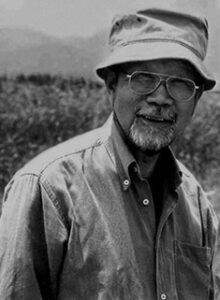
Collaboration
Shomei Tomatsu
As another co‑founder of VIVO, Kikuji Kawada and Shomei Tomatsu shared a commitment to confronting the complexities of post‑war Japan. Their collaborative relationship within VIVO, alongside other members, fostered a cross‑pollination of ideas that made the collective a cornerstone of modern Japanese photography.
Verified 2026-09-04Wikipedia – Shomei Tomatsu
Kikuji Kawada – Wikipedia (opens a new site)
A comprehensive biographical entry on Kikuji Kawada, the Japanese photographer born in 1933. It covers his career beginnings as a staff photographer for Shinseiki magazine, his involvement with the VIVO collective, and the creation of his landmark 1960 photobook 'Chizu' (The Map), which was inspired by his visit to Hiroshima in 1955 and his encounter with the victims of the atomic bombing. The article also outlines his later works, awards, and influence on postwar Japanese photography.
COMMUNITY DISCUSSION
Discuss this entry
Share interpretations, reading notes, and source-aware questions. For catalog corrections, use the feedback form below.
No discussion yet. Start the first focused conversation.
Sign in to join the discussion.
Optionally receive a digest when related photobooks are added to the catalog.
See something incorrect? Sign in to suggest a correction or report an issue.