Photographer
Martin Schoeller
Martin Schoeller, born in Germany in 1968, is a New York-based portrait photographer best known for a sustained practice of extreme close-up portraiture. His career belongs to the late-twentieth- and early-twenty-first-century culture of editorial photography, in which magazine commissions could circulate a recognizable visual signature to a mass audience. Schoeller has photographed prominent public figures as well as people without celebrity status, using the same tightly controlled format to question how fame, familiarity, and social position shape the way a face is read.
His defining visual language is direct and deliberately repetitive: the sitter’s face fills the frame, the viewpoint remains frontal, and sharp detail suppresses many of the atmospheric devices traditionally used to flatter or dramatize a subject. This consistency makes minute variations in gaze, skin, expression, and posture unusually consequential. Unlike environmental portraitists, who construct identity through clothing, location, and narrative props, Schoeller removes most contextual cues. The method can feel clinical because of its technical precision, yet it also produces moments of uncertainty and vulnerability. Its apparent neutrality should not be mistaken for an absence of authorship; framing and lighting impose a strong system through which every sitter is seen.
The central body of work is “Close Up,” developed from 1998 onward. By applying one visual template across celebrities and ordinary people, the series turns individual portraits into a comparative archive. Its significance lies less in any single famous subject than in the cumulative tension between equality of treatment and persistent differences in how viewers recognize—or fail to recognize—the faces. Schoeller’s broader editorial portrait practice extends this concern: recognizable figures enter the same unforgiving field of detail as less familiar sitters, while commissioned photography becomes a platform for examining contemporary visibility. The 2015 MediaStorm film “Close Up” provides a useful audiovisual introduction to this approach and its range of subjects.
Schoeller’s historical position rests on the way he translated typological consistency into the language of celebrity portraiture. Working within editorial culture while producing images suited to galleries and serial presentation, he helped make the close, frontal face a recurring form of contemporary visual culture. The format is accessible but not uncomplicated: it can suggest democratic equivalence, even as a viewer’s prior knowledge continues to privilege some subjects over others. That unresolved contradiction gives the work more critical weight than a collection of famous faces alone.
Photobook collectors should pay attention to how Schoeller’s photographs change when encountered sequentially rather than as isolated magazine images. Repetition becomes the organizing principle: pacing, pairings, scale, cropping, and reproduction determine whether the faces read as personalities, specimens, or members of a provisional social cross-section. Because the supplied evidence does not establish particular book editions or publishing details, the official portfolio and the sustained “Close Up” project are the safest entry points. They clarify why any book-length treatment must be judged not only by image selection and printing fidelity, but by how its design manages similarity and difference across the sequence.
〔PBL-BIO/2〕



Nan Goldin
Shared publisher: Steidl, teNeues
17 photobook(s) in the library
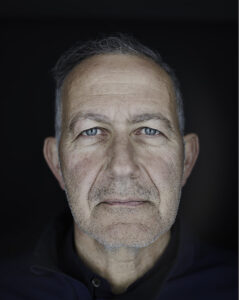
Nadav Kander
Shared publisher: Steidl, teNeues
6 photobook(s) in the library
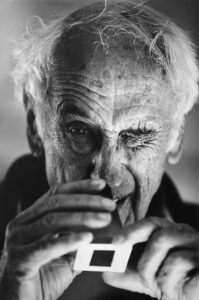
Thomas Hoepker
Shared publisher: Steidl, teNeues
6 photobook(s) in the library
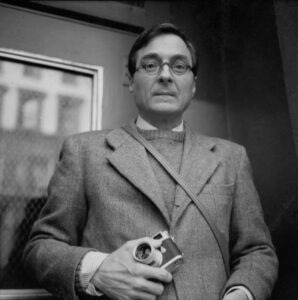
William Eggleston
Shared publisher: Steidl
26 photobook(s) in the library
COMMUNITY DISCUSSION
Discuss this entry
Share interpretations, reading notes, and source-aware questions. For catalog corrections, use the feedback form below.
No discussion yet. Start the first focused conversation.
Sign in to join the discussion.
Optionally receive a digest when related photobooks are added to the catalog.
See something incorrect? Sign in to suggest a correction or report an issue.