Photographer
Nobuyoshi Araki
Nobuyoshi Araki (born 1940 in Tokyo) is one of Japan’s most prolific and controversial photographers, known professionally as Arākii. Over a career spanning six decades, he has published more than 500 books and helped redefine the boundaries between fine art, eroticism, and autobiography.
Araki studied film and photography at Chiba University from 1959 to 1963 before working at the major advertising firm Dentsu, where he met his future wife, Yōko Aoki. His early self‑published Xeroxed Photo Albums and his intimate photobook “Sentimental Journey” established the diaristic, confessional style that would become central to his work. After Yōko’s death in 1990, he continued the series with “Winter Journey,” creating one of the most emotionally raw photographic diaries of the 20th century.
Throughout his career, Araki has explored themes of sexuality, kinbaku (Japanese rope bondage), mortality, love, flowers, and the changing city of Tokyo. His autobiographical “I‑photography” connects private life and artistic practice, often blurring the lines between documentation and performance. His work has also included celebrity portraiture, notably of Björk and Lady Gaga.
Araki has received the Niépce Prize (2001) and exhibited internationally at institutions such as Fondation Cartier, Centre Pompidou, the Museum of Sex in New York, the Hara Museum, and many others. His photographs are held in major museum collections worldwide, including Tate, SFMOMA, MoMA, and the Stedelijk Museum. Despite controversy and frequent censorship in Japan, Araki remains one of the most influential figures in contemporary photography.
Born on May 25, 1940 in Tokyo, Nobuyoshi Araki studied photography and cinema at Chuo University before working as a commercial photographer at the ad agency Dentsu. His 1971 self-published book Sentimental Journey, documenting the honeymoon and marriage to his wife Yoko, established an intensely autobiographical mode. After Yoko’s death from cancer in 1990, his Winter Journey series continued that diary-like practice. He became internationally known for explicit Tokyo erotica and bondage imagery as well as street portraits, and has released hundreds of photo books, making him one of Japan’s most prolific photographers.

Araki. 45th Ed.

Araki: Impossible Love: Vintage Photographs

Photo-Crazy A

Hi-Nikki (Non-Diary Diary)

Sentimental Journey

Araki. Tokyo Lucky Hole

Araki by Araki

Nobuyoshi Araki: Self, Life, Death

Love and Death

Tokyo Lucky Hole

Araki by Araki: The Photographer's Personal Selection 1963–2002

Araki (Limited Collector's Edition)

Chiro My Love

Araki: Tokyo Lucky Hole
Selected Works & Key Projects
A source-backed introduction to individual photographs and significant bodies of work.
Key projects

Project · 1971
Sentimental Journey
Sentimental Journey began as Araki’s self-published 1971 photobook and is identified by the Tokyo Photographic Art Museum as the starting point of his “I-photographs.” SFMOMA records Araki’s own description of it as a honeymoon photobook, while the museum’s later exhibition situated the work within a lifelong photographic journey centered on Yoko. This project merits selection because it establishes the autobiographical, close-to-life mode that the museum describes as central to Araki’s practice, rather than functioning simply as an isolated group of prints.
View source ↗
Project · 1989–1990
Winter Journey
Winter Journey is represented in the Toyota Municipal Museum of Art collection by sixteen monochrome baryta-paper prints dated 1989–90. The museum describes the series as a close record of everyday life with Yoko, her incurable illness, hospitalization, and the period through the funeral; its dated pocket-camera images include hospital-room scenes, views from the hospital, the cat at home, and a flower said to have reopened at the end. It merits selection for making a sustained sequence from ordinary incidents, treating private loss as photographic time rather than as a single memorial image.
View source ↗
Project · 1980
Pseudo-Reportage
Pseudo-Reportage is a 1980 project in which Araki directly addressed prevailing documentary approaches in Japanese photography. SFMOMA states that the related 1980 photobook juxtaposes quasi-documentary pictures with misleading captions, foregrounding problems of photographic truthfulness. This makes the project significant at the level of photographic method: its challenge is not merely the subject matter of any one picture, but the friction between an apparently evidentiary image and text that disrupts confidence in it. The project is therefore a focused selection from Araki’s wider experiments with photography’s latent fictionality.
View source ↗Selected photographs

1971
Untitled from “Sentimental Journey, Winter Journey”
MoMA catalogues this 1971 work as an untitled gelatin silver print from Sentimental Journey, Winter Journey, measuring 26.7 × 40.5 cm. The collection record does not assign an individual descriptive title, so its value should be understood as that of a specific sheet within a larger photobook-derived body of work rather than as a separately named image. It merits selection because it gives the catalogue a documented museum-held example from the project’s 1971 component, with its medium, dimensions, acquisition credit, and object number preserved in a public collection record.
Work source ↗
1976
Untitled from “My Love, Yoko”
MoMA identifies this object as an untitled 1976 gelatin silver print from My Love, Yoko. At 40.4 × 26.8 cm, it is a vertical-format work in the museum’s Photography Department, acquired through the generosity of Toshio Hara. Because the institutional record names the series but supplies no separate image title or curatorial account, the strongest documented reason for selecting it is representational: it is a precisely identified museum collection example from a Yoko-titled body of work. Its catalogue presence keeps the distinction clear between a series designation and an individually untitled photograph.
Work source ↗
1984
Untitled from “Nostalgic Night”
This is a 1984 gelatin silver print catalogued by MoMA as Untitled from Nostalgic Night. The museum records a vertical format of 40.4 × 26.9 cm, acquisition through the generosity of Takeo Obayashi, and placement in its Photography Department. The work is worth selecting as a specific, verifiable object rather than as a generalized illustration of Araki’s 1980s production: its series affiliation, date, material form, dimensions, and collection history are all documented. Since MoMA provides no individual subtitle or interpretive note, no more particular scene or meaning is assigned here.
Work source ↗1980
Pseudo-Reportage
SFMOMA holds this 1980 Pseudo-Reportage as a gelatin silver print, 29.5 × 40.6 cm, purchased through its Accessions Committee Fund in 2007. It is a particularly useful individual selection because the museum’s artist essay explains the project’s operation: quasi-documentary photographs were paired with misleading captions in the related 1980 photobook, making photographic veracity its subject. This print thus stands for a project-level investigation while remaining a separately catalogued object. Its significance lies in testing the authority conventionally granted to documentary-looking photographs and their accompanying text.
Work source ↗2011
KaoRi by 20 x 24 instant film
SFMOMA catalogues KaoRi by 20 x 24 instant film as a 2011 photograph by Araki, realized as a color offset lithograph measuring 86.6 × 55.9 cm. It entered the museum in 2014 as a gift of the Kurenboh Collection. This work merits inclusion as a documented later example that is materially distinct from the gelatin silver prints represented elsewhere in this selection. The title itself identifies 20 × 24 instant film, while the catalogue specifies the exhibited object’s offset-lithograph medium; retaining both facts avoids conflating the work’s title with its collection-record medium.
Work source ↗-
1959–1965
Education
Education at Chuo University
Araki studied photography and film at Chuo University in Tokyo, where he developed an early interest in documentary and expressive imagery. This formal training provided the technical basis for his subsequent practice as an independent photographer and shaped his unconventional approach to framing and subject matter. His academic years also exposed him to various aesthetic debates in postwar Japan, influencing a career marked by deliberate transgression of traditional photographic norms.
Source: Wikipedia Verified Sep 4, 2026
-
1964
Exhibition
First solo exhibition at Kasumigaseki Gallery
Araki's first solo exhibition at a Tokyo gallery introduced his raw and intimate style to the public. Before he became widely known, this show already revealed his penchant for capturing personal, everyday moments with an unpolished, snapshot-like aesthetic. It announced a career focused on the intersections of urban life, sexuality, and memory, diverging from prevailing tendencies toward neat, formalist photography in postwar Japan.
Source: Wikipedia Verified Sep 4, 2026
-
1965
Career milestone
Joined Dentsu advertising agency
After graduating, Araki became a photographer at Dentsu, Japan's largest advertising agency. This position enabled him to earn a living through commercial work while quietly developing his own vision on the side. The discipline of delivering corporate assignments contrasted with his simultaneous personal projects, which increasingly explored eroticism, intimacy, and the underbelly of Tokyo. This dual practice pushed him toward artistic autonomy.
Source: Wikipedia Verified Sep 4, 2026
-
1970
Career milestone
Left Dentsu to become a freelancer
In 1970 Araki quit Dentsu to devote himself fully to independent photography. This decisive move freed him from corporate constraints, allowing him to produce fiercely personal and confrontational works that would eventually polarize critics and make him one of Japan's most prolific and controversial artists. The new autonomy also enabled him to experiment with self-publishing, a practice that continued throughout his career.
Source: Wikipedia Verified Sep 4, 2026
-
1971
Photobook
Publication of Sentimental Journey
Sentimental Journey is a photobook that chronicles Araki's honeymoon with his wife Yoko. Combining candid snapshots of everyday life, travel scenes, and domestic intimacy, the work turned the private experience of marriage into a public artistic statement. It is considered a landmark of Japanese photography because it fused the snapshot aesthetic with a deeply autobiographical narrative, later influencing generations of artists drawn to diary-like photography.
Source: Wikipedia Verified Sep 4, 2026
-
1990
Series
Winter Journey
After the death of his wife Yoko in early 1990, Araki created Winter Journey, a series of photographs largely depicting the sky, clouds, flowers, and intimate objects associated with her. These images function as a visual elegy, transforming personal grief into an unmasked meditation on mortality. The series is a central piece in his oeuvre because it reveals a vulnerable, tender side beneath his provocative exterior, and has been widely reproduced in histories of Japanese photography.
Source: Wikipedia Verified Sep 4, 2026
-
1990
Photobook
Publication of Tokyo Lucky Hole
Tokyo Lucky Hole is a photobook documenting the lively, decaying world of a working-class pleasure district in Tokyo during the late 1980s. Through hundreds of gritty black-and-white photographs, Araki captures nightlife, prostitutes, and fleeting gestures of intimacy, preserving a subculture that soon vanished. The book exemplifies his ability to merge documentary observation with raw, unapologetic eroticism, making it one of his most notable and frequently studied publications.
Source: Wikipedia Verified Sep 4, 2026
-
2012
Award
Sony World Photography Awards – Outstanding Contribution to Photography
In 2012 Araki received the Outstanding Contribution to Photography prize at the Sony World Photography Awards, an international honor recognizing artists whose careers have had a lasting impact on the medium. The award acknowledged his decades-long practice, his role in expanding the boundaries of erotic and intimate photography, and his influence on younger photographers both in Japan and abroad.
Source: Wikipedia Verified Sep 4, 2026
-
2013
Exhibition
Retrospective 'Self, Life, Death' at Barbican Art Gallery
Araki's comprehensive retrospective 'Self, Life, Death' debuted at London's Barbican Art Gallery in 2013. The exhibition featured over 400 works spanning five decades, including early black-and-white images, the Sentimental Journey series, and more recent color photographs. It was a major survey that introduced his provocative yet deeply personal vision to a wide European audience, confirming his status as a central figure in contemporary photography.
Source: Wikipedia Verified Sep 4, 2026
Museum relationship
Tokyo Metropolitan Museum of Photography
The Tokyo Metropolitan Museum of Photography holds Nobuyoshi Araki's works in its permanent collection, as documented in major artist biographies. Its acquisition reflects the museum's role in preserving significant Japanese photography, including Araki's extensive exploration of urban life, eroticism, and personal memory.
Verified 2026-09-04Wikipedia (Nobuyoshi Araki)
Museum relationship
Museum of Modern Art (MoMA), New York
MoMA's collection includes prints by Nobuyoshi Araki, recognized in international art histories. His presence in MoMA underscores his global significance as a photographer who challenged conventions of representation, documenting intimate and public spheres with raw immediacy.
Verified 2026-09-04Wikipedia (Nobuyoshi Araki)
Museum relationship
San Francisco Museum of Modern Art (SFMOMA)
SFMOMA holds works by Nobuyoshi Araki, as listed in authoritative artist summaries. This museum-level representation demonstrates Araki's influence on post-war Japanese photography and his reception in Western institutions, where his provocative yet deeply humanistic imagery has been studied and exhibited.
Verified 2026-09-04Wikipedia (Nobuyoshi Araki)
Museum relationship
Tate Modern, London
Tate Modern includes Nobuyoshi Araki's photographs in its collection, per its online records and artist references. His inclusion at Tate reflects the institutional recognition of his oeuvre—spanning erotic works, cityscapes, and the deeply personal diary of his life with his late wife—as essential to contemporary photography.
Verified 2026-09-04Wikipedia (Nobuyoshi Araki)
The Incomplete Araki: Sex, Life, and Death in the Works of Nobuyoshi Araki (opens a new site)
This Museum of Sex exhibition record documents a New York survey structured around Araki’s books, prints, and Polaroids. It states that the installation included more than 400 books, 150 prints, and 500 Polaroids, alongside historical material and perspectives from collaborators, critics, fans, and fellow photographers. The record is valuable for research on institutional framing: it explicitly names obsession, ritual, kinbaku-bi, sentimentality, photographer–subject relations, and controversy as the exhibition’s subjects.
Nobuyoshi Araki (opens a new site)
SFMOMA’s artist page provides a museum-based orientation to Araki’s presence in its collection, listing works including examples from Pseudo-Reportage and Kinbaku (Bondage). It also situates him in exhibition history by noting his inclusion in Japan: A Self-Portrait at New York’s International Center of Photography in 1979. The page is particularly useful as a navigation resource: it gathers collection works, bibliography, essays, and artist-talk material in one institutional record.
Dirty pretty things (opens a new site)
Adrian Searle’s Guardian review considers Araki through a major Barbican presentation described as the most comprehensive British exhibition of his work at that time. It is a useful critical entry point because it addresses the deliberately excessive, subjective character of his photographs rather than isolating a single motif. The article frames the work’s reception through the conflicting labels attached to Araki—pornographer, monster, and genius—and identifies desire as a force driving the images.
Nobuyoshi Araki: Sentimental Journey (opens a new site)
Centro Pecci’s archival video documents its 2000 solo exhibition, Sentimental Journey, curated by Bruno Corà and Filippo Maggia in collaboration with Araki. The museum states that the exhibition combined work from the preceding fifteen years with new series made in Prato, Florence, and Naples, which were subsequently acquired by the institution. Its account also identifies photobooks, catalogues, Polaroids, city views, and Sentimental Journey as key components of the display, making the video a useful record of an early museum survey.
Nobuyoshi Araki’s “more is more” approach to photography (opens a new site)
This SFMOMA interview presents Araki explaining his preference for photographs that retain accident, ambient noise, and excess rather than aiming for visual perfection. In the transcript, he describes photography as inseparable from living and says he photographs what attracts him at a given moment, naming flowers, women, and the sky. The resource is useful because it records his own concise account of immediacy, contingency, and attraction as working principles rather than treating those qualities as later critical interpretations.
Nobuyoshi Araki: Journey through life and death (opens a new site)
In this SFMOMA interview, Araki discusses Sentimental Journey/Winter Journey, the 1991 photobook that includes photographs from his 1971 honeymoon. The accompanying transcript concentrates on his memories of photographing his wife Yoko and on the emotional importance he assigns to a seemingly spontaneous picture of her. It is a focused primary-source resource for understanding how Araki himself connected love, photographic selection, and the autobiographical material associated with this book.

Sebastiao Salgado
Shared publisher: Phaidon Press Limited, Silvana Editoriale
21 photobook(s) in the library

Steve McCurry
Shared publisher: Phaidon Press Limited, Taschen
18 photobook(s) in the library
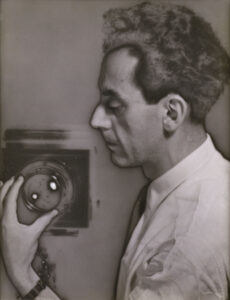
Man Ray
Shared publisher: Silvana Editoriale, Taschen
8 photobook(s) in the library

Annie Leibovitz
Shared publisher: Phaidon Press Limited, Taschen
8 photobook(s) in the library
COMMUNITY DISCUSSION
Discuss this entry
Share interpretations, reading notes, and source-aware questions. For catalog corrections, use the feedback form below.
No discussion yet. Start the first focused conversation.
Sign in to join the discussion.
Optionally receive a digest when related photobooks are added to the catalog.
See something incorrect? Sign in to suggest a correction or report an issue.