Photographer
Luigi Spina
Luigi Spina is an Italian photographer whose practice is closely bound to archaeology, classical antiquity, and the museum. Working between documentation and interpretation, he is often described by publishers and critics as a photographer of antiquity, yet his images are not neutral records of ruins. Instead, they treat ancient sites and objects as visual environments shaped by light, surface, and the traces of time. His work has appeared in exhibition contexts tracked by Artsy and in publications from Five Continents Editions, and he has been associated with projects involving Pompeii, amphitheatres, and the relationship between art and faith.
Spina’s visual language is patient, frontal, and materially attentive. He photographs frescoes, mosaics, architectural interiors, and sculptural fragments with a respect for their original settings, allowing color, texture, and spatial rhythm to carry meaning. Unlike photographers who dramatize ruins through extreme contrast or romantic decay, he often favors even light and carefully composed views that let the ancient surface remain legible. This approach is evident in his work in Pompeii, where he explores the contrast between the city’s plain exteriors and its vividly painted theatrical interiors. The result is less a travelogue than an encounter with ancient visual culture at close range.
Among his best-known publications is Inside Pompeii, issued by Five Continents Editions, a book that reflects his unusual access to the archaeological site. During pandemic lockdowns, according to Arquitectura Viva, he was able to move through Pompeii and even reside among its ruins, photographing spaces usually crowded with visitors. The book’s strength lies in its sequencing and production: large-format images of frescoes, rooms, and streets create a slow, immersive reading experience rather than a checklist of monuments. It also positions Spina within a longer tradition of Italian photography that treats cultural heritage as a living subject, not merely an inventory.
Other research has focused on amphitheatres, the civic dimension of the sacred, and links between art and faith, subjects noted in his artist profile on Artsupp. These projects show a recurring interest in how ancient architecture organizes collective experience—whether through spectacle, ritual, or daily movement. His exhibition history, documented by Artsy, includes solo and group presentations, while his recent Instagram activity points to performances and museum interventions such as Body Dialects at KMSKA Museum Night, suggesting an expanding practice that moves between still photography, installation, and live event.
For photobook collectors, Spina is worth attention because his books are not simply exhibition catalogues. They are carefully designed objects in which image scale, paper, and sequence shape how antiquity is understood. Inside Pompeii exemplifies this: it uses the photobook to slow down viewing and to give readers a sense of inhabiting spaces that are normally off-limits or overrun. A useful entry point is that volume, ideally alongside his Pompeii and amphitheatre-related projects. While claims about his influence should remain measured, his work offers a thoughtful model for photographing heritage with both documentary rigor and visual sensitivity.
Luigi Spina (born 1966 in Naples) is an Italian photographer. He specializes in photographing archaeological artifacts and classical sculptures. He has collaborated with the National Archaeological Museum of Naples (MANN), where he photographed the Farnese Collection. His work explores the relationship between photography and archaeology, using light and perspective to reveal details of ancient works. He has published several books with 5 Continents Editions. His projects include the Farnese Collection, the Toro Farnese, the Galata, and the Riace Bronzes. His photographs have been exhibited in museums and galleries. This source provides a concise biography and overview of his career.
5 Continents Editions presents Luigi Spina as an Italian photographer born in Naples in 1966. The publisher has released several of his books, including “The Farnese Collection” (2015), “The Toro Farnese” (2017), “The Galata” (2019), and “The Riace Bronzes” (2022). These volumes document his photographic investigations of classical sculpture and archaeological masterpieces. Spina’s work is characterized by a sensitive use of light and composition, aiming to evoke the original context and aesthetic power of ancient art. His publications with the publisher have received critical attention and have been exhibited at major museums. This source offers a biographical profile focused on his publishing collaborations.

CAMPI FLEGREI

Sculture di Capua antica | Sculptures from Ancient Capua

Il complesso di Santa Maria delle Anime del Purgatorio ad Arco a Napoli

CANOVA Four Tempos vol. IV

Inside Pompeii

The Riace Bronzes

CANOVA Four Tempos vol. III

CANOVA Four Tempos vol. II

SING SING Il corpo di Pompei

CANOVA Four Tempos vol. I

Mythical Diary

The Buchner Boxes
Selected Works & Key Projects
A source-backed introduction to individual photographs and significant bodies of work.
Key projects
Project · 2022–2023
The Riace Bronzes – a Journey through Images
The Riace Bronzes – a Journey through Images presented photographs by Luigi Spina at Florence’s Galleria dell’Accademia in collaboration with the National Archaeological Museum of Reggio Calabria. Conceived for the fiftieth anniversary of the bronzes’ discovery, the exhibition set Spina’s photographic interpretation alongside the Galleria’s David 140 programme. The project’s importance lies in its museum-to-museum framing: photographs allowed the Riace statues to be brought into dialogue with Michelangelo’s David without physically moving them. It merits selection as a documented example of Spina using photography to create a virtual encounter between landmark sculptures and collections.
View source ↗Project · 2023
Inside Pompeii
Inside Pompeii is Luigi Spina’s large-format photographic exploration of the archaeological city, made after he received exceptional access to the full site. The Getty describes the resulting book as a tour through Pompeii’s spaces built from Spina’s original photographs. Its significance is project-level: rather than isolate a single monument, it makes the city’s architecture, decoration, and archaeological remains the subject of a sustained visual sequence. It merits selection because this access-based survey places photography at the center of how a major ancient site can be encountered in publication form.
View source ↗Project · 2023–2024
Vis-à-vis. Tenerani Spina. Dialogo in immagini
Vis-à-vis paired twenty-five plaster portraits by the nineteenth-century sculptor Pietro Tenerani with Luigi Spina’s photographs at the Museo di Roma. For each portrait, Spina produced a diptych on black-and-white film and personally printed the photographs. The museum states that the photographs reveal details that can escape close viewing of the sculptures, while the exhibition renewed attention to the Tenerani plaster collection. This is significant as a project because its subject is not simply portraiture but the translation of sculpture into photographic looking. It merits selection for its clearly documented dialogue between historical plaster casts, close detail, and contemporary photographic interpretation.
View source ↗-
2014
Photobook
L’Ora Incerta
Spina published this personal-research photobook on the Roman Forum with Electaphoto.
Source: Reggia di Caserta Verified Sep 26, 2026
-
2019
Exhibition
The Buchner Boxes presented at the National Archaeological Museum of Naples
The Buchner Boxes series was shown at the National Archaeological Museum of Naples, the institution whose own storerooms the photographs depict. Displaying the images inside the museum that holds the crates placed contemporary photography in direct dialogue with the institution's history of collecting and storing antiquities, and gave Italian audiences access to a project otherwise known mainly through its book. It is a meaningful milestone because it shows Spina's work moving between the printed page and the museum exhibition space.
Source: Museo Archeologico Nazionale di Napoli Verified Sep 26, 2026
-
2019
Exhibition
Timeless Faces
At Centrale Montemartini, Spina presented 60 black-and-white photographs of 37 ancient sculpted faces from the Capitoline collections.
Source: Museo di Roma Verified Sep 26, 2026
-
2020
Photobook
Canova Four Tempos, Volume I
The first volume of Spina’s photographic study of Canova’s plaster models at Possagno was published by 5 Continents Editions.
Source: Museo Gypsotheca Antonio Canova Verified Sep 26, 2026
-
2020
Award
Artribune’s Best Photographer of 2020
Artribune named Spina a co-recipient of its 2020 Best Photographer recognition.
Source: Artribune Verified Sep 26, 2026
-
2022
Award
Finalist for the 73rd Premio Michetti and winner of the Premio Digital Michetti
Spina was a finalist for the 73rd Premio Michetti for Contemporary Art and received the Premio Digital Michetti.
Source: Museo Gypsotheca Antonio Canova Verified Sep 26, 2026
-
28 June 2023–7 January 2024
Exhibition
Vis-à-vis: Tenerani–Spina. A Dialogue in Images
At the Museo di Roma, Spina’s black-and-white photographic diptychs were shown alongside 25 plaster portraits by Pietro Tenerani.
Source: Museo di Roma Verified Sep 26, 2026
-
2023
Photobook
Inside Pompeii
Getty Publications released Spina’s 480-page photographic volume on Pompeii, produced with the Archaeological Park of Pompeii and including views of normally inaccessible spaces.
Source: Getty Publications Verified Sep 26, 2026
-
2024
Award
Strategia Fotografia 2024 selection
The Ministry of Culture selected Spina’s project on Umbria and Saint Francis for funding as a new photographic commission for the Galleria Nazionale dell’Umbria’s public collection.
Source: Direzione Generale Creatività Contemporanea, Ministero della Cultura Verified Sep 26, 2026
-
20 April 2024–7 January 2025
Exhibition
Canova Four Tempos
The Gypsotheca Antonio Canova exhibited 32 large-format black-and-white photographs drawn from four annual campaigns and placed them in dialogue with Canova’s sculptures.
Source: Museo Gypsotheca Antonio Canova Verified Sep 26, 2026
-
2025
Collection acquisition
Luigi Spina: L’Umbria di San Francesco
The Galleria Nazionale dell’Umbria presented Spina’s project in Perugia and made it the starting point of a new contemporary-photography section in its collection.
Source: Galleria Nazionale dell’Umbria Verified Sep 26, 2026
Collection
Museo Archeologico Nazionale di Napoli (MANN)
The Naples National Archaeological Museum holds the Farnese antiquities that form the core subject of much of Spina's photographic output. His studio practice has circulated around its marble and bronze holdings, producing images conceived for the museum's scholarly volumes and exhibition contexts rather than as documentary record shots. Photographing sculpture in a collection setting allows Spina to treat lighting, scale and surface as interpretative tools, so the museum functions less as a backdrop than as the defining archive of his subject matter.
Verified 2026-09-26Museo Archeologico Nazionale di Napoli
Publishing relationship
5 Continents Editions
This Milan-based art and photography publisher has issued Spina's volumes on classical antiquity, presenting his sculptural photography in a book format that pairs large-format plates with art-historical commentary. The publisher's catalogue places his work within a tradition of fine-art photography books devoted to museum objects, giving the images a reading context beyond the exhibition wall. This publishing relationship matters because it documents how Spina's photographs are circulated and interpreted as authored works rather than as commissioned museum imagery.
Verified 2026-09-265 Continents Editions
Luigi Spina in the Artribune archive (opens a new site)
Search of the Italian art and photography magazine Artribune, whose archive carries exhibition reviews and short news pieces on projects involving Spina's photographs of classical sculpture and archaeological material. Because the outlet covers Italian institutional exhibitions as they open, its items help establish when and where his series were shown rather than only what he published. It represents independent editorial commentary, as opposed to the promotional voice of a publisher or museum.
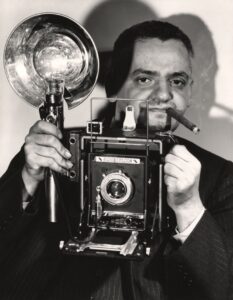
Weegee
Shared publisher: 5 Continents Editions, Thames & Hudson
14 photobook(s) in the library
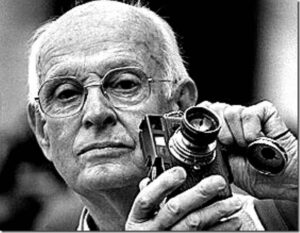
Henri Cartier-Bresson
Shared publisher: 5 Continents Editions, Thames & Hudson
11 photobook(s) in the library

Man Ray
Shared publisher: 5 Continents Editions, Thames & Hudson
8 photobook(s) in the library

Philippe Chancel
Shared publisher: 5 Continents Editions, Thames & Hudson
6 photobook(s) in the library
COMMUNITY DISCUSSION
Discuss this entry
Share interpretations, reading notes, and source-aware questions. For catalog corrections, use the feedback form below.
No discussion yet. Start the first focused conversation.
Sign in to join the discussion.
Optionally receive a digest when related photobooks are added to the catalog.
See something incorrect? Sign in to suggest a correction or report an issue.