Photographer
Edward Burtynsky
Canadian photographer known for large-scale studies of industrial landscapes and environmental transformation.
Edward Burtynsky (born 1955) is a renowned Canadian photographer known for his large-scale, high-resolution images of industrial landscapes. His works, such as the ‘Oil’ and ‘Anthropocene’ series, capture the profound impact of human industry on the environment. He has received numerous awards and his photographs have been exhibited globally. The article details his early life, education at Ryerson, and his technique of using elevated vantage points to depict sand mines, quarries, and refineries. His work has been compared to the romantic landscape tradition but with a critical environmental focus.


Selected Works & Key Projects
A source-backed introduction to individual photographs and significant bodies of work.
Key projects

Project · 2018–2019
Anthropocene Project
The Anthropocene Project is a multi-artist initiative co-created by composer Jennifer Baichwal, director Nicholas de Pencier, and Edward Burtynsky. It synthesizes large-format photography, film, and virtual reality to document industrial human impact on planetary geology. Burtynsky's aerial perspectives, such as sprawling mines and depleted landscapes, visualize the proposed geological epoch, raising public and scientific debate. The project was exhibited at the Art Gallery of Ontario and immersive VR experiences. It distinguishes Burtynsky's practice by integrating technical innovation with ecological advocacy, making abstract scientific concepts tangible for broad audiences.
View source ↗
Project · 1997–2009
Oil Series
Burtynsky's Oil series is a comprehensive survey of the oil industry from extraction to consumption. Shooting from both ground and aerial perspectives, he captures colossal strip mines, refineries, tank farms, and the landscapes of suburban sprawl that are shaped by petroleum. The series critiques human reliance on oil without resorting to graphic pollution imagery. The 2009 publication ''Oil'' and accompanying exhibitions established its importance as a visual essay on modern energy. It is notable for balancing environmental concern with a fascination for industrial aesthetics, making it a touchstone in contemporary documentary photography.
View source ↗Project · 2004–2005
China Series
Burtynsky's China series documents the explosive urbanization and industrial growth of contemporary China. Using his signature high-angle vantage, he photographs dam construction, steel mills, factory interiors, and quarry sites that have been transformed by human labor. The series exposes the scale of Chinese industrialization and its environmental costs, from the Yangtze River dam project to dense manufacturing clusters. Exhibited widely, these images juxtapose historical ideals of landscape painting with raw industrial reality, influencing how the world perceives the country's rapid modernization.
View source ↗Selected photographs
2001 · Chittagong, Bangladesh
Shipbreaking No. 1, Chittagong, Bangladesh
From his series on industrial demolition, this photograph depicts the beached hulls of supertankers being dismantled by hand. Burtynsky frames the scene as a vast dark plain where rusting ships look like stranded whales. The work documents one of the world's most hazardous occupations while presenting a terrifyingly beautiful industrial landscape. It is among his most reproduced images, symbolizing the hidden costs of global commerce. The photograph was acquired by several museums including the National Gallery of Canada, and it appeared in his acclaimed monograph ''Edward Burtynsky: Extraction / Transformation''.
Work source ↗1981 · Vancouver Island, British Columbia, Canada
Nanaimo River, Vancouver Island
This early photograph from Burtynsky's formative log-trunk series shows a clear-cut area by the Nanaimo River. Mounds of cut timber lie like fallen soldiers amidst scorched earth, revealing the scale of industrial forestry. The composition, with its rough texture and diffuse light, already displays his later preoccupation with human-altered terrain. Though less known than his later worldwide works, it marks the genesis of his thematic exploration of extraction. It was printed and collected by the Vancouver Art Gallery as evidence of his Canadian origins.
Work source ↗2001 · Carrara, Tuscany, Italy
Carrara Marble Quarries No. 12, Tuscany, Italy
Part of Burtynsky's exploration of stone extraction, this photograph captures the immense terraced cavities of the Carrara quarries. The white marble carcasses and dusty slopes resemble a snowy mountain range carved by machines. He emphasizes the contrast between the ancient use of marble for sculpture and the modern industrial scale that strips entire mountains. The work presents geology subordinated to aesthetics and commerce, prompting reflection on human creation and destruction. It was featured in his series ''Quarries'' and toured globally in a group exhibition at the Pompidou Centre.
Work source ↗2002 · Kuwait
Burning Oil Field, Kuwait
From the recent period of the Oil series, this aerial photograph shows massive flames rising from desert wells. Burtynsky banked his plane to capture near-perpendicular views of burning flares, creating abstract patterns of fire and smoke. The image abstracts catastrophe into a controlled composition, provoking dual responses of awe and horror. It epitomizes his ability to transform environmental disaster into art while maintaining editorial objectivity. Published in his book ''Oil'', the photograph is internationally cited in discussions about war and resource exploitation and was exhibited at the Art Gallery of Ontario.
Work source ↗2010 · Tibetan Plateau, China
Pole of Indifference (from The Third Pole)
In this image from the ''Third Pole'' series, Burtynsky surveys the Himalayan watershed region where human interventions like hydropower have altered ancient landscapes. The picture presents broad engineering scars across frozen soil, mixing notions of progress and environmental damage. While not as widely reproduced as his oil or shipbreaking works, it represents his later focus on climate change and water resources. The series was developed in partnership with scientists and incorporated into exhibitions about the Anthropocene, furthering photographic inquiry into large-scale planetary change.
Work source ↗-
1982
Education
Bachelor of Applied Arts in Photography
Edward Burtynsky received his Bachelor of Applied Arts in Photography from Ryerson Polytechnical Institute (now Toronto Metropolitan University) in Toronto, Canada. This formal education in photography provided his technical foundation and introduced him to large-format camera work, which became integral to his later industrial landscapes.
Source: Wikipedia Verified Sep 3, 2026
-
2003
Photobook
Publication of 'Manufactured Landscapes'
Burtynsky's monograph 'Manufactured Landscapes' was published by Steidl, presenting his early large-format color photographs of industrial sites such as quarries, mines, and factories. The book established his international reputation, showcasing his ability to render environmental destruction in aesthetically majestic images that challenge viewers' perspectives.
Source: Wikipedia Verified Sep 3, 2026
-
2006
Career milestone
Premiere of 'Manufactured Landscapes' documentary
The documentary film 'Manufactured Landscapes', directed by Jennifer Baichwal, premiered at the Sundance Film Festival. The film follows Burtynsky as he travels to industrial sites in China, Bangladesh, and elsewhere, and it brought his photographic work to a broader public through cinema, earning critical acclaim for its meditative portrayal of human industrialization.
Source: Wikipedia Verified Sep 3, 2026
-
2009
Photobook
Publication of 'Oil'
Burtynsky's landmark project 'Oil' was published as a book by Steidl. The six-year series (2003-2009) traces oil from extraction to consumption, featuring quintessential images of Alberta's tar sands, pipelines, and refineries. Renowned for its epic scale and nuanced critique, 'Oil' became a seminal work in environmental photography, prompting viewers to reflect on global energy dependence.
Source: Wikipedia Verified Sep 3, 2026
-
2013
Photobook
Publication of 'Water'
The photobook 'Water' presents Burtynsky's investigation of human water use and abuse, with sites ranging from Colorado River dams to aquaculture farms in China. This series expands his concern to a vital planetary resource, reinforcing his position as both an artist and an environmental activist. The images display his signature formal precision while conveying urgency about water scarcity.
Source: Wikipedia Verified Sep 3, 2026
-
2016
Award
Infinity Award for Art from ICP
Burtynsky received the 2016 Infinity Award for Art from the International Center of Photography in New York. This major recognition acknowledged the cumulative impact of his large-scale industrial landscapes, which have altered contemporary documentary photography by blending aesthetic grandeur with critical environmental commentary.
Source: Wikipedia Verified Sep 3, 2026
-
2018
Exhibition
'Anthropocene' Exhibition at the Art Gallery of Ontario
The multi-year Anthropocene project, a collaboration between Burtynsky, filmmaker Jennifer Baichwal, and Nicholas de Pencier, culminated in a large-scale exhibition at the Art Gallery of Toronto (AGO). Featuring photographs and high-resolution aerial imagery of mines, cities, and sites of environmental change, this exhibition extended Burtynsky's practice into immersive and experimental formats, reflecting the geological scale of human impact.
Source: Art Gallery of Ontario Verified Sep 3, 2026
-
2019
Career milestone
Release of 'Anthropocene: The Human Epoch' film
The documentary 'Anthropocene: The Human Epoch', co-directed by Burtynsky, Jennifer Baichwal, and Nicholas de Pencier, was released; it premiered at the 2018 Toronto International Film Festival and saw wide theatrical release in 2019. The film combines aerial cinematography with intimate portraits to illustrate the extent of human-driven geological changes, consolidating Burtynsky's role as a visual historian of the Anthropocene.
Source: Wikipedia Verified Sep 3, 2026
Collection
Museum of Modern Art (MoMA)
The Museum of Modern Art in New York holds photographs by Edward Burtynsky in its permanent collection, including large-format industrial landscapes that explore human impact on the earth.
Verified 2026-09-04MoMA Artists
Collection
Tate
Tate in the UK includes Edward Burtynsky's work in its collection, recognizing his contribution to contemporary landscape photography and his focus on environmental themes.
Verified 2026-09-04Tate Artist Page
Collection
National Gallery of Canada
The National Gallery of Canada in Ottawa holds photographs by Edward Burtynsky, celebrating his status as one of Canada's most important contemporary photographers.
Verified 2026-09-04National Gallery of Canada Collection
Collection
Art Gallery of Ontario
The Art Gallery of Ontario in Toronto holds a collection of Burtynsky's photographs, reflecting his deep ties to the Canadian art scene and his exploration of industrial landscapes.
Verified 2026-09-04AGO Collection
Representation
Nicholas Metivier Gallery
Edward Burtynsky is represented by Nicholas Metivier Gallery in Toronto, which has showcased his work in solo exhibitions and publications since the early 2000s.
Verified 2026-09-04Nicholas Metivier Gallery Artist Page
Representation
Flowers Gallery
Flowers Gallery in London and New York represents Edward Burtynsky, providing international exposure for his large-scale industrial landscape photographs.
Verified 2026-09-04Flowers Gallery Artist Page
Edward Burtynsky (opens a new site)
The National Gallery of Art artist record identifies Burtynsky as a Canadian artist born in 1955 and provides collection entries for photographs including works from his Mines, Quarries, Shipbreaking, Oil, and China-related subjects. Each linked entry supplies object-specific titles, dates, medium, accession information, and collection status. It is a reliable museum resource for confirming individual works held by the National Gallery of Art.
Aerial Views of Our Water World (opens a new site)
Smithsonian Magazine surveys Burtynsky’s Water photographs and the related film Watermark. It reports that the project documented human reshaping of water systems across several countries and identifies aerial images of infrastructure, development, farming, dams, and drought. The article offers accessible editorial context for a major Burtynsky subject: water as both a natural resource and a landscape materially transformed by human activity.
Anthropocene (opens a new site)
Art Gallery of Ontario’s exhibition overview for the 2018–2019 presentation of The Anthropocene Project. It describes Burtynsky’s new and newly released large-scale colour photographs alongside film installations and augmented-reality works by Jennifer Baichwal and Nicholas de Pencier. The page is a useful primary institutional introduction to the project’s multi-format approach to visualizing human alteration of the Earth.
Manufactured Landscapes | Edward Burtynsky in dialogue with François Hébel (opens a new site)
Fondazione MAST’s video records a conversation in which Burtynsky discusses the development of work centered on the relationship between humanity and nature with François Hébel. The page situates the event alongside a screening of Manufactured Landscapes and identifies that film as the first installment of a trilogy followed by Watermark and Anthropocene: The Human Epoch. It is a focused resource on the origins of his environmental subject matter.
Edward Burtynsky: Natural Order (opens a new site)
Nicholas Metivier Gallery presents an exhibition walkthrough for Natural Order, dated October 1, 2020. The resource documents the gallery presentation through an embedded Vimeo video. As a source issued by Burtynsky’s gallery, it is useful for viewing the installation context of this named exhibition and for locating a contemporaneous record of how the works were displayed together.
My wish: Manufactured landscapes and green education (opens a new site)
In this TED2005 talk, Burtynsky accepts the 2005 TED Prize and presents a wish that his photographs of humanity’s impact on the world might help prompt a global conversation about sustainability. The video is a direct record of the artist framing the public purpose of his manufactured-landscape images and is especially useful for studying the relationship he draws between photography, environmental awareness, and education.
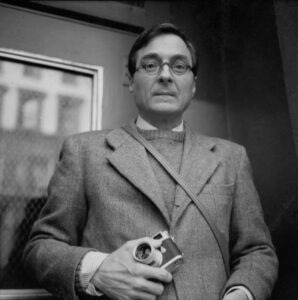
William Eggleston
Shared publisher: Steidl, Yale University Press
26 photobook(s) in the library
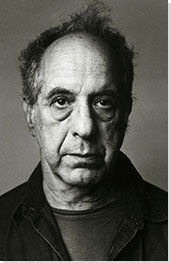
Robert Frank
Shared publisher: Steidl, Yale University Press
19 photobook(s) in the library
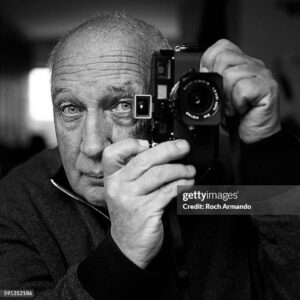
Raymond Depardon
Shared publisher: Steidl, Thames & Hudson
16 photobook(s) in the library
Alex MacLean
Shared publisher: Thames & Hudson, Yale University Press
12 photobook(s) in the library
COMMUNITY DISCUSSION
Discuss this entry
Share interpretations, reading notes, and source-aware questions. For catalog corrections, use the feedback form below.
No discussion yet. Start the first focused conversation.
Sign in to join the discussion.
Optionally receive a digest when related photobooks are added to the catalog.
See something incorrect? Sign in to suggest a correction or report an issue.