Photographer
Garry Winogrand
American street photographer known for energetic compositions and candid public-life studies.
Garry Winogrand (1928–1984) was an American street photographer known for his candid, energetic images of everyday life in mid-20th-century United States. Born in New York City, he studied photography at Columbia University and worked in advertising and commercial photography. He achieved recognition for his innovative use of a 35mm Leica, capturing spontaneous moments with tilted framing and layered compositions. His major projects include The Animals and Women Are Beautiful. Winogrand taught at several institutions, including the Art Institute of Chicago and the University of Texas. He died while traveling in Mexico.

Garry Winogrand: Winogrand Color

Garry Winogrand

Arrivals & Departures: The Airport Pictures of Garry Winogrand

Winogrand 1964

Garry Winogrand – The Game of Photography

The Man in the Crowd: The Uneasy Streets of Garry Winogrand

Garry Winogrand Figments From The Real World

Stock Photographs: The Fort Worth Fat Stock Show and Rodeo

Public relations

Women are beautiful

The Animals
Selected Works & Key Projects
A source-backed introduction to individual photographs and significant bodies of work.
Key projects
Project · 1962–1969
The Animals
The Animals is a group of black-and-white, wide-angle photographs made at New York zoos and the Coney Island aquarium. MoMA describes the series as an investigation in which visitors and animals become visually comparable, making the boundary between observer and observed unstable. The images bring captivity, public leisure, voyeurism, and the racial and gender segregations of the period into the same photographic field. It merits selection because it gives Winogrand’s street practice a sustained, clearly defined subject and was first presented by MoMA as a dedicated exhibition in 1969–70.
View source ↗Project
Women are Beautiful
Women are Beautiful comprises 85 photographs that Winogrand compiled and sequenced himself. First exhibited and published as a book in 1975, then issued as a print portfolio in 1981, it centers mainly on urban women in New York during the 1960s and early 1970s, photographed with a wide-angle Leica M4. The project merits selection for its ambitious editing of everyday encounters into a major photobook statement. Its reception is integral to its significance: the work has been criticized for objectifying an unaware female subject while also being celebrated for registering women’s expressive freedom.
View source ↗Project · 1969–1973
Public Relations
Public Relations grew from Winogrand’s 1969 Guggenheim Fellowship proposal to photograph “the effect of media on events.” MoMA records that he worked on the project through 1973, photographing marches, rallies, press conferences, games, strikes, demonstrations, funerals, parades, museum openings, celebrations, and other public occasions. The project matters because it turns those staged-for-publicity situations into a composite account of public behavior under social and political pressure. MoMA’s 1977 presentation was accompanied by a 112-page book containing 74 photographs, establishing the project as a major authored body of work rather than a miscellaneous event archive.
View source ↗Selected photographs

1967 · Central Park Zoo, New York City, United States
Central Park Zoo, New York
This 1967 gelatin silver print is a core zoo image in Winogrand’s work. MoMA’s collection record establishes its precise setting, date, medium, and its place in the museum’s Photography department. It merits selection because the Central Park Zoo is the specific public setting through which The Animals examines people and animals together: MoMA characterizes the larger series as wide-angle photographs that blur viewer and subject and find humorous parallels between human and animal behavior. The photograph therefore provides a concentrated entry into a project that MoMA first presented as a one-person exhibition in 1969–70.
Work source ↗
1970 · New York City, United States
New York City from Women are Beautiful
MoMA identifies this 1970 gelatin silver print as New York City from Women are Beautiful. It merits selection as a specific, collection-held example of the project’s New York focus and its attention to ordinary urban experience. MoMA situates Winogrand’s approach within a shift away from earlier documentary photography’s service to social causes: for him and his peers, everyday life had value as a photographic subject. The museum further emphasizes his concern with how a camera lens changes vision. This print is therefore useful not merely as an illustration of the series, but as evidence of its photographic premise.
Work source ↗
Women are Beautiful
This gelatin silver print depicts a woman and a man dancing in a nightclub amid men in tuxedos. UMMA notes the distinct directions of their gazes, the flash-lit figure of the woman, and the patterned wallpaper made visible behind her. It merits selection because it makes the project’s contested stakes concrete within one scene: the larger 85-image sequence has drawn criticism for an objectifying male gaze, yet some works have been praised for representing the expressive freedom of the new woman. The photograph’s social setting, crowd, flash, and asymmetrical looking condense that debate into a single image.
Work source ↗
1973 · Austin, Texas, United States
Elliot Richardson Press Conference, Austin
This 1973 gelatin silver print records an Elliot Richardson press conference in Austin. MoMA identifies it as a work shown in the museum’s 1977 Public Relations exhibition. It merits selection because a press conference directly embodies the project’s stated concern with the relationship between media and public events. Rather than treating the image as an isolated political record, the exhibition context places it among photographs of rallies, demonstrations, games, funerals, openings, and celebrations—occasions Winogrand understood as organized for media as well as participants. Its inclusion makes the project’s critical focus legible through a named historical event.
Work source ↗
1960
Untitled
The Met dates this gelatin silver print to 1960 and describes it as atypical within Winogrand’s oeuvre. Rather than the confrontational, kinetically charged street situations for which he is chiefly known, the museum reads its figures as suspended in a three-dimensional balancing arrangement structured by their shadows. The Met further identifies the photograph as an exploration of tragic undertones within life’s dark comedy. It merits selection because it qualifies the prevailing view of Winogrand as a photographer of rapid, witty urban collision: here, graphic invention serves stillness, distance, and a more somber emotional register.
Work source ↗-
January 14, 1928
Career milestone
Born in New York
Garry Winogrand was born on January 14, 1928. Getty’s Union List of Artist Names identifies him as an American photographer and records New York as his birthplace.
Source: Getty Research, Union List of Artist Names Verified Sep 5, 2026
-
1945
Career milestone
Begins photographing during Air Force service
Getty records that Winogrand began to photograph in 1945 while serving in the United States Air Force. This marks the documented beginning of his photographic activity.
Source: Getty Research, Union List of Artist Names Verified Sep 5, 2026
-
1949–1951
Career milestone
Photographer at the New School of Social Research
From 1949 through 1951, Winogrand worked as a photographer at the New School of Social Research in New York City. The position places his early professional practice in an academic institution before his later agency and freelance work.
Source: Getty Research, Union List of Artist Names Verified Sep 5, 2026
-
1955
Career milestone
First photographic trip across the United States
Getty records Winogrand’s first photographic trip across the United States in 1955. The source identifies Texas, Colorado, California, and New York among the places connected with this journey, documenting an early expansion beyond a single local setting.
Source: Getty Research, Union List of Artist Names Verified Sep 5, 2026
-
May 28–July 21, 1963
Exhibition
Included in Five Unrelated Photographers at MoMA
Winogrand was included in Five Unrelated Photographers at the Museum of Modern Art. MoMA dates the exhibition from May 28 to July 21, 1963; it is an early museum exhibition milestone in its recorded history of presenting his work.
Source: The Museum of Modern Art, Exhibition History Verified Sep 5, 2026
-
1964
Award
Guggenheim Fellowship
The Guggenheim Foundation lists Winogrand as a photography fellow in 1964. Its fellows index also records further Winogrand fellowships in 1969 and 1978, establishing the 1964 award as the first of three listed fellowships.
Source: Guggenheim Fellowships, Meet Our Fellows Verified Sep 5, 2026
-
February 28–May 7, 1967
Exhibition
Included in New Documents at MoMA
MoMA records Winogrand’s participation in New Documents, held from February 28 to May 7, 1967. In the museum’s exhibition history, the show is listed alongside his other major MoMA presentations, including later solo exhibitions.
Source: The Museum of Modern Art, Exhibition History Verified Sep 5, 2026
-
October 24, 1969–January 18, 1970
Exhibition
The Animals at MoMA
MoMA presented Garry Winogrand: The Animals from October 24, 1969, to January 18, 1970. MoMA describes the series as wide-angle black-and-white photographs made between 1962 and 1969 at New York zoos and the Coney Island aquarium, examining encounters between human visitors and animals.
Source: The Museum of Modern Art, Garry Winogrand: Some Animals Verified Sep 5, 2026
-
1969–1973
Series
Develops Public Relations
A MoMA exhibition label states that Winogrand received a 1969 Guggenheim Fellowship to photograph what he termed the “effect of the media on events.” He worked on the project through 1973, photographing public occasions including rallies, press conferences, demonstrations, openings, and celebrations.
Source: The Museum of Modern Art, Public Relations wall label Verified Sep 5, 2026
-
October 18–December 11, 1977
Exhibition
Public Relations at MoMA
MoMA’s exhibition history records Public Relations: Photographs by Garry Winogrand from October 18 through December 11, 1977. The exhibition gave the media-and-public-events project a dedicated museum presentation after the photographic work described by MoMA as continuing until 1973.
Source: The Museum of Modern Art, Exhibition History Verified Sep 5, 2026
-
1978
Award
Third listed Guggenheim Fellowship
The Guggenheim Foundation’s photography fellows index lists Winogrand for 1964, 1969, and 1978. The 1978 entry is the final fellowship year recorded for him on that official index.
Source: Guggenheim Fellowships, Meet Our Fellows Verified Sep 5, 2026
-
March 19, 1984
Career milestone
Dies in Tijuana, Mexico
Getty records that Winogrand died on March 19, 1984, in Tijuana, Mexico. The Metropolitan Museum of Art notes that his death left marked but unprinted proof sheets and approximately 6,600 rolls of film that he had not seen, including rolls that had not been developed.
Source: Getty Research, Union List of Artist Names Verified Sep 5, 2026
Archive
Center for Creative Photography
The Center for Creative Photography at the University of Arizona houses Garry Winogrand's photographic archive, including negatives and prints donated after his death, ensuring the preservation and study of his work.
Verified 2026-09-05Wikipedia
Museum relationship
Museum of Modern Art
The Museum of Modern Art in New York holds works by Winogrand and featured his photography in key exhibitions, including the 1967 'New Documents' show that shaped the evolution of documentary and street photography.
Verified 2026-09-05Wikipedia
Shared exhibition
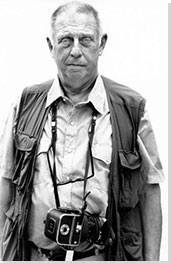
Lee Friedlander
Friedlander and Winogrand were both included in MoMA’s 1967 exhibition New Documents.
Verified 2026-09-03The Museum of Modern Art
Shared exhibition
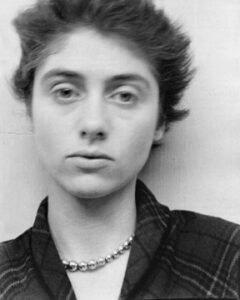
Diane Arbus
Arbus and Winogrand were showcased together in the 1967 'New Documents' exhibition at the Museum of Modern Art, representing a new generation of photographers focused on social observation and existential moments.
Verified 2026-09-05Wikipedia
Shared exhibition
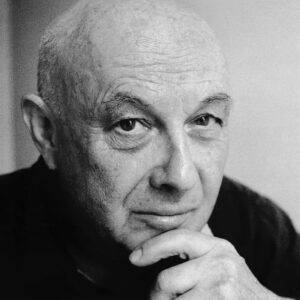
Bruce Davidson
Bruce Davidson and Garry Winogrand were both part of the 1967 'New Documents' exhibition at the Museum of Modern Art, a pivotal moment for modern street and documentary photography.
Verified 2026-09-05Wikipedia
Garry Winogrand (opens a new site)
SFMOMA’s record for the 2013 retrospective catalogue describes a 464-page publication edited by Leo Rubinfien and produced with Yale University Press. It combines canonical photographs with newly printed images from early and late work that had remained insufficiently examined, alongside essays by several photography scholars. As a research resource, the catalogue matters because it accompanied the major SFMOMA–National Gallery of Art retrospective that subsequently traveled to the Met, Jeu de Paume, and Fundación MAPFRE, framing a broad reassessment of Winogrand’s career.
“I Am a Photographer of Attack” (opens a new site)
SFMOMA presents an English translation and downloadable Japanese original of Shoji Yamagishi’s 1977 Camera Mainichi interview with Winogrand. The interview is a valuable primary resource because it records the photographer addressing his own rapid, exploratory approach to making photographs and places him within contemporary Japanese discussion of American photography. It is especially useful for studying Winogrand’s ideas in his own words rather than through later retrospective interpretation.
The Boxer (opens a new site)
This SFMOMA conversation between assistant curator Erin O’Toole and Nick Biondi documents Winogrand’s 1954 assignment photographing the young boxer. Biondi recalls the photographer following his training, school, club, home, and subway journey; he also describes how little self-consciousness the camera produced among those photographed. The resource is particularly valuable for its first-person evidence about an early commissioned body of work, its publication history, and Winogrand’s ability to work unobtrusively around a subject over multiple occasions.
Garry Winogrand: All Things Are Photographable (opens a new site)
PBS American Masters describes this feature documentary as a cinematic survey of Winogrand’s legacy. It follows his photographs of American life from the late 1950s through the early 1980s and draws on access to the estate, color home movies, footage of street work and protests, and newly discovered audio recordings. The film is a strong introductory screen resource because it brings together the career’s public images and archival material while addressing the substantial quantity of unprocessed and unedited work he left at his death.
Garry Winogrand at Rice University (opens a new site)
The National Gallery of Art presents a 16-minute selection from Winogrand’s 1977 Rice University seminar, where photographer and professor Geoff Winningham invited him to answer student questions. The source notes that the original discussion lasted more than two hours and that this version was produced for the National Gallery’s Winogrand exhibition organized with SFMOMA. It is an essential viewing resource because it preserves the artist speaking directly about photography in an educational setting, with surviving 1977 footage credited to Winningham.
COMMUNITY DISCUSSION
Discuss this entry
Share interpretations, reading notes, and source-aware questions. For catalog corrections, use the feedback form below.
No discussion yet. Start the first focused conversation.
Sign in to join the discussion.
Optionally receive a digest when related photobooks are added to the catalog.
See something incorrect? Sign in to suggest a correction or report an issue.