Photographer
Julia Margaret Cameron
Julia Margaret Cameron (1815–1879) was a British photographer whose artistic portraits and allegorical scenes redefined the medium during the Victorian era. She began taking photographs relatively late in life—at about the age of forty-nine—yet quickly established herself as one of the most ambitious and original figures in early photography. Born into a cultured family and well connected within intellectual and artistic circles, she brought a literary and theatrical sensibility to the camera, turning it away from purely documentary use and toward expressive, painterly imagery.
Cameron’s visual language was distinctive for its deliberate soft focus, dramatic use of natural light, and close cropping. She rejected the prevailing emphasis on technical sharpness, arguing instead for the emotional and spiritual truth of a portrait. Her sitters—often family members, friends, servants, and neighbors—were posed in tableaux inspired by religion, mythology, and literature. She was particularly known for her powerful close-up portraits of notable Victorian figures, as well as for staged compositions that blurred the line between photography and painting.
Her body of work includes hundreds of portraits and narrative studies produced over a productive decade from the mid-1860s through the 1870s. While no single photobook dominated her output, she published albums and distributed prints through the Photographic Society, and her images circulated among collectors and fellow artists. Major institutions such as the Victoria and Albert Museum, the Metropolitan Museum of Art, and the Museum of Modern Art now hold substantial collections, indicating that her work was preserved across archival and museum circuits. Her most famous compositions, such as those featuring young women in sylvan settings, remain icons of the medium.
Historically, Cameron holds a pivotal place in the transition of photography from craft to fine art. She was an amateur in the original sense—working not for commercial gain but for personal and aesthetic pursuit—yet her boldness influenced later Pictorialists and portraitists. Her practice coincided with the debates over photography’s artistic legitimacy, and she insisted on the photographer’s role as creator rather than mere recorder. She exhibited at galleries and received recognition in her lifetime, though her reputation was later revived by early twentieth-century modernists who admired her directness and formal power.
For collectors of photobooks and fine photography, Cameron’s relevance lies in the material quality of her prints and the conceptual ambition behind them. Her albumen prints, often annotated with titles and dates, display the handmade character valued in early photography. A useful entry point is a complete survey of her work as published by mapfre or another scholarly institution, which frames her contribution within Victorian culture and the larger history of imaging. While her original prints are scarce in public hands, catalogues and monographs provide accessible documentation of her pioneering vision, making her an essential figure for anyone studying the origins of photographic art.
〔PBL-BIO/2〕


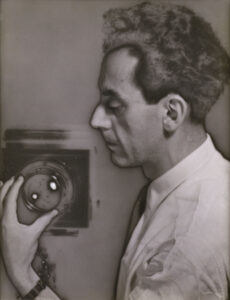
Man Ray
Shared publisher: 5 Continents Editions, MACK
8 photobook(s) in the library
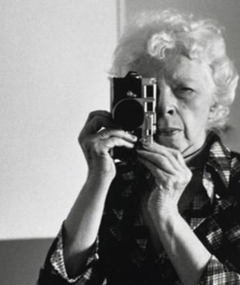
Lisette Model
Shared publisher: 5 Continents Editions, MACK
6 photobook(s) in the library
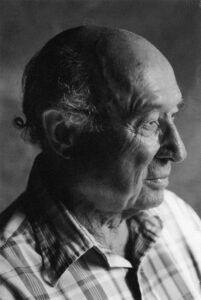
Harry Callahan
Shared publisher: 5 Continents Editions, MACK
6 photobook(s) in the library
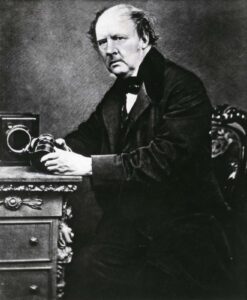
William Henry Fox Talbot
Shared publisher: 5 Continents Editions, MACK
5 photobook(s) in the library
COMMUNITY DISCUSSION
Discuss this entry
Share interpretations, reading notes, and source-aware questions. For catalog corrections, use the feedback form below.
No discussion yet. Start the first focused conversation.
Sign in to join the discussion.
Optionally receive a digest when related photobooks are added to the catalog.
See something incorrect? Sign in to suggest a correction or report an issue.