Photographer
Lucien Clergue
Lucien Clergue (1934–2014) was a French photographer whose life and work were profoundly shaped by his native city of Arles in the south of France, a region renowned for its Roman heritage, bullfighting culture, and intense Mediterranean light. Born into a working-class family, Clergue began taking photographs as a teenager in the years after World War II, initially self-taught. He rose to become one of the country’s most celebrated photographers and a tireless advocate for the recognition of photography as a fine art, culminating in his election as chairman of the Academy of Fine Arts in Paris in 2013.
Clergue’s visual language is distinctive for its ability to transform everyday scenes and the human body into sculptural, almost abstract compositions. Although he photographed a variety of subjects—including the streets of Arles, gypsy communities, and bullfighting arenas—his most iconic works are his nudes, which he rendered with a strong sense of form, light, and texture. Unlike many contemporaries who pursued documentary realism, Clergue used the camera to create painterly images that blur the line between photography and sculpture. His early works, especially his studies of circus performers and flamenco dancers, show a fascination with movement and the expressive potential of the body.
Among his major bodies of work are his extensive series of female nudes, often photographed in natural settings or against stark backdrops, and his studies of the bullfight, a subject steeped in the cultural tradition of the Camargue region. He also collaborated with artists, most notably with Pablo Picasso, whom he met in the 1950s; Clergue later published several portfolios documenting the artist’s life and creative process. Over his career, he published or illustrated more than seventy books, establishing himself as a prolific author and editor. Yet it was his role as a co-founder, in 1969, of the Rencontres d’Arles, the annual photography festival held in his hometown, that cemented his legacy as an institutional builder.
The Rencontres d’Arles became one of the most important international gatherings for photography, attracting curators, collectors, and artists from around the world. Through this festival and his own practice, Clergue helped elevate photography from a craft to a recognized art form in France, a contribution that was acknowledged by his appointment to the Académie des Beaux-Arts in 2006 (he served as chairman in 2013). His work has been exhibited widely, and his prints are held in major museums. However, some critics have noted that his lyrical approach to the body occasionally verged on sentimental idealization, and his commercial success sometimes overshadowed the conceptual rigor that animated his best work.
For photobook collectors, Clergue’s bibliography offers a rich entry point into postwar French art photography. While many of his early books were produced in small editions, later monographs, such as the lavish volumes published by Actes Sud, reflect his attention to sequencing and design, pairing gravures with poetic texts. A useful starting point is his collaboration with Picasso, which reveals how Clergue weaved portraiture, reportage, and personal friendship into a coherent narrative. Whether one is drawn to his formal nudes or his documentation of Provençal life, Clergue’s books provide a tactile sense of his vision—warm, sensual, and deeply rooted in the landscapes and people he loved.
〔PBL-BIO/2〕


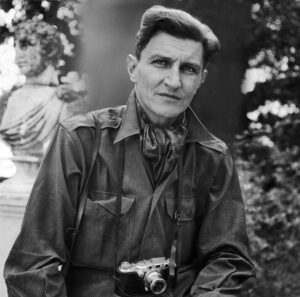
George Rodger
Shared publisher: Hatje Cantz, Prestel
4 photobook(s) in the library
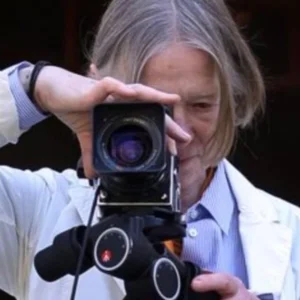
Candida Höfer
Shared publisher: Hatje Cantz, Prestel
4 photobook(s) in the library

Michael Kenna
Shared publisher: Prestel
22 photobook(s) in the library
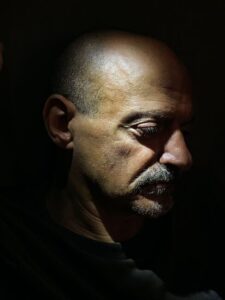
Antoine D'Agata
Shared publisher: Prestel
22 photobook(s) in the library
COMMUNITY DISCUSSION
Discuss this entry
Share interpretations, reading notes, and source-aware questions. For catalog corrections, use the feedback form below.
No discussion yet. Start the first focused conversation.
Sign in to join the discussion.
Optionally receive a digest when related photobooks are added to the catalog.
See something incorrect? Sign in to suggest a correction or report an issue.