Photographer
Edward S. Curtis
Edward Sheriff Curtis (1868–1952) was an American photographer and ethnologist who devoted more than three decades to documenting the indigenous peoples of North America. Born near Whitewater, Wisconsin, he grew up in the Midwest before moving to Seattle, where he established a successful portrait studio. His encounter with Princess Angeline, daughter of Chief Seattle, is often cited as the spark for his lifelong project to record Native cultures before they were thought to disappear.
Curtis developed a pictorialist style, using soft focus, dramatic lighting, and retouching to create images that were both documentary and artistic. He believed that the traditional ways of life were vanishing and saw his work as a salvage operation. His approach was not purely objective: he often posed his subjects, removed modern objects from view, and dressed individuals in historical attire, a practice that has made his work controversial among contemporary critics and Native communities. Nevertheless, his photographs are celebrated for their technical mastery and their sympathetic portrayal of individuals.
His magnum opus, The North American Indian (1907–1930), comprised twenty volumes of photogravures and accompanying text, funded in part by financier J.P. Morgan. It covered over eighty tribes, from the Southwest to the Pacific Northwest, and included more than 2,200 photographs. The project also involved recording audio and film, and Curtis produced a feature-length film, In the Land of the Head Hunters (1914), among his ethnographic works. The sheer scale of the undertaking was unprecedented in the history of photography.
Curtis faced financial and personal difficulties as the project stretched on, and interest in his work waned after its completion. In his later years, he worked for other photographers and struggled to sell his prints. After his death in Los Angeles in 1952, his work was largely forgotten until the 1970s, when renewed interest in Native American culture and photography led to a revival of his reputation. Major institutions such as the Smithsonian and the Library of Congress now hold extensive collections of his work, and his photographs have been exhibited worldwide.
For photobook collectors, Curtis’s publications are landmark objects. The original volumes of The North American Indian are prized for their high-quality photogravures, handmade paper, and elaborate bindings. A more accessible entry point is the Taschen reprint edition, which reproduces the complete portfolio in a more affordable format. Collectors should also consider original portfolio prints, which often appear at auction. Yet the value lies not only in rarity but in the complex cultural legacy: Curtis’s photographs remain a vivid, if sometimes contested, record of a pivotal era in American history.
〔PBL-BIO/2〕


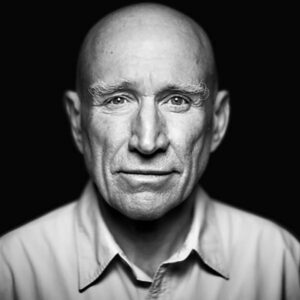
Sebastiao Salgado
Shared publisher: Taschen, Taschen America Llc
21 photobook(s) in the library
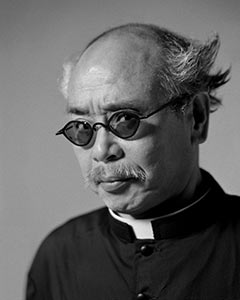
Nobuyoshi Araki
Shared publisher: Taschen, Taschen America Llc
14 photobook(s) in the library

Steve McCurry
Shared publisher: Taschen
18 photobook(s) in the library

Joel Sternfeld
Shared publisher: Bulfinch Press
16 photobook(s) in the library
COMMUNITY DISCUSSION
Discuss this entry
Share interpretations, reading notes, and source-aware questions. For catalog corrections, use the feedback form below.
No discussion yet. Start the first focused conversation.
Sign in to join the discussion.
Optionally receive a digest when related photobooks are added to the catalog.
See something incorrect? Sign in to suggest a correction or report an issue.