Photographer
Martin Parr
British photographer known for color documentary work on leisure, consumer culture, and social observation.
Martin Parr (born 1952) is a British documentary photographer known for his satirical, vibrant color images exploring class, consumption, and everyday British life. He became a full member of Magnum Photos in 1994 and served as its president from 2013 to 2017. Parr’s work challenges traditional notions of documentary photography through close cropping, flash lighting, and acute observation. His books, such as ‘The Last Resort’ and ‘Small World’, have drawn international acclaim and critical debate, establishing him as a leading contemporary photographer.

Global Warning

Field Trips: Travels in Britain 1976–1993

The Last Resort: 40 Years On

Grand Hotel Parr: Photobooks by Martin Parr

Fashion Faux Parr

A Year in the Life of Chew Stoke Village

Déjà View

ToiletMartin PaperParr

Martin Parr: From the Pope to a Flat White, Ireland 1979–2019

Only Human

Remote Scottish Postboxes

The Martin Parr Coloring Book!

Black Country Stories

Hong Kong Parr

Life's a Beach

Martin Parr: The Non-Conformists

The Last Resort

Small World

From Our House to Your House

From A to B: Tales of Modern Motoring

Martin Parr: Early Works (Second Edition)
Selected Works & Key Projects
A source-backed introduction to individual photographs and significant bodies of work.
Key projects

Project · 1983–1985
The Last Resort
Made in New Brighton between 1983 and 1985, The Last Resort examines a British seaside town during a period of economic decline in northwest England. Parr used saturated colour and daylight flash to picture holidaymakers, leisure venues, and crowded public life. The project is significant because it helped drive the new British colour-documentary photography of the 1980s and established Parr’s public reputation. Its 1986 Serpentine Gallery presentation and photobook provoked sharply divided responses, including accusations that its treatment of working-class subjects was cruel or condescending. That controversy makes the series essential: it crystallized debates about class, satire, spectatorship, and documentary ethics.
View source ↗Project · 1995–1999
Common Sense
Common Sense is Parr’s 1995–99 photographic project on consumerism and ordinary material culture. Made with a macro lens and ring flash, its intensely coloured pictures turn the visual language of mass-market goods back on the consumer world. The series was first presented as a grid of 350 colour Xerox prints at Rocket in London in 1999 and simultaneously at 52 venues internationally; eighteen large photographs later appeared in Tate Gallery’s 2003 exhibition Cruel and Tender. It merits selection for transforming apparently trivial objects, food, souvenirs, and accessories into a systematic, globally distributed portrait of consumption.
View source ↗Project
Small World
Small World is Parr’s sustained satire of international tourism and the search for supposedly authentic culture. First published as a book in 1996, it has remained in print and was reissued in an expanded 2026 edition with more than eighty photographs. The work considers the gap between tourism’s mythology and its realities: people seek difference while participating in a consumer culture that can make destinations increasingly alike. Its importance lies in the scale and clarity of that argument. Long before tourism’s environmental consequences became central public concerns, Parr made tourist behaviour, spectacle, choice, and consumption into the project’s photographic subject.
View source ↗Selected photographs

1997 · Florida
Common Sense 96 [Cigarettes, Florida]
This 1997 photograph is a named work from Common Sense, Parr’s large-scale study of international consumerism. Its selection is warranted not merely by its subject but by its place within the project’s influential installation history: the 350-image presentation premiered in London in 1999 and was shown simultaneously at 52 locations worldwide. Rocket identified this photograph among the vintage C-type prints associated with the series’ later presentation at Tate Gallery. It is therefore a concise individual entry point into Parr’s larger method of isolating consumer details and making them carry social meaning.
Work source ↗
1997 · Benidorm
Common Sense 32 [Goggles, Benidorm]
Common Sense 32 [Goggles, Benidorm] is a 1997 work from Parr’s Common Sense series. The photograph merits selection as a clearly identified, widely circulated component of a project whose original 350-image Xerox installation was launched at Rocket, London, in 1999 and shown concurrently in 52 locations worldwide. The work was offered as a vintage C-type print from the original negative, and Rocket’s project documentation connects such prints to the eighteen large Common Sense photographs included in Tate Gallery’s Cruel and Tender in 2003. It represents the series’ focused attention to consumer objects, leisure, and national cliché.
Work source ↗1998 · Las Vegas
Common Sense 60 [Breakfast, Las Vegas]
Dated 1998, Common Sense 60 [Breakfast, Las Vegas] is one of the individually identified photographs through which Common Sense addresses international consumerism. Rocket describes the exhibited example as a vintage C-type print made from the original negative in 1999. Its importance is inseparable from the project’s unusually ambitious public form: Common Sense premiered as 350 colour Xerox prints in London in 1999, appeared simultaneously in 52 locations, and later contributed eighteen large photographs to Tate Gallery’s Cruel and Tender. This work is selected as a named, place-specific instance of that larger photographic argument about consumption.
Work source ↗1999 · Sand Bay
Common Sense 53 [Teacup, Sand Bay]
Common Sense 53 [Teacup, Sand Bay], dated 1999, is a named photograph from Parr’s Common Sense project. The gallery record identifies the exhibited object as a C-type photograph printed from the original negative in 1999, in an edition of ten across two sizes. Its significance is best understood at project scale: Common Sense’s 350-colour-Xerox installation premiered at Rocket in 1999 and was simultaneously displayed at 52 worldwide venues, while eighteen large photographs were included in Tate Gallery’s 2003 Cruel and Tender exhibition. This work offers a specific, cataloguable unit within that sustained examination of consumer culture.
Work source ↗1996 · Ramsgate
Common Sense 72 [Doughnut, Ramsgate]
This 1996 photograph is a specifically titled work from Common Sense. The available gallery record identifies it as a C-type photograph printed from the original negative and records a twenty-five-print edition for the exhibited size. It merits selection because it connects a single named image to a project with exceptional exhibition reach: Common Sense opened as a 350-image colour-Xerox installation at Rocket in 1999, appeared simultaneously in 52 places, and supplied eighteen large photographs to Tate Gallery’s 2003 Cruel and Tender exhibition. The work functions as an accessible individual example of Parr’s broader analysis of everyday consumption.
Work source ↗-
1970–1973
Education
Studies at Manchester Polytechnic
Martin Parr studied photography at Manchester Polytechnic, where he developed a foundation in documentary practice and social observation. During these years he rejected conventional photojournalism in favor of a more personal, often satirical approach to recording British life. This education set the tone for his later work, which frequently critiques class, consumer culture, and everyday rituals, establishing him as one of the United Kingdom’s most distinctive photographic voices.
Source: Wikipedia Verified Sep 4, 2026
-
1975–1980
Series
The Non-Conformists
Shot among the Methodist community of Hill Top, a small Yorkshire village, this early documentary series was Parr’s first major project and an important step away from press photography. Working entirely in black-and-white, he captured daily routines, religious gatherings, and the textures of a vanishing rural life. The work shows his emerging ability to combine affection with irony, and it anticipates his later move to color as a means of exploring social subtleties. It was collected into a book published decades later, highlighting its enduring relevance.
Source: Wikipedia Verified Sep 4, 2026
-
1986
Photobook
The Last Resort – publication
Parr’s book “The Last Resort” captured the seaside town of New Brighton with a striking new palette of saturated colors and harsh flash lighting. The photographs turned a critical yet affectionate eye on working-class leisure, showing lager, litter, and tired families against a run-down backdrop. The work caused considerable debate about class representation in Britain and is now seen as a pivotal moment in documentary photography, marking Parr’s definitive shift toward color and his signature style of mixing humor with social analysis.
Source: Wikipedia Verified Sep 4, 2026
-
1994
Representation
Joined Magnum Photos
In 1994, Parr became a full member of Magnum Photos, the celebrated international photographers’ cooperative. Although his work was known for its unorthodox, often satirical take on contemporary life, Magnum welcomed him as a member, recognizing his contribution to documentary and the expanding definition of the medium. His membership gave him a global platform and influenced Magnum’s direction, demonstrating that authentic documentary could be subversive without losing its journalistic roots.
Source: Wikipedia Verified Sep 4, 2026
-
2004
Award
Hasselblad Award
The international Hasselblad Foundation recognized Parr’s entire body of work with its prestigious annual award in 2004. The jury cited his ability to break with tradition and offer a probing, often uncomfortable commentary on contemporary life, while constantly renewing the language of photography. The prize affirmed his position as a leading figure in documentary practice and helped further its acceptance within the art world, broadening public expectations of what a “serious” photographer might achieve.
Source: Wikipedia Verified Sep 4, 2026
Representation
Magnum Photos
Martin Parr is a full member of Magnum Photos, the prestigious photographic cooperative. He joined as a nominee in 1994, became a full member in 1997, and served as president from 2012 to 2015. This membership and leadership position underscore his influence within the international documentary photography community and his role in perpetuating the cooperative's legacy.
Verified 2026-09-04Magnum Photos
Foundation
Martin Parr Foundation
Martin Parr founded the Martin Parr Foundation, a charitable organization established in 2015 and opened in 2017 in Bristol. The foundation preserves Parr's extensive archives, including his prints, negatives, and book collections, and actively supports documentary photography through exhibitions, research, and public programs. It stands as a permanent legacy of his practice and commitment to the medium.
Verified 2026-09-04Martin Parr Foundation
Collection
Tate
Tate holds a significant number of Martin Parr's photographs in its collection, including works from his influential series 'The Last Resort.' The museum's acquisition of his pieces acknowledges his pivotal contribution to British contemporary photography and his distinctive use of color and documentary observation. His presence in Tate's collection affirms his status as a key figure in the history of modern visual culture.
Verified 2026-09-04Tate
Collection
Victoria and Albert Museum
The Victoria and Albert Museum in London has acquired a substantial number of Martin Parr's photographs for its permanent collection. The museum, known for its comprehensive decorative arts and design holdings, considers Parr's work essential to the history of photography, particularly his explorations of British social class and consumer culture through saturated color and intimate flash documentary.
Verified 2026-09-04Victoria and Albert Museum
Collection
Museum of Modern Art
The Museum of Modern Art in New York holds works by Martin Parr, featuring prints from various stages of his career, from early black-and-white studies to his famous color projects. MoMA's acknowledgment of Parr places him within the international canon of contemporary photographers, highlighting his impact on the evolution of documentary and street photography globally.
Verified 2026-09-04The Museum of Modern Art
Collaboration
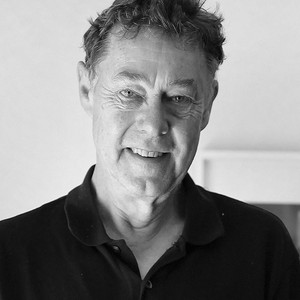
Gerry Badger
Badger collaborated with Martin Parr on all three volumes of The Photobook: A History.
Verified 2026-09-03Martin Parr Foundation
Shared exhibition
Phillip Prodger
Curatorial Exhibitions lists Martin Parr: Only Human among Phillip Prodger’s recent exhibitions. The National Portrait Gallery describes the 2019 exhibition as bringing together Parr’s photographs of people, with particular attention to his observations of British identity.
Verified 2026-09-03Curatorial Exhibitions
Martin Parr – Wikipedia (opens a new site)
This Wikipedia entry provides an overview of Martin Parr, a British documentary photographer known for his humorous and satirical color images of everyday life. It covers his early black-and-white work, his transition to vivid color photography, his membership in Magnum Photos, major projects such as The Last Resort and Common Sense, and his impact on social documentary photography. The entry also references his extensive publication history and curatorial work.
COMMUNITY DISCUSSION
Discuss this entry
Share interpretations, reading notes, and source-aware questions. For catalog corrections, use the feedback form below.
No discussion yet. Start the first focused conversation.
Sign in to join the discussion.
Optionally receive a digest when related photobooks are added to the catalog.
See something incorrect? Sign in to suggest a correction or report an issue.