Photographer
Gregory Crewdson
American photographer known for cinematic staged scenes exploring suburban psychology.
Gregory Crewdson (born September 26, 1962) is an American photographer famous for elaborately staged, cinematic color photographs of suburban America. He earned a BFA from SUNY Purchase and an MFA from Yale University, where he later became a professor. His major series include “Twilight” (1998–2002), “Beneath the Roses” (2003–2008), and “Cathedral of the Pines” (2013–2014). Crewdson constructs detailed tableaux with large crews and lighting rigs, producing unsettling scenes that blend the ordinary with the surreal. His works are held in numerous museum collections, and he has received fellowships and honorary degrees.


Selected Works & Key Projects
A source-backed introduction to individual photographs and significant bodies of work.
Key projects

Project · 1998–2002
Twilight
Twilight is a series of elaborately staged, large-scale color photographs that places uncanny events within the American suburban vernacular. Its photographic achievement lies in joining realist detail to cinematic lighting, staging, and special effects, producing narratives deliberately suspended at moments of transformation. Gagosian described the resulting tension between the ordinary and the paranormal as turning suburbia into a terrain of wonder and anxiety; the series was also published complete by Harry N. Abrams with an introduction by Rick Moody. It merits selection as a concentrated account of Crewdson’s psychological realism and his use of the single still image to imply an unresolved story.
View source ↗
Project · 2003–2008
Beneath the Roses
Beneath the Roses is a multi-year body of large-scale photographs that extends Crewdson’s attention to the American vernacular while shifting emphasis toward atmosphere and setting. Its interiors and exteriors use carefully controlled light, windows, doorways, and mirrors to produce separation, solitude, and a voyeuristic sense of being poised between a before and an after. The concluding 2008 presentation followed four seasonal productions and included his first winter photographs. It merits selection because it shows how a sustained serial structure—not one isolated image—allowed Crewdson to refine cinematic production into a study of small-town disquiet, rootlessness, and loneliness.
View source ↗
Project · 2018–2019
An Eclipse of Moths
An Eclipse of Moths comprises sixteen large-scale panoramic exterior photographs made with Crewdson’s established technical crew and meticulous staging process. Set among postindustrial sites—such as a taxi depot, carnival lot, abandoned factory complex, closed bars and diners, and vacant storefronts—the series moves his concern with isolation into landscapes of industrial decline. Crewdson characterized these pictures as a meditation on brokenness and a search for meaning, while also locating hope in persistent nature and figures seeking light. It merits selection as a late project that retains his constructed photographic method while explicitly balancing anxiety with renewal and redemption.
View source ↗Selected photographs
1988
Untitled
This 1988 chromogenic print is a significant early work because the Metropolitan Museum of Art documents it as having been made while Crewdson was in Yale’s MFA program. He went door to door in small Massachusetts towns with a camera and a few lights, asking strangers if he could photograph them. The Met identifies the resulting image as hovering between documentary and cinematic modes, a tension that remained central to his later practice. It merits selection as a compact, museum-held record of the formative working method from which his more elaborate staged photographs developed.
Work source ↗
2001
Untitled (Ophelia)
Untitled (Ophelia) is a 2001 digital C-print issued in an edition of ten, documented by Luhring Augustine as part of Crewdson’s 2002 presentation of new photographs. The gallery’s exhibition text describes this group as staged, large-scale color photographs in which cinematic lighting, staging, and special effects animate the psychological underside of American vernacular life. The work merits selection not merely as an example of Twilight’s method: Luhring Augustine specifically identifies the photograph as a reference to Shakespeare’s Ophelia and records that it later became the cover image for Crewdson’s 2003 book Twilight.
Work source ↗
2007
Untitled (The Madison)
Untitled (The Madison), dated 2007, was included in Luhring Augustine’s 2008 presentation completing Beneath the Roses. Its importance is project-specific: it belongs to the concluding group through which Crewdson redirected attention from overt confrontation and psychological turmoil toward atmosphere and setting. The exhibition describes the series’ interiors and exteriors as carefully lit spaces of displacement and solitude, with figures held in anticipatory intervals rather than resolved action. This named photograph merits selection as a recognizable work from the final phase of a major serial project, where seasonal production and controlled framing gave Crewdson’s small-town scenes their sustained emotional charge.
Work source ↗2018
The Taxi Depot
The Taxi Depot is a 2018–19 digital pigment print from An Eclipse of Moths, issued in an edition of four plus two artist’s proofs. It is one of the project’s panoramic images of postindustrial locations, a group for which Crewdson spent months scouting and staging sites before production. Its selection value rests on its clear articulation of the series’ scale and terrain: the taxi depot is among the specific kinds of neglected sites through which the project considers isolation, decay, and the pressure of nature. Crewdson’s accompanying statement frames this body of work as seeking meaning and possible renewal rather than presenting brokenness as wholly pessimistic.
Work source ↗2014
The Mattress
The Mattress is a 2014 digital pigment print in the Fondation Louis Vuitton collection. Set in a forest, it shows a motionless man before a mattress left beside a path, with a police car and another car nearby; the event remains unidentified. The Fondation emphasizes that this uncertainty heightens the image’s unease. As part of Cathedral of the Pines, it belongs to a series prompted by a forest trail and concerned with more intimate forms of isolation and loneliness. It merits selection because it demonstrates how Crewdson’s staged, film-like method can make a sparse outdoor setting psychologically charged while leaving the photograph’s narrative silent and unresolved.
Work source ↗-
1985
Education
BFA in Photography, Purchase College
Crewdson earned a Bachelor of Fine Arts in photography from Purchase College, State University of New York. Under the mentorship of photographer Joel Sternfeld, he began using a large-format camera and developed an early interest in staging suburban scenes, laying a foundation for his later cinematic tableaux.
Source: Wikipedia Verified Sep 4, 2026
-
1988
Education
MFA, Yale School of Art
He received a Master of Fine Arts from the Yale School of Art, where his thesis work began to evolve into the meticulously staged, psychologically charged environments that would define his career. His time at Yale also established long-term connections with academic and artistic circles.
Source: Wikipedia Verified Sep 4, 2026
-
1992–1997
Series
Natural Wonder
In his first important series, Crewdson photographed suburban homes and streets invaded by incongruous natural elements—wild animals, fires, or flooding. The images create an uncanny disturbance within ordinary settings, using a 4×5 camera and artificial light. This series established his method of constructing scenes rather than capturing chance moments.
Source: Wikipedia Verified Sep 4, 2026
-
1994
Career milestone
Joins Faculty at Yale School of Art
Crewdson became a faculty member at the Yale School of Art, where he taught photography for decades. His role at a leading institution influenced countless emerging photographers and allowed him to remain embedded in scholarly and critical dialogues about contemporary art.
Source: Wikipedia Verified Sep 4, 2026
-
1998–2002
Series
Twilight
Twilight consists of large-format images of middle-class interiors and suburban exteriors shown at dusk or night, often lit by strange artificial glows. The scenes feature isolated figures caught in moments of ambiguous drama, suggesting a narrative just outside the frame. Widely exhibited and published, it brought Crewdson international recognition and solidified his reputation for cinematic, painterly photography.
Source: Wikipedia Verified Sep 4, 2026
-
2003–2008
Series
Beneath the Roses
This project involves elaborate productions with casts, crews, and borrowed film equipment, depicting downtrodden small-town America. Crewdson synthesizes influences from film noir and Edward Hopper’s paintings, crafting scenes of quiet desolation that are both hyperreal and dreamlike. The series was presented in solo exhibitions at major institutions and resulted in a widely distributed monograph.
Source: Wikipedia Verified Sep 4, 2026
-
2012–2014
Series
Cathedral of the Pines
In a New England setting, Crewdson creates less populated but emotionally dense landscapes and interiors that allude to rituals, loss, and the sublime in nature. Using natural light and longer exposures, he turned away from the overtly manufactured look of his earlier series while retaining narrative ambiguity. This series reaffirmed his capacity to invest a single image with profound psychological weight.
Source: Wikipedia Verified Sep 4, 2026
Representation
Gagosian Gallery
Gagosian Gallery represents Gregory Crewdson, presenting his large-scale cinematic photographs in major international exhibitions and art fairs. The gallery has hosted several solo shows of his work since 2001, solidifying his commercial and critical presence in the contemporary art market.
Verified 2026-09-04Gagosian Gallery Artist Page
Collection
Museum of Modern Art (MoMA), New York
The Museum of Modern Art in New York holds works by Gregory Crewdson in its permanent collection, reflecting his importance in the history of contemporary American photography. MoMA has exhibited his photographs and acquired several key pieces, such as works from the 'Twilight' and 'Beneath the Roses' series.
Verified 2026-09-04MoMA Collection Database
Collection
Whitney Museum of American Art
The Whitney Museum of American Art in New York owns photographs by Gregory Crewdson, recognizing his contribution to the realism and cinematic visual language in American contemporary art. His work has been part of Whitney biennials and permanent collection displays.
Verified 2026-09-04Whitney Museum Artist Page
Gregory Crewdson: Alone Street (opens a new site)
Aperture’s page for Alone Street documents a 2021 monograph that brings together Cathedral of the Pines and An Eclipse of Moths. It characterizes both series through their attention to small-town, post-industrial New England and records that the book includes complete series selections alongside behind-the-scenes photographs and storyboards. The entry is useful for studying Crewdson’s planning, scenography, and photographic storytelling across these two bodies of work.
Gregory Crewdson: Brief Encounters (opens a new site)
The official film site identifies Gregory Crewdson: Brief Encounters as a film by Ben Shapiro and describes it as an intimate portrait made with access to Crewdson over a decade while he produced photographs. The site lists an 80-minute running time and provides a trailer. This documentary is a useful moving-image resource on the extended production environment behind Crewdson’s photographic practice.
Gregory Crewdson: Cathedral of the Pines (opens a new site)
Produced by The Photographers’ Gallery, this 2017 video records Crewdson speaking about Cathedral of the Pines on the occasion of the gallery’s exhibition of the series. The source credits Stephen Connolly for sound, film, and co-editing, and Janice McLaren for interview and co-editing. It is a direct exhibition-context resource centered on the artist’s own account of this specific body of work.
Rencontre avec Gregory Crewdson (opens a new site)
Centre Pompidou presents this recorded artist conversation in its Parole aux artistes series. The page identifies Gregory Crewdson and Michel Poivert as participants and records the event date, production credit, and full running time. It is a substantial primary audiovisual resource for hearing Crewdson speak in a museum setting, with an art-historical interlocutor rather than a commercial production framework.
Gregory Crewdson, Untitled (beckoning bus driver), 2001–02 (opens a new site)
In this Whitney Museum video, Crewdson discusses Untitled (beckoning bus driver), 2001–02. He explains his use of familiar elements—a house and school bus—and local residents, including the district’s actual bus driver, to combine reality with fiction. The accompanying museum narration identifies the photograph as a Hollywood-scale staged vignette, while Crewdson focuses on light and color as means of producing an unsettling narrative tension.
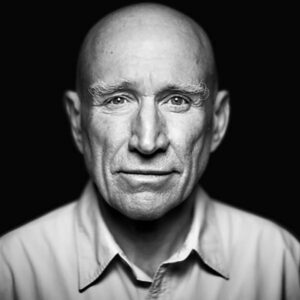
Sebastiao Salgado
Shared publisher: Aperture, Harry N. Abrams
21 photobook(s) in the library
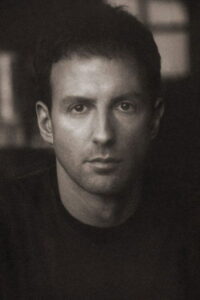
Nick Brandt
Shared publisher: Harry N. Abrams, Skira
9 photobook(s) in the library
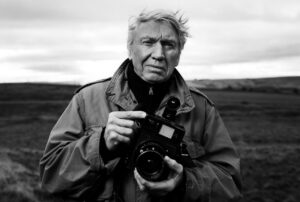
Don McCullin
Shared publisher: Aperture, Skira
9 photobook(s) in the library
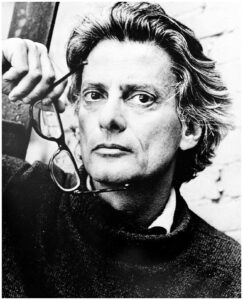
Richard Avedon
Shared publisher: Harry N. Abrams, Skira
8 photobook(s) in the library
COMMUNITY DISCUSSION
Discuss this entry
Share interpretations, reading notes, and source-aware questions. For catalog corrections, use the feedback form below.
No discussion yet. Start the first focused conversation.
Sign in to join the discussion.
Optionally receive a digest when related photobooks are added to the catalog.
See something incorrect? Sign in to suggest a correction or report an issue.