Photographer
Felice Beato
Felice Beato, also known as Felix Beato, was an Italian-British photographer born around 1832 and active across Asia and the Near East during a formative period for photographic reporting. He died in 1909. Institutions identify him as one of the earliest war photographers and as an unusually committed visual chronicler of Asia. His career intersected with imperial expansion, military conflict, and rapid political change, giving his pictures enduring documentary value while also requiring them to be read within the colonial structures that enabled their production and circulation.
Beato’s visual language combines descriptive precision with a strong sense of place. Battle sites, damaged buildings, urban spaces, monuments, and people are presented as evidence-bearing subjects rather than fleeting impressions. The detail and exactness noted in accounts of his work distinguish him from photographers concerned mainly with studio portraiture or picturesque travel views. Because nineteenth-century photographic processes made spontaneous action difficult, he often recorded consequences, occupied landscapes, and material traces. This temporal distance can make the images appear controlled, but it also exposes how photography translated war into scenes that distant viewers could inspect.
His photographs connected with the Indian Rebellion of 1857 constitute a major early body of conflict imagery. The Smithsonian’s album titled “Photographs of Delhi” preserves one important form in which such views were gathered and encountered. His work on the Second Opium War extended this practice into China, linking military events to records of architecture and terrain. A third landmark body is his documentation of Japan during the late Edo and early Meiji eras. These photographs matter because they register a society undergoing political transformation while revealing the selective viewpoint of a foreign commercial photographer.
Beato’s historical importance lies in the geographic range and continuity of his practice. The Getty describes him as the first photographer to devote himself entirely to photographing Asia and the Near East, while archival sources characterize him as a pioneer of war and documentary photography. His images of the Indian Rebellion and Second Opium War helped establish an early model of sustained photographic reporting. Their later presence in the Getty Museum, Smithsonian, and UMass Amherst collections has also encouraged reassessment of authorship, context, and the relationship between documentary evidence and imperial power.
For photobook and album collectors, “Photographs of Delhi” offers a useful entry point because it shifts attention from isolated famous images to the historical album as a sequence. Order, captions, mounting, and institutional provenance can shape how a campaign or city is understood, although surviving albums should not automatically be treated as sequences designed solely by Beato. Comparing the Delhi material with his China and Japan photographs reveals how recurring subjects—sites, structures, aftermaths, and social types—were adapted to different places. Careful cataloguing is especially important, since Beato’s work circulated through collaborative and commercial networks rather than through modern author-controlled photobooks.
〔PBL-BIO/2〕


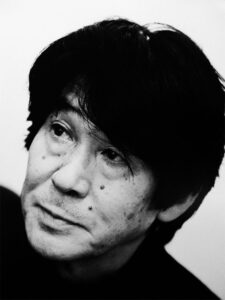
Daido Moriyama
Shared publisher: Getty Publications, MACK
15 photobook(s) in the library
Lisa Barnard
Shared publisher: GOST Books, MACK
4 photobook(s) in the library
Gustave Le Gray
Shared publisher: Getty Publications, MACK
2 photobook(s) in the library
Lindokuhle Sobekwa
Shared publisher: GOST Books, MACK
2 photobook(s) in the library
COMMUNITY DISCUSSION
Discuss this entry
Share interpretations, reading notes, and source-aware questions. For catalog corrections, use the feedback form below.
No discussion yet. Start the first focused conversation.
Sign in to join the discussion.
Optionally receive a digest when related photobooks are added to the catalog.
See something incorrect? Sign in to suggest a correction or report an issue.