Photographer
Margaret Bourke-White
Margaret Bourke-White (1904–1971) was an American photographer whose work helped define twentieth-century photojournalism. Born in The Bronx, New York, she studied at the University of Michigan and Cornell University, where she discovered photography in 1927. She first established herself as an architectural and commercial photographer, making her reputation through pictures of buildings, factories, and machines before moving decisively into magazine journalism. Her career unfolded as illustrated publications transformed photography into a central form of public communication.
Bourke-White’s visual language joined crisp geometric composition to a dramatic sense of scale. Steel mills, skyscrapers, machinery, and working bodies became monumental through strong contrast, bold framing, and carefully controlled perspective, while her portraits of ordinary people retained a direct human presence. In 1930 she became the first foreign photographer allowed to document Soviet industry, producing a celebrated body of work that conveyed both the utopian energy and the harsh realities of early Soviet construction. Her photographs of German industry and of Americans confronting the Great Depression further established her as a photojournalist of unusual ambition.
Her professional life developed alongside the rise of the modern photo-essay. As a contributor to Life magazine, she helped pioneer the combination of photographs and text that shaped print journalism in the 1930s and 1940s. She traveled widely, including through the United States, the Soviet Union, Europe, and India, adapting her methods to the demands of each story. During World War II she worked in active war zones, recording military operations as well as civilian suffering. The images she made during and after the conflict remain stark historical documents, balancing reportorial urgency with a highly deliberate visual structure.
Bourke-White’s importance also rests on her role as a female pioneer in a male-dominated profession. When few women held correspondent or staff positions, she broke professional barriers through determination and skill. The Museum of Modern Art in New York recognizes her as a pioneering photojournalist whose insightful pictures of 1930s Russia, German industry, and the Depression captured the texture of modernity. Her example influenced later generations of documentary and magazine photographers, who admired her ability to unite aesthetic control with engagement in the world.
For collectors, Bourke-White’s photographs and publications represent a crucial link between art photography and mass-media journalism. Her images appeared in major magazines and entered leading museum collections, while her Life work and early industrial portfolios offer especially clear points of entry into her practice. Parkinson’s disease marked her later life, and she died in 1971, but her legacy remains vivid. Across individual photographs and extended series, she showed how a single frame could carry beauty, scale, and documentary weight at once, making her work central to the history of the photographic essay and to the study of the modern photobook tradition.
〔PBL-BIO/2〕


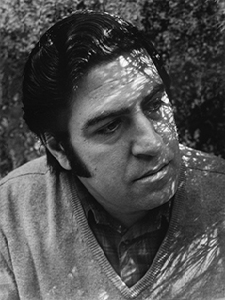
Paul Caponigro
Shared publisher: David R. Godine Publisher
4 photobook(s) in the library
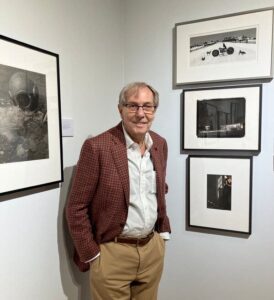
George Tice
Shared publisher: David R. Godine Publisher
4 photobook(s) in the library

Builder Levy
Shared publisher: David R. Godine Publisher
4 photobook(s) in the library
Arthur Leipzig
Shared publisher: David R. Godine Publisher
2 photobook(s) in the library
COMMUNITY DISCUSSION
Discuss this entry
Share interpretations, reading notes, and source-aware questions. For catalog corrections, use the feedback form below.
No discussion yet. Start the first focused conversation.
Sign in to join the discussion.
Optionally receive a digest when related photobooks are added to the catalog.
See something incorrect? Sign in to suggest a correction or report an issue.