Photographer
Esther Bubley
Esther Bubley (1921–1998) was an American documentary photographer known for her sensitive, humanistic depictions of everyday life during the mid-twentieth century. Born in Phillips, Wisconsin, to Jewish immigrant parents, she developed an early interest in photography and left home in the late 1930s to pursue a career. Her work emerged during the so-called golden age of American photojournalism, spanning roughly 1945 to 1965, when she built a reputation as a versatile freelance photographer for major magazines and government agencies.
Bubley’s visual language was marked by an unobtrusive, nearly candid style. She often worked with a small camera and available light, allowing her subjects—ordinary people in buses, boarding houses, hospitals, and workplaces—to appear natural and unposed. Unlike the more theatrical or staged approaches of some contemporaries, her photographs emphasize quiet moments of introspection and human connection. This approach was evident even in her early assignments for the Office of War Information during World War II, where she documented the American home front, including the realities of racial segregation and wartime labor.
Among her most significant bodies of work are the Greyhound Bus series (1943), which captured passengers and terminals during long-distance travel, and the boarding house series in Washington, D.C., which portrayed the social dynamics of shared living spaces. She also produced notable photo essays for Life, Look, and other publications, covering topics from pediatric hospitals to women’s workplaces. These projects demonstrate her ability to find narrative depth within mundane subjects, elevating the documentary genre beyond mere reportage.
Bubley’s historical significance lies in her pioneering role as a woman in a field dominated by men, and her consistent focus on marginalized or overlooked populations. Her work has been exhibited at institutions such as the National Museum of Women in the Arts, the Phillips Collection, and the Akron Art Museum, and she remains a touchstone for scholars of American documentary photography. The Esther Bubley Photography Archive, directed by her niece Jean Bubley, preserves and promotes her legacy, contributing to ongoing exhibitions and publications.
For collectors, Bubley’s photobooks and exhibition catalogues offer a window into mid-century American life. Her images are notable for their authentic street-level perspective and their engagement with social issues that remain relevant today. While prints may be scarce, her archive makes her work accessible to researchers and curators. A useful entry point is the monograph ‘Esther Bubley: Photographing the World War II Homefront’ (exhibition catalogue) or the archive’s online resources, which contextualize her shots within their historical and cultural frameworks.
〔PBL-BIO/2〕


Berenice Abbott
Shared publisher: Aperture, Dover Publications
5 photobook(s) in the library
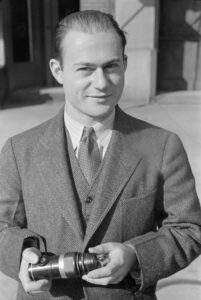
Arthur Rothstein
Shared publisher: Dover Publications, GILES
5 photobook(s) in the library
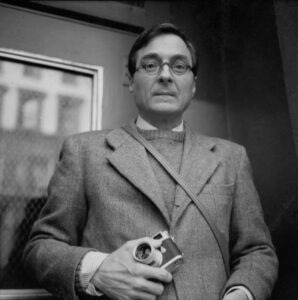
William Eggleston
Shared publisher: Aperture
26 photobook(s) in the library
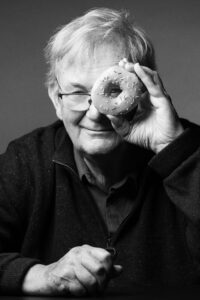
Martin Parr
Shared publisher: Aperture
21 photobook(s) in the library
COMMUNITY DISCUSSION
Discuss this entry
Share interpretations, reading notes, and source-aware questions. For catalog corrections, use the feedback form below.
No discussion yet. Start the first focused conversation.
Sign in to join the discussion.
Optionally receive a digest when related photobooks are added to the catalog.
See something incorrect? Sign in to suggest a correction or report an issue.