Photographer
Daido Moriyama
Daido Moriyama (b. 1938, Japan) is one of the most influential photographers in postwar Japanese photography, known for his raw, high-contrast black-and-white images that capture the fragmented experience of urban life.
Associated with the Provoke movement, Moriyama developed a distinctive visual language often described as “are-bure-boke” (grainy, blurry, out-of-focus). His work reflects themes of alienation, memory, and the fleeting nature of modern existence, frequently photographing the streets of Tokyo and other cities.
His photobooks, including Japan: A Photo Theater and Farewell Photography, are considered foundational works in contemporary photobook culture. For collectors, Moriyama’s work is highly sought after for its iconic style, historical importance, and lasting influence on generations of photographers.
Daido Moriyama (born 10 October 1938 in Ikeda, Osaka) is a leading Japanese photographer whose work transformed postwar street photography. He began as an assistant to photographer Shomei Tomatsu, then developed a deliberately rough, high-contrast, grainy and often blurred style commonly described as are-bure-boke. He contributed to the avant-garde magazine Provoke and produced canonical photobooks including Farewell Photography (1972), Hunter (1972), and Memories of a Dog (1994). His 1971 image Stray Dog (Misawa) became one of his most recognised photographs, and he received the Hasselblad Award in 2019.

Los Angeles x Shinjuku

Daido Moriyama: Quartet

Exteriors: Annie Ernaux and Photography

A Retrospective

Farewell Photography

1960-1982: Tokyo Polytechnic University Shadai Gallery Archive

Light and Shadow

Shinjuku(Collage)

Farewell Photography

One Picture Book Two #10: Daido Moto

One Picture Book Two #38: Daido "Uno"

One Picture Book Two #39: Daido "Dos"

One Picture Book #39: Kuchibiru

One Picture Book #90: Self

Mantis
Selected Works & Key Projects
A source-backed introduction to individual photographs and significant bodies of work.
Key projects
Project · 1968
Japan: A Photo Theater
Moriyama’s first published book, Japan: A Photo Theater, was issued in 1968 by Muromachi Shobo with text by poet and playwright Shuji Terayama. Its 145 black-and-white photographs draw on popular entertainment and experimental theater, a subject field documented by SFMOMA as central to the book. The project merits selection because it establishes the theatrical figures, high-contrast vocabulary, and unstable modern atmosphere that recur throughout Moriyama’s early work. It is a project-level landmark: the book organizes varied street, portrait, and performance photographs into a sustained encounter with 1960s Japan rather than treating any one image as a complete statement.
View source ↗Project · 1972
Hunter
Hunter is the 1972 book in which the works later shown by the Metropolitan Museum of Art first appeared. The Met describes its sequence as dark and intense, made from shadows and from the windows of moving cars; its subject is the friction and vitality of postwar Japan amid Western mores and mass media. This makes Hunter a crucial project rather than simply a group of period photographs: its poetic ordering gives mobility, partial vision, and urban encounter a coherent form. The Met’s dedicated 1999–2000 presentation of forty vintage prints also documents the project’s museum reception and supports its place among Moriyama’s major photobook achievements.
View source ↗
Project · 1972
Farewell Photography
Published in 1972, Farewell Photography is Moriyama’s sustained challenge to conventional photographic finish and factual authority. Phoenix Art Museum characterizes the book’s stark, high-contrast black-and-white photographs as declaring a departure from photography’s earlier commitments to propriety, stillness, and objective fact-rendering. That explicit account explains its selection: the project is significant for interrogating what a photograph is permitted to look like and claim, not merely for representing postwar Japan. It remains a key point of reference in accounts of Japanese postwar photography because its formal refusal is inseparable from its argument about the medium.
View source ↗Selected photographs

1966
Japan Theater
This 1966 gelatin silver print is held by SFMOMA. In its accompanying curatorial essay, Sandra S. Phillips identifies the subject as likely connected to an underground theater troupe and notes Moriyama’s high-contrast printing, sharply lit figure, and withheld gaze. The photograph merits selection as a concentrated example of the concerns later assembled in Japan: A Photo Theater: performance, ambiguous identity, and the collision of older and emerging Japan. Its importance as an individual work lies in how one performer becomes, in SFMOMA’s reading, both a specific person and a figure for the uncertainty and darkness of the 1960s.
Work source ↗1968 · Hamamatsu, Japan
Soldiers, Hamamatsu
Soldiers, Hamamatsu is a 1968 gelatin silver print in MoMA’s Department of Photography. The work was included in MoMA’s 1974 exhibition New Japanese Photography and was later identified in the museum’s 2019–2021 collection installation Four Photographers, Four Places. It merits selection as a documented museum-held example from the decade in which Moriyama developed the gritty, expressionist treatment of postwar Japanese life described by SFMOMA. The photograph’s value here is specific rather than project-wide: its title fixes attention on military presence in Hamamatsu, while its exhibition history demonstrates sustained institutional interest in this individual print.
Work source ↗1969 · Tokyo, Japan
Midnight Accident, Tokyo
Midnight Accident, Tokyo is a 1969 gelatin silver print in MoMA’s Photography collection. MoMA records its inclusion in New Japanese Photography in 1974, Tokyo 1955–1970: A New Avant-Garde in 2012–2013, and Four Photographers, Four Places in 2019–2021. SFMOMA identifies Accident as a 1969 group in which Moriyama rephotographed and reframed imagery, including traffic-safety-poster material. This print therefore merits selection as an individual entry point into his use of already-circulating images and the visual language of urban media. Its repeated placement in MoMA exhibitions establishes a documented institutional afterlife beyond its original 1969 context.
Work source ↗1968
KARIUDO (Hunter)
This 1968 gelatin silver print, titled KARIUDO (Hunter), is in SFMOMA’s collection. It is selected as an early individual work bearing the title later used for Moriyama’s 1972 Hunter book. The distinction matters: the photograph is a single collection object, whereas Hunter is a later poetic sequence assembled in book form. SFMOMA’s record securely identifies this work’s date, medium, and collection status; the Metropolitan Museum of Art describes the subsequent book as a sequence of shadowed and moving-car-window photographs concerned with postwar Japan. Together, those records make this print a useful, documented bridge between an early image and one of Moriyama’s major photobook projects.
Work source ↗1972
Farewell Photography, from the portfolio Farewell Photography
SFMOMA records this work as a screenprint dated 1972 and printed in 2012, given to the museum by Taka Ishii Gallery in honor of curator Sandra S. Phillips. It merits selection because it is a material, collection-specific manifestation of Farewell Photography rather than a generic illustration of the book. Phoenix Art Museum identifies the 1972 photobook as a decisive break with prior expectations of photographic propriety, stillness, and objective fact-rendering. The later print date should be retained: it documents the survival and re-presentation of an image from that pivotal project, while distinguishing this object from a 1972 vintage print or the book as a whole.
Work source ↗-
1938
Career milestone
Birth in Osaka
Daido Moriyama was born on October 10, 1938, in Osaka, Japan. His childhood and youth in a rapidly changing urban Japan later surfaced in imagery that resists nostalgia and instead captures the gritty, anarchic energy of postwar streets. Moriyama's distinctive visual language, marked by high contrast and grain, emerged only after he left formal education and engaged with photography professionally.
Source: Wikipedia Verified Sep 4, 2026
-
1961
Career milestone
Assistant to Takeji Iwamiya
Moriyama moved to Tokyo in 1961 and became an assistant to the established photographer Takeji Iwamiya, known for his theatrical and often commercial work. This apprenticeship gave Moriyama technical fluency and access to Tokyo's avant-garde artistic circles. He soon began to rebel against the polished aesthetics of Iwamiya's output, seeking instead to incorporate motion, density, and informal framing into his own photographic approach.
Source: Wikipedia Verified Sep 4, 2026
-
1963
Exhibition
First Solo Exhibition at Fuji Photo Salon
In 1963, Moriyama held his first solo exhibition at the Fuji Photo Salon in Tokyo. This show featured street photographs taken in the Shinjuku and Kabuki-chō districts, revealing his early attraction to nightlife, wanderers, and urban chaos. Critics noted his unconventional spontaneous shots, but the exhibition also marked the beginning of decades of provocative exhibitions that would eventually earn him international acclaim.
Source: Wikipedia Verified Sep 4, 2026
-
1968
Photobook
Publication of 'Japan: A Photo Theater'
Moriyama's first photobook, 'Nippon gekijō shashin-chō', was published in 1968. The collection interweaves scenes from his Osaka childhood, Tokyo nightlife, and abstract close‑ups, using a mix of snapshot to high‑contrast printing. It is recognized as a seminal bridge between post‑war documentary impulse and the subversive 'Provoke' generation. The book established Moriyama as a voice that challenged dominant notions of composition and meaning in Japanese photography.
Source: Wikipedia Verified Sep 4, 2026
-
1972
Photobook
Publication of 'Farewell Photography'
With 'Shashin yo Saraba' (Farewell Photography) in 1972, Moriyama pushed his practice to radical extremes. The pages contain blurry, heavily grained, often off‑register prints, some intentionally torn or stained. This book is historically crucial for aligning photography with the destructive energies of art and punk‑era sensibility. It challenged whether photography could ever faithfully preserve memory, and influenced the so‑called 'are, bure, boke' ethos of a generation.
Source: Wikipedia Verified Sep 4, 2026
-
2019
Award
Hasselblad Award
In 2019, Moriyama received the Hasselblad Foundation International Award in Photography, one of the most prestigious honours for photographers. The award recognized his lifelong contribution to expanding photographic language, particularly his aggressive, intuitive, and anti‑traditional formal decisions. The prize catalysed new retrospectives and exhibitions worldwide, cementing the history of an artist whose work had influenced several generations of photographers, especially in Europe and Japan.
Source: Wikipedia Verified Sep 4, 2026
Collection
Museum of Modern Art
The Museum of Modern Art in New York holds a substantial collection of Daido Moriyama's photographs, including major series such as 'Hunter' and 'Stray Dog'. MoMA acquired these works as part of its broader commitment to postwar Japanese photography, exhibiting them in group and solo shows that introduced Moriyama's raw, grainy aesthetic to American audiences. The collection demonstrates his acceptance within the canon of twentieth-century art photography.
Verified 2026-09-04Wikipedia: Daido Moriyama
Collection
Tate
Tate, with galleries in London and Liverpool, holds works by Moriyama in its collection, reflecting his influence on European photography. Tate acquired his prints and placed them in the context of international conceptual and street photography. The institution highlights his radical approach to snapshot aesthetics and his impact on artists beyond Japan, making his work accessible to British and global audiences through regular displays.
Verified 2026-09-04Wikipedia: Daido Moriyama
Representation
Akio Nagasawa Gallery
Akio Nagasawa Gallery in Tokyo represents Daido Moriyama, serving as a primary venue for his exhibitions and distribution of his prints. The gallery has organized numerous solo shows, including retropectives of his early and recent works, and publishes catalogues that contextualize his practice. Its representation strengthens Moriyama's presence in the Japanese market and connects him to a domestic collector base.
Verified 2026-09-04Akio Nagasawa Gallery: Artist page
Representation
Luhring Augustine
Luhring Augustine, a contemporary art gallery in New York, represents Daido Moriyama in the United States. The gallery has mounted multiple exhibitions of his photographs, introducing his gritty urban imagery to North American audiences. Its representation facilitates his participation in international art fairs and supports the sale of his prints to institutional and private collectors, reinforcing his global reputation.
Verified 2026-09-04Luhring Augustine: Artist page
Other institution
Provoke
Daido Moriyama was a key member of the avant-garde photography magazine Provoke, which operated from 1968 to 1969. The magazine, founded by Takuma Nakahira and others, pushed for a raw, 'are-bure-boke' (rough, blurry, out-of-focus) style in response to Japanese political turmoil. Moriyama's contributions, particularly his series like 'Accident', exemplify the movement's rejection of traditional pictorialism, influencing subsequent generations of photographers worldwide.
Verified 2026-09-04Wikipedia: Provoke (photography magazine)
Influence & affinity
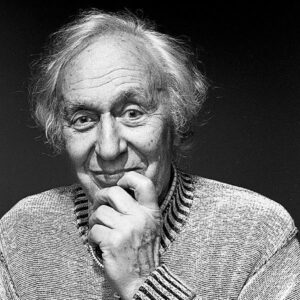
William Klein
Curator Thyago Nogueira links Moriyama’s early encounter with Klein’s New York to the formation of Moriyama’s are-bure-boke style.
Verified 2026-08-31Aperture — Daido Moriyama’s Homecoming in Japan
Shared exhibition
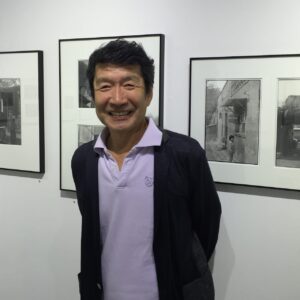
Kazuo Kitai
Kazuo Kitai and Daido Moriyama belong to the same generation of Japanese photographers who, from the late 1960s, rejected postwar humanist reportage in favour of rougher, more subjective documentary imagery. Their work has been presented together in survey exhibitions of that movement, such as 'Provoke: Between Protest and Performance,' which framed their documentary and experimental street photography as part of one generational break.
Verified 2026-09-29Wikipedia

Influence & affinity
Shomei Tomatsu
Daido Moriyama has cited Japanese photographer Shomei Tomatsu as an important influence. Tomatsu's documentary work in postwar Japan, especially his images of American military bases and societal transformation, inspired Moriyama's own intense, subjective documentary style. Moriyama absorbed Tomatsu's use of high contrast and grainy film, but pushed it toward even more radical abstraction and personal expression, creating a distinct language that diverged from Tomatsu's more narrative approach.
Verified 2026-09-04Wikipedia: Shomei Tomatsu
Daido Moriyama: A Retrospective (opens a new site)
The Photographers’ Gallery’s exhibition page introduces its UK retrospective of more than 200 works, large-scale installations, and numerous photobooks and magazines. Its overview follows Moriyama from early magazine assignments, attention to the American occupation, and photorealism through self-reflexive work of the 1980s and 1990s, later investigations of memory and cities, and the reworking of his archive. It is a concise institutional route into the breadth of his career.
Daido Moriyama (opens a new site)
SFMOMA’s artist profile, written by Sandra S. Phillips, surveys Moriyama’s development from work around American military bases and contributions to Camera Mainichi through Japan: A Photo Theater, The Tales of Tono, Light and Shadow, and later color work. It is particularly useful for its account of his recurring concern with postwar Japan and Western—especially American—influences, and for situating his 1974 visibility in New Japanese Photography at MoMA.
The Endless Outer World (opens a new site)
In this Aperture interview, Tsuyoshi Ito speaks with Moriyama about joining Provoke at Takuma Nakahira’s invitation, the group’s shared but differing photographic positions, Shinjuku, graphic design, and the role of the photobook. Moriyama describes books not as finished thematic containers but as open-ended “jigsaw puzzles,” making this a valuable primary-source resource on his working ideas and on his personal account of the Provoke period.
Daido Moriyama on social rebellion in 1960s Japan (opens a new site)
In this SFMOMA interview, Moriyama reflects on late-1960s Japanese youth culture, Provoke, and his desire to reform photography rather than make direct political statements. He discusses Shashin yo sayonara / Farewell Photography (1972), explaining that it included images without conventional subjects and damaged darkroom materials. He recalls that the book was initially rejected by most people as photography, while Nobuyoshi Araki praised it. The page supplies a full transcript.
Daido Moriyama snaps the 'most interesting city in the world'! (opens a new site)
Kobunsha Shinsho presents interview footage made for the publication of Moriyama’s photobook Tokyo. Editor Yuya Furukawa explains that the book was conceived as a guidebook and drew on Moriyama’s continuing Tokyo Sightseeing Guide series for Otona no Shumatsu. The accompanying text frames the footage as a conversation about the book’s making and Moriyama’s then-current thoughts on Tokyo and photography, with images from the publication.
Artist Daido Moriyama – In Pictures | Tate (opens a new site)
Tate’s film follows Moriyama in his studio and on a walk through Shinjuku, Tokyo, a neighborhood identified in the video as especially important to him. The description notes his use of an ordinary compact camera and presents him as the best-known photographer to emerge from the 1960s Provoke movement. The film was made in connection with Tate Modern’s William Klein + Daido Moriyama exhibition, held from 10 October 2012 to 20 January 2013.
COMMUNITY DISCUSSION
Discuss this entry
Share interpretations, reading notes, and source-aware questions. For catalog corrections, use the feedback form below.
No discussion yet. Start the first focused conversation.
Sign in to join the discussion.
Optionally receive a digest when related photobooks are added to the catalog.
See something incorrect? Sign in to suggest a correction or report an issue.