Photographer
Dawoud Bay & Carrie Mae Weems
Dawoud Bey (born David Edward Smikle, 1953) is an American photographer and educator whose work interrogates visibility, race, place, and historical memory. Raised in Queens, New York, during the height of the civil rights movement, he began making photographs in Harlem in 1975. His early series Harlem, USA, first shown at the Studio Museum in Harlem in 1979, established him as a close observer of Black community life. Over a career spanning five decades, Bey has moved between street-based portraiture, large-scale studio portraits, landscape photography, and film installations, always with a deliberate attention to how Black Americans are represented.
Bey’s visual language is marked by an empathetic, collaborative approach to portraiture. He often worked with large-format cameras in informal public settings, inviting passersby—especially adolescents—to pose for multiple frame portraits that were later combined into multipanel images. This process grants his subjects a self-conscious dignity rarely seen in documentary photography. In his later projects, Bey shifted from the human figure to landscapes charged with historical trauma, producing darkened, atmospheric views of sites connected to slavery and the civil rights era. These works demand slow looking and are often presented as immersive installations.
Three major bodies of work anchor his achievement. Harlem, USA (1970s) captures the texture of everyday Black life, anticipating later interest in community-based portraiture. The Chicago Project (2003) continues his engagement with adolescents, this time across a broader racial and economic spectrum. The Birmingham Project, first realized around the fiftieth anniversary of the 1963 Birmingham church bombing, pairs portraits of survivors and descendants with contemporary residents of the city, creating a commemoration across generations and media. His large retrospective Dawoud Bey: An American Project traveled to institutions including the Whitney Museum of American Art, the San Francisco Museum of Modern Art, and the High Museum of Art, reflecting his standing as a central figure in American photography.
Educated at the School of Visual Arts and later earning an MFA from Yale School of Art in 1993, Bey has combined practice with pedagogical work, mentoring young photographers through community projects and teaching positions. He received a MacArthur Fellowship, a recognition that has amplified public awareness of his contributions. His commitment to collaborative process and historical consciousness places him in dialogue with contemporaries such as Carrie Mae Weems and Lorna Simpson, while his emphasis on place and memory extends the legacy of documentary photographers like Roy DeCarava.
For photobook collectors, Bey’s publications offer significant insight into his working method and visual philosophy. Dawoud Bey on Photographing People and Communities (2019), part of the Photography Workshop Series, distills his collaborative ethics and technical approach into a useful handbook. Exhibition catalogs such as Dawoud Bey: An American Project reproduce his portraits and landscapes with careful sequencing that mirrors the immersive experience of his installations. Collectors seeking a gateway into his career should begin with monographs that pair his landmark series, as the juxtaposition of street portraits and contemplative landscapes reveals the evolution of his thinking about history and representation.
〔PBL-BIO/2〕
Carrie Mae Weems (born 1953) is an American artist best known for her photography, video, and text-based installations exploring family, race, gender, class, and cultural identity. Her landmark series ‘Kitchen Table Series’ (1990) remains a touchstone, and she was a 2013 MacArthur Fellow.
Dawoud Bey (born 1953) is an American photographer and educator known for large-scale portraits of marginalized subjects, Harlem street photography, and the 2017 series ‘Night Coming Tenderly, Black’ reimagining the Underground Railroad. He is a professor at Columbia College Chicago and a MacArthur Fellow (2017).

Selected Works & Key Projects
A source-backed introduction to individual photographs and significant bodies of work.
Key projects
Project · 1976–1983
Harlem, 1976-1983
Harlem, 1976–1983 is Bey’s sustained portrait of a neighborhood he knew through family history, childhood visits, and later repeated walks and conversations. Working in black and white, he photographed residents, workers, children, and street life with an intimacy that joined documentary observation to collaborative portraiture. The project’s early presentation at the Studio Museum in Harlem made it a foundational public statement of his practice. It merits selection because it replaced generalized images of Harlem with distinct social presences and supplied the ethical and visual basis for Bey’s later community-centered projects.
View source ↗Project · 1990
Kitchen Table Series (1990)
Kitchen Table Series is a sequence of 20 staged photographs accompanied by 14 text panels, all organized around a kitchen table illuminated by a single hanging lamp. Weems performs its central figure, but the recurring set and episodic scenes construct a broader narrative of friendship, desire, conflict, solitude, and motherhood. First exhibited in 1990, the project became a key reference for photography that treats domestic space as a site where race, gender, class, and power are enacted rather than merely represented. It merits selection for uniting serial form, text, performance, and self-portraiture in one sustained visual story.
View source ↗Selected photographs
1981 · Harlem, New York
A Man in a Bowler Hat, Harlem, New York (1981)
This early Harlem portrait isolates a sharply dressed man whose bowler hat and composed bearing hold their own against the activity of the street. Rather than treating him as anonymous urban scenery, Bey gives the encounter the scale and attentiveness of portraiture, joining individual presence to the social life of the neighborhood. It merits selection because it clearly demonstrates the reciprocal, community-based approach that distinguished Bey’s formative Harlem photographs and helped establish his long engagement with Black self-presentation in public space.
Work source ↗1983 · Harlem, New York
Three Men, Harlem, New York (1983)
Three Men, Harlem, New York uses a three-part black-and-white arrangement to make a sidewalk encounter unfold across adjacent images. The format preserves the specificity of each sitter while turning their proximity, gestures, and shared setting into a compact study of companionship and public life. This photograph is a strong selection from Bey’s early work because it shows him testing how serial composition can expand a street portrait beyond a single decisive instant, without surrendering the dignity or individuality of the people pictured.
Work source ↗1990 · New York
Untitled (Kitchen Table) (1990)
This photograph is one episode in Weems’s staged Kitchen Table Series, a fictional domestic narrative in which she performs the central woman. A fixed table and overhead lamp create a repeatable theatrical set; changes in company, pose, and objects make ordinary domestic space register shifting roles as lover, friend, and mother. Selected on its own, the image is significant because it condenses the series’ method—self-portraiture used as constructed narrative—and shows why the project became a widely cited account of gender, intimacy, and Black womanhood in contemporary photography.
Work source ↗1995 · New York
From Here I Saw What Happened and I Cried (1995-96)
From Here I Saw What Happened and I Cried is Weems’s 34-part installation of rephotographed archival images of Africans and African Americans, including photographs made to support nineteenth-century racial pseudoscience. She enlarged, cropped, and tinted the images, then placed them behind glass inscribed with her own text, shifting attention from the archive’s supposed evidence to its acts of framing and power. The work is selected for making photography’s historical role in racial classification and dehumanization visible while using image and language to restore critical attention to people treated as specimens.
Work source ↗2017 · Cuyahoga Valley, Ohio
Untitled #25 (Night Coming Tenderly, Black) (2017)
This dark Lake Erie view is the culminating image of Bey’s Night Coming Tenderly, Black, a sequence that imagines the final Ohio passage of freedom seekers on the Underground Railroad. Large gelatin-silver printing and dense, Roy DeCarava–informed tonal darkness make the horizon difficult to read at first, requiring viewers to adapt to the conditions of concealment and uncertainty the series evokes. It merits selection as the project’s visual threshold: water promises Canada and freedom, yet the absent shore preserves the danger, distance, and unresolved suspense of the journey.
Work source ↗-
1976-1978
Education
Dawoud Bey studies at Empire State College
Bey attended Empire State College in New York, where he began formal study of photography.
Source: Wikipedia – Dawoud Bey Verified Sep 3, 2026
-
1990
Series
Weems produces Kitchen Table Series
Carrie Mae Weems completed 'Kitchen Table Series', a landmark photo-text work exploring Black womanhood and intimacy.
Source: Wikipedia – Carrie Mae Weems Verified Sep 3, 2026
-
2013
Award
Weems receives MacArthur Fellowship
Carrie Mae Weems was named a MacArthur Fellow, recognizing her significant contributions to contemporary art.
Source: Wikipedia – Carrie Mae Weems Verified Sep 3, 2026
-
2017
Award
Bey receives MacArthur Fellowship
Dawoud Bey was named a MacArthur Fellow, citing his powerful portraits and landscape work.
Source: Wikipedia – Dawoud Bey Verified Sep 3, 2026
-
2019-2020
Exhibition
Dawoud Bey: An American Project at SFMOMA
SFMOMA co-organized a major retrospective of Bey's work, traveling to the Whitney Museum.
Source: Wikipedia – Dawoud Bey Verified Sep 3, 2026
Collection
Art Institute of Chicago
The Art Institute of Chicago holds major works by both Dawoud Bey and Carrie Mae Weems in its permanent collection, including Bey's Harlem portraits and Weems' Kitchen Table images.
Verified 2026-09-03Art Institute of Chicago
Collection
Smithsonian American Art Museum
SAAM holds works by both Dawoud Bey and Carrie Mae Weems in its permanent collection.
Verified 2026-09-03Smithsonian American Art Museum
Carrie Mae Weems at MoMA (2014) (opens a new site)
A short interview with Carrie Mae Weems on the occasion of her retrospective at the Museum of Modern Art, discussing her practice and key works.

Arnold Newman
Shared publisher: DelMonico Books
4 photobook(s) in the library
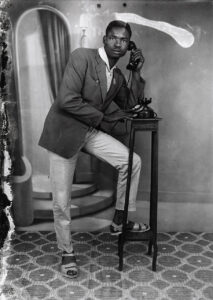
Seydou Keïta
Shared publisher: DelMonico Books
3 photobook(s) in the library
Jimmy DeSana
Shared publisher: DelMonico Books
1 photobook(s) in the library
Fadeley Collection
Shared publisher: DelMonico Books
1 photobook(s) in the library
COMMUNITY DISCUSSION
Discuss this entry
Share interpretations, reading notes, and source-aware questions. For catalog corrections, use the feedback form below.
No discussion yet. Start the first focused conversation.
Sign in to join the discussion.
Optionally receive a digest when related photobooks are added to the catalog.
See something incorrect? Sign in to suggest a correction or report an issue.