Photographer
Edward Weston
Edward Weston was an American photographer whose career helped define modernist photography in the United States. Born in Highland Park, Illinois, in 1886, he began photographing in Chicago parks and moved to California in 1906. His early professional work followed the soft-focus, carefully manipulated conventions of Pictorialism, but during the 1920s he rejected that manner in favor of sharply described forms. California—especially the central coast—became his principal geographic and imaginative territory until his death in 1958.
Weston’s mature visual language joined precise observation to radical simplification. Working frequently with a large-format camera, he used close viewpoints, sustained tonal gradation, and carefully organized light to make ordinary subjects appear newly strange. Peppers, shells, cabbages, rocks, trees, dunes, and the nude body become compact structures of contour and volume rather than illustrations of categories. Unlike photographers primarily concerned with fast social reportage, Weston worked slowly and contemplatively; unlike Pictorialists, he did not disguise the medium’s descriptive power. His images nevertheless resist being merely clinical: their formal analogies often allow plant, landscape, and body to echo one another.
Several bodies of work mark his development. Photographs made in Mexico during the 1920s register his decisive turn toward direct, modern form while reflecting an exchange with the country’s post-revolutionary artistic culture. His celebrated still lifes of shells and vegetables, including the closely studied peppers, demonstrated that a domestic object could sustain the visual intensity traditionally assigned to monumental subjects. The dune photographs reduce landscape to light, shadow, and rhythmic surface, while his work around Point Lobos and Carmel confronts eroded stone, cypress, kelp, and shoreline as records of natural process. Together these groups dissolve conventional distinctions between still life, nude, and landscape.
Weston became closely associated with the West Coast movement known as Group f/64, which advocated clarity, depth, and photographic specificity. His progression from Pictorialism to direct photography made his career an unusually legible account of a broader change in twentieth-century photographic aesthetics. Museum and archival recognition, including the substantial holdings of the Center for Creative Photography at the University of Arizona, has helped preserve not only individual icons but also the range of his practice. His disciplined approach to exposure, printing, and previsualizing form remained consequential for later generations of photographers.
Photobook collectors should approach Weston as a printmaker whose pictures depend on tonal relationships that reproduction can either reveal or flatten. Because his career preceded the contemporary photographer-authored book as a dominant form, later monographs and institutional publications often provide the most coherent sequences through his work. A useful entry point is a well-printed survey that places the Mexican photographs, still lifes, dunes, nudes, and Point Lobos landscapes in chronological relation. Comparing reproductions across publications can clarify how paper, scale, cropping, and tonal separation shape the experience of images usually encountered one at a time.
〔PBL-BIO/2〕
Edward Weston (1886–1958) was an American photographer born in Highland Park, Illinois, who later worked in Southern California and died in Carmel. During the 1920s, he engaged with European modernist influences and traveled to New York to seek guidance from Alfred Stieglitz at a time when photography had not yet gained broad recognition as an art form.
Weston moved to Mexico in 1924, where he became part of an established artistic community and gained confidence in his direction as a photographer. He subsequently returned to California, living first in Glendale and later in Carmel.
Alongside Ansel Adams, Imogen Cunningham, and other members of Group f.64, Weston advanced a sharp-focus approach to photography. His subjects included bodies, plants, shells, rocks, clouds, industrial structures, and coastal landscapes, reflecting his interest in finding connected visual rhythms across natural and human forms.
Edward Henry Weston (March 24, 1886–January 1, 1958) was an American photographer born in Highland Park, Illinois, who moved to California as a young man. After studying briefly at the Illinois College of Photography, he worked in Los Angeles studios and opened his own portrait business in Tropico in 1910. His early photographs followed pictorialism, but work made at the Armco steel mill in Ohio in 1922 marked a shift toward sharply focused, highly detailed images.
Weston worked in Mexico between 1923 and 1926, photographing portraits, nudes, everyday objects, and folk art. After returning to California, he produced studies of shells, vegetables, landscapes, and the human figure, including Nautilus (1927) and Pepper No. 30 (1930). He settled near Carmel and photographed extensively at Point Lobos. In 1932, he participated in the first Group f/64 exhibition at the de Young Museum in San Francisco alongside photographers including Ansel Adams and Willard Van Dyke.
In 1937, Weston became the first photographer to receive a Guggenheim Fellowship; renewed support enabled him to make nearly 1,400 negatives with an 8 × 10 view camera over two years. Diagnosed with Parkinson’s disease in 1947, he soon stopped photographing and spent his remaining years overseeing the printing of more than 1,000 images. He died at Carmel Highlands, California, aged 71.

Edward Weston: The Flame of Recognition

Edward Weston: The Early Years

Edward Weston: One Hundred Twenty-Five Photographs

Edward Weston's Book of Nudes

Edward Weston: A LEGACY

Edward Weston, 1886-1958

The Daybooks of Edward Weston: Two Volumes in One

Edward Weston on Photography

Edward Weston: Fifty Years: The Definitive Volume of His Photographic Work

The Daybooks of Edward Weston: Volume II, California
-
1908
Education
Studies at the Illinois College of Photography
Weston attended the Illinois College of Photography in Effingham, completing its twelve-month program in six months before returning to California.
Source: Edward Weston & Cole Weston Family Website Verified Aug 31, 2026
-
1922
Series
ARMCO Steel Plant Photographs
Weston photographed the ARMCO steel plant in Middletown, Ohio. These industrial studies signaled his turn from soft-focus Pictorialism toward sharper detail, abstract form, and direct photography.
Source: Edward Weston & Cole Weston Family Website Verified Aug 31, 2026
-
1923–1926
Career milestone
Mexico City Period
Weston traveled to Mexico with Tina Modotti and his son Chandler. During his approximately two-and-a-half years there, he expanded his subjects beyond portraits and nudes and developed a stronger emphasis on simplified, volumetric form.
Source: J. Paul Getty Museum Verified Aug 31, 2026
-
1932
Exhibition
Inaugural Group f/64 Exhibition
On November 15, Weston and ten other photographers announced Group f/64 at an exhibition at San Francisco’s M. H. de Young Memorial Museum, promoting sharply focused, direct photographic practice.
Source: The Metropolitan Museum of Art Verified Aug 31, 2026
-
1937–1938
Award
Guggenheim Fellowship and Renewal
Weston became the first photographer to receive a Guggenheim Fellowship in 1937. The award was renewed in 1938 and supported travel and photography across the western United States, during which he made about 1,400 negatives.
Source: J. Paul Getty Museum Verified Aug 31, 2026
-
1940
Photobook
Publication of California and the West
California and the West, associated with Weston and written by Charis Wilson, was published following their Guggenheim-supported travels and photographic work in California and the American West.
Source: The Huntington Library, Art Museum, and Botanical Gardens Verified Aug 31, 2026
-
1946
Exhibition
The Photographs of Edward Weston
MoMA presented The Photographs of Edward Weston from February 13 through March 31. The exhibition was accompanied by a 44-page publication by Nancy Newhall.
Source: The Museum of Modern Art Verified Aug 31, 2026
-
1947
Photobook
Publication of 50 Photographs
50 Photographs was published in New York by Duell, Sloan and Pearce in an edition of 1,500 copies. Designed by Merle Armitage, it presented a selection of Weston’s photographs from the 1920s onward.
Source: Nationalmuseum Sweden Verified Aug 31, 2026
-
1959
Collection acquisition
Gift of 204 Prints to the Art Institute of Chicago
Max McGraw gave the Art Institute of Chicago 204 Weston prints made by Brett Weston under his father’s close supervision. Sixty-four prints from the group were selected for a museum exhibition in 1960.
Source: Art Institute of Chicago Verified Aug 31, 2026
-
1981
Archive
Acquisition of the Edward Weston Archive
The Center for Creative Photography acquired the Edward Weston Archive. Its holdings include more than 2,000 exhibition prints, over 10,000 negatives, the original Daybooks, correspondence, financial records, and other materials.
Source: Center for Creative Photography, University of Arizona Verified Aug 31, 2026
Archive
Center for Creative Photography
The center has housed the Edward Weston Archive since acquiring it in 1981. Its holdings include more than 2,000 exhibition prints, over 10,000 negatives, Daybooks, correspondence, financial records, and ephemera.
Verified 2026-08-31Edward Weston | Center for Creative Photography
Collection
The Museum of Modern Art
MoMA’s artist record lists 263 works by Edward Weston online, confirming his representation in the museum’s collection.
Verified 2026-08-31Edward Weston | MoMA
Collection
J. Paul Getty Museum
The museum’s 2007 Weston retrospective featured prints drawn primarily from its own holdings.
Verified 2026-08-31Edward Weston: Enduring Vision | Getty Center Exhibitions
Collection
San Francisco Museum of Modern Art
SFMOMA’s collection includes photographs and related materials by Edward Weston, documented on its official artist page.
Verified 2026-08-31Edward Weston · SFMOMA
Collection
National Gallery of Art
The National Gallery of Art’s artist record lists 21 works by Edward Weston, with accession details for individual photographs.
Verified 2026-08-31Edward Weston | National Gallery of Art
Collection
Art Institute of Chicago
In 1959, the museum received 204 prints selected from Weston’s master set and later added further portraits to the group.
Verified 2026-08-31Hugh Edwards | Edward Weston
Collection
Museum of Fine Arts, Boston
The Lane Collection gift to the museum included approximately 2,500 works by Edward Weston across several photographic genres.
Verified 2026-08-31Lane Collection | Museum of Fine Arts Boston
Collection
The Metropolitan Museum of Art
The museum holds Weston’s 1924 photograph Circus Tent in its Department of Photographs as object 1987.1100.250.
Verified 2026-08-31Edward Weston – Circus Tent | The Metropolitan Museum of Art
Collection
Smithsonian American Art Museum
The museum owns Weston’s 1930 gelatin silver print Pepper no. 30, acquired by purchase as object 1985.56.
Verified 2026-08-31Pepper no. 30 | Smithsonian American Art Museum
Publishing relationship
Aperture
Aperture published Edward Weston: The Flame of Recognition in 1965 as the first book in its publishing history and later issued anniversary editions.
Verified 2026-08-31First Book in Aperture’s History, Edward Weston: The Flame of Recognition, Reissued in a 60th Anniversary Paperback Edition
Shared movement
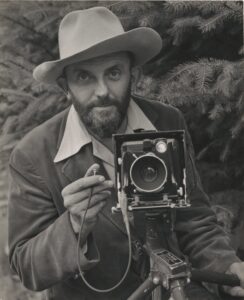
Ansel Adams
Weston and Adams were among the Bay Area photographers who helped found Group f/64 in 1932.
Verified 2026-08-31J. Paul Getty Museum — Imogen Cunningham: A Retrospective
Collaboration
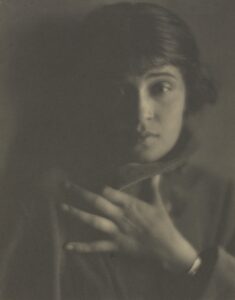
Tina Modotti
Modotti and Weston lived and worked together in Mexico from 1923 to 1926. Modotti managed their portrait studio, and each contributed to the other’s artistic development.
Verified 2026-08-31SFMOMA Presents Mexico as Muse: Tina Modotti and Edward Weston
Romancing Edward (opens a new site)
Susan Morgan turns to love letters preserved in the Edward Weston archive to complicate the self-portrait established by his edited Daybooks. Correspondence from women in his artistic circle illuminates the intimate relationships and bohemian networks surrounding his photographs.
Passion Fruit (opens a new site)
Henry Allen uses Weston’s celebrated pepper photographs and his later image of studio mannequins to contrast different facets of the photographer’s modernism. Drawing on Weston’s writings, the essay portrays sustained observation of ordinary objects as central to his search for visual revelation.
Hugh Edwards | Edward Weston (opens a new site)
This institutional essay outlines Weston’s modernist principles and the Art Institute of Chicago’s relationship to his work. It highlights the museum’s acquisition of 204 prints produced by Brett Weston under his father’s supervision and the 1960 exhibition selected by curator Hugh Edwards.
Edward Weston: The Matter of Forms (opens a new site)
Organized as a seven-part retrospective of roughly two hundred photographs and related documents, this exhibition followed Weston from Pictorialism to Straight Photography. It emphasized his precise technique and his ability to bring figuration and abstraction into productive tension.
First Book in Aperture’s History, Edward Weston: The Flame of Recognition, Reissued in a 60th Anniversary Paperback Edition (opens a new site)
Aperture announces a sixtieth-anniversary paperback edition of its first book, originally published in 1965. Combining Weston’s photographs with selections from his Daybooks and letters, the volume presents his images and writing as complementary expressions of his artistic outlook.
Real American Places: Edward Weston and Leaves of Grass (opens a new site)
This exhibition revisited Weston’s photographs for a 1941 deluxe edition of Walt Whitman’s Leaves of Grass. Pairing twenty-five photographs with Whitman materials, it restored attention to an ambitious but often overlooked chapter of Weston’s career.
Inside Edward Weston’s Flame of Recognition (opens a new site)
This archival feature presents Ansel Adams’s 1964 tribute to Weston, later used as a preface to The Flame of Recognition. Adams reflects on Weston’s integrity, intuitive approach, and decisive contribution to photography’s recognition as a fine art.
Edward Weston: Enduring Vision (opens a new site)
Drawing primarily from the Getty Museum’s collection, this exhibition surveyed Weston’s work in California, Mexico, and across the United States. Its thematic chronology connects his disciplined straight-photography technique with the changing subjects and scale of his mature vision.
Mexico as Muse: Tina Modotti and Edward Weston (opens a new site)
This exhibition examined the creative and personal partnership of Tina Modotti and Edward Weston during their years in Mexico. Photographs and correspondence reveal how the country’s cultural and political vitality became central to both artists’ development.
Edward Weston: Nature Is “the Great Stimulus” (opens a new site)
This short SFMOMA documentary considers how the natural world shaped Edward Weston’s photographic vision. It offers a focused introduction to nature as both his subject and creative catalyst.
COMMUNITY DISCUSSION
Discuss this entry
Share interpretations, reading notes, and source-aware questions. For catalog corrections, use the feedback form below.
No discussion yet. Start the first focused conversation.
Sign in to join the discussion.
Optionally receive a digest when related photobooks are added to the catalog.
See something incorrect? Sign in to suggest a correction or report an issue.