Photographer
Irving Penn
Irving Penn (1917–2009) was an American photographer whose long career joined magazine culture, commercial practice, and museum photography. Best known for fashion, portraiture, and still life, he worked for Vogue and other commercial clients in the United States and abroad for nearly seventy years. That duration matters: Penn did not merely document changing styles but helped establish a visual grammar through which editorial photography could be read as an autonomous artistic practice.
Penn’s pictures are distinguished by disciplined composition and close attention to pose, contour, texture, and tonal relationships. Whether photographing clothing, a celebrated sitter, or an ordinary object, he tended to reduce the scene to a concentrated encounter between subject, light, and camera. His fashion images could be sophisticated without depending on elaborate spectacle, while his portraits were often incisive rather than anecdotal. In still life, the same precision redirected attention from social identity toward surface, form, and material presence. This consistency across assignments and personal work separated him from photographers who maintained a clearer boundary between commissioned imagery and fine art; the Art Institute of Chicago specifically describes his work as blurring fashion, advertising, and art photography.
Three interconnected bodies of work organize his achievement. The fashion photographs made for Vogue transformed garments and models into tightly constructed images rather than simple records of merchandise. His portraiture applied comparable formal control to the human face and body, producing encounters whose psychological force comes partly from restraint. His still lifes demonstrated that the visual intelligence of editorial photography could also be directed toward objects, with arrangement and illumination carrying the meaning. Together these strands show that Penn’s subject was not only fashion or celebrity, but the act of looking closely under controlled conditions.
Penn’s historical position rests on this movement between publication and exhibition. His photographs circulated widely in magazines, yet institutions later presented the full range of his practice as art. The Smithsonian American Art Museum’s exhibition Irving Penn: Beyond Beauty brought fashion, portraits, and still lifes into a single account, while the Irving Penn Foundation now preserves and interprets his career. Such presentations make clear that his commercial and personal production should not be treated as unrelated halves, even though the elegance of his formal method can sometimes make the social circumstances surrounding a subject recede from view.
For photobook collectors, Penn is especially instructive as a case study in translating editorial photographs into sustained sequences. His work rewards attention to how portraits, fashion studies, and still lifes change when removed from magazine assignments and placed in dialogue across pages. Reproduction quality is consequential because fine tonal differences, textures, and spatial restraint carry much of the imagery’s effect. A useful starting point is a publication or institutional resource associated with Beyond Beauty, followed by the chronology and image groupings maintained by the Irving Penn Foundation; these provide a grounded framework for comparing how different books and exhibition projects edit the same expansive career.
〔PBL-BIO/2〕


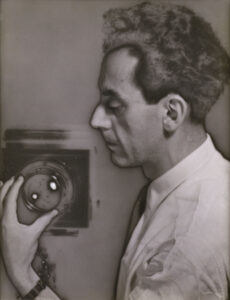
Man Ray
Shared publisher: 5 Continents Editions, The Metropolitan Museum of Art
8 photobook(s) in the library
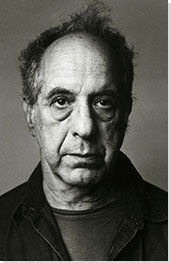
Robert Frank
Shared publisher: 5 Continents Editions, Yale University Press
19 photobook(s) in the library
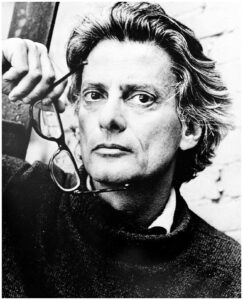
Richard Avedon
Shared publisher: 5 Continents Editions, Harry N. Abrams
8 photobook(s) in the library
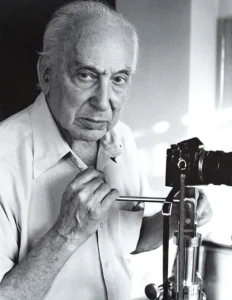
André Kertész
Shared publisher: 5 Continents Editions, Yale University Press
8 photobook(s) in the library
COMMUNITY DISCUSSION
Discuss this entry
Share interpretations, reading notes, and source-aware questions. For catalog corrections, use the feedback form below.
No discussion yet. Start the first focused conversation.
Sign in to join the discussion.
Optionally receive a digest when related photobooks are added to the catalog.
See something incorrect? Sign in to suggest a correction or report an issue.