Photographer
Saul Leiter
Saul Leiter was an American photographer and painter born in Pittsburgh in 1923. Enchanted by both mediums as a teenager, he later moved to New York City, where he developed the work for which he became known. His photographs from the 1940s and 1950s now occupy an important place in the history of postwar color photography, although broad recognition arrived comparatively late. Leiter died in 2013, leaving an archive that connects photography with a lifelong painterly sensibility.
Leiter’s distinctive visual language transformed ordinary urban experience into layered, partially abstract pictures. Rather than treating the street primarily as a theater of decisive public events, he attended to color, atmosphere, visual interruption, and the unstable boundary between description and abstraction. His photographs often make the city feel fragmented rather than fully disclosed: figures and structures become elements within a composition instead of straightforward documentary subjects. This approach differentiated him from peers whose street photography emphasized social incident, graphic immediacy, or narrative clarity. Leiter’s continuing work as a painter helps explain, without entirely defining, his sensitivity to color relationships and compressed pictorial space.
His most consequential body of work is the early color photography made in and around New York during the 1940s and 1950s. At a time when color photography had not yet secured the same artistic legitimacy as black and white, Leiter used it as a flexible expressive language rather than merely a descriptive technology. A related body of urban abstractions reduced streets, signs, people, and architectural details to shifting planes and accents of color. His paintings form a third essential strand of the archive, demonstrating that photography and painting were parallel practices rather than separate phases of his career.
Leiter is now regularly described as a pioneer of color photography, but that label can obscure the quieter character of his achievement. His importance lies not simply in using color early, but in showing how color could reorganize perception and make familiar surroundings appear elusive. The belated recognition of his work also complicates a simple story of immediate innovation and influence: much of his historical standing was consolidated only after the photographs reached wider audiences. The Saul Leiter Foundation now provides the principal institutional point of access to his work and legacy.
For photobook collectors, Leiter merits attention because his pictures depend strongly on relationships between images. Repetition, pauses, changes of scale, and shifts between saturated color and subdued passages can reveal continuities that are less apparent in isolated reproductions. Since the available evidence does not establish particular landmark titles, editions, or publishing collaborations, a responsible entry point is to consult the Foundation’s presentation of the archive and compare publications by their sequencing, reproduction quality, and treatment of both photography and painting. Books that preserve subtle color separation and tonal restraint are especially useful for understanding why his work resists reduction to a single signature effect.
〔PBL-BIO/2〕


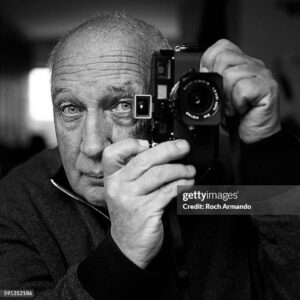
Raymond Depardon
Shared publisher: Steidl, Thames & Hudson
16 photobook(s) in the library
Henri Cartier-Bresson
Shared publisher: Steidl, Thames & Hudson
11 photobook(s) in the library

William Klein
Shared publisher: Distributed Art Publishers (DAP), Thames & Hudson
10 photobook(s) in the library

Mona Kuhn
Shared publisher: Steidl, Thames & Hudson
9 photobook(s) in the library
COMMUNITY DISCUSSION
Discuss this entry
Share interpretations, reading notes, and source-aware questions. For catalog corrections, use the feedback form below.
No discussion yet. Start the first focused conversation.
Sign in to join the discussion.
Optionally receive a digest when related photobooks are added to the catalog.
See something incorrect? Sign in to suggest a correction or report an issue.