Photographer
Mark Ruwedel
Mark Ruwedel is an American landscape photographer and educator, born in 1954. He has spent decades documenting western North American landscapes shaped by human ambition and abandonment. Based in California and coastal British Columbia, he has taught at Concordia University in Montreal and, since 2002, at California State University, Long Beach. His practice sits between landscape photography and an archaeology of infrastructure, where the land is read as a record of economic and social change.
Ruwedel’s visual language is quiet, sustained, and attentive to traces rather than events. In projects such as Westward the Course of Empire, he photographs the remains of abandoned railway lines across the western United States and Canada. The title links the expansion of rail transport to the older idea of an American empire moving west, but the images foreground erosion, overgrowth, and disuse. This emphasis on linear routes and their disappearance distinguishes his work from more celebratory landscape traditions, as well as from straightforward industrial documentation.
Another significant body, Message from the Exterior, examines abandoned and decaying houses in desert communities around Los Angeles. Here, the domestic architecture of the desert edge becomes a way to think about speculation, isolation, and the fragility of settlement. The photographs treat houses not as simple ruins but as evidence of particular social and environmental pressures. Together, these projects suggest a consistent method: long looking at places that have been left behind, with an interest in how the land absorbs or exposes human failure.
Ruwedel’s career has been recognized in significant ways. In 2014 he received both a Guggenheim Fellowship and the Scotiabank Photography Award; in 2018 he was shortlisted for the Deutsche Börse Photography Prize. He has had solo exhibitions at institutions including the Chinati Foundation, Presentation House Gallery, and Southern Alberta Art Gallery. His work is held in major public collections such as the J. Paul Getty Museum, Los Angeles County Museum of Art, the Metropolitan Museum of Art, the National Gallery of Art, the National Gallery of Canada, and the San Francisco Museum of Modern Art.
Within contemporary photography, Ruwedel is notable for turning the large-scale landscape survey toward marginal and derelict subjects. Rather than presenting wilderness as untouched, he repeatedly shows the landscape as a layered archive of construction, settlement, and retreat. This perspective gives his work historical weight while avoiding easy nostalgia. It also connects him to broader conversations about land use, the American West, and the afterlives of infrastructure.
For photobook readers and collectors, Ruwedel’s projects reward attention because they are conceived as extended visual arguments rather than isolated images. The book form allows the abandoned routes and houses to accumulate meaning across sequences, so that a regional subject becomes a broader meditation on obsolescence. Without access to specific edition details, a useful entry point is to begin with Westward the Course of Empire or Message from the Exterior through library or institutional holdings, where their structure can be studied firsthand.
〔PBL-BIO/2〕
Mark Ruwedel (born 1954) is a Canadian photographer known for large-format black-and-white landscapes that examine marks of human activity across the American West. He is professor emeritus at California State University, Long Beach, and has received a Guggenheim Fellowship.


Selected Works & Key Projects
A source-backed introduction to individual photographs and significant bodies of work.
Key projects
Project
Westward the Course of Empire
Westward the Course of Empire is Ruwedel’s sustained survey of disused and unfinished rail corridors across the American and Canadian West. Using a large-format view camera and gelatin-silver printing, he isolates cuts, grades, tunnels, trestles, and water towers in a deliberately consistent visual syntax, often organizing the results as typological grids with handwritten rail-line names. The project revises the nineteenth-century photographic rhetoric of westward progress: infrastructure appears as an archaeological residue rather than a triumph. Published by Yale and acquired by major museums, it is a defining selection because it joins Ruwedel’s historical research, serial method, and exacting landscape photography most fully.
View source ↗Project
Ends of the Earth
The supplied title Ends of the Earth cannot be corroborated as a distinct Mark Ruwedel project in the artist’s published project list, monographs, or the Smithsonian’s archival finding aid. It should therefore not be catalogued as an established series or attributed a specific reception history. The wording does resemble concerns central to Ruwedel’s verified work—remote terrain, geological time, and material traces of habitation or industry—but those concerns belong to several separate projects, including Desert Houses, Pictures of Hell, and Westward the Course of Empire. This record merits selection only after its title and intended works are reconciled with a documented project.
View source ↗Project
Power Lines
The supplied title Power Lines likewise cannot be verified as a named Mark Ruwedel project in the artist’s documented bibliography, project list, or Smithsonian archive. Utility wires do appear incidentally in some of his photographs of altered western landscapes and abandoned desert houses, where they can register the incomplete reach of settlement and infrastructure. That recurring motif, however, is not sufficient evidence for a separate series, nor does it establish the stated focus on desert transmission corridors. The record should be retained provisionally only for identification work: it may describe a group within another verified project, but its title, constituent photographs, and exhibition history require confirmation before cataloguing.
View source ↗-
Born
Education
Mark Ruwedel born in Montreal
Ruwedel was born in Montreal, Canada.
Source: Wikipedia Verified Sep 3, 2026
-
First solo exhibition
Career milestone
Solo exhibition at Galerie Anderson
Held an early solo exhibition in Montreal.
Source: Yossi Milo Gallery Verified Sep 3, 2026
-
Guggenheim Fellowship
Award
Awarded John Simon Guggenheim Memorial Foundation Fellowship
Received a Guggenheim Fellowship for photography.
Source: Wikipedia Verified Sep 3, 2026
-
Publication of 'Westward the Course of Empire'
Photobook
Book published by MACK
The first substantial monograph of the series was released.
Source: Wikipedia Verified Sep 3, 2026
Representation
Yossi Milo Gallery
Mark Ruwedel is represented by Yossi Milo Gallery in New York.
Verified 2026-09-03Yossi Milo Gallery
Collection
National Gallery of Canada
His photographs are held in the permanent collection of the National Gallery of Canada.
Verified 2026-09-03National Gallery of Canada
Archive
Library of Congress
The Library of Congress holds a set of Ruwedel's prints from the series 'Westward the Course of Empire'.
Verified 2026-09-03Wikipedia
Mark Ruwedel: Westward the Course of Empire (opens a new site)
An interview with Ruwedel discussing his major series, his approach to landscape photography, and the conceptual roots of his work.
Mark Ruwedel: Artist Talk at Yossi Milo Gallery (opens a new site)
A video of the artist giving a talk about his series and photographic practice, recorded during an exhibition.
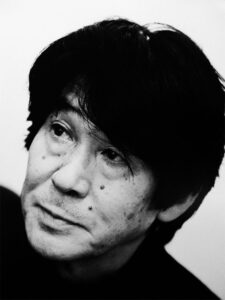
Daido Moriyama
Shared publisher: MACK, Nazraeli Press
15 photobook(s) in the library
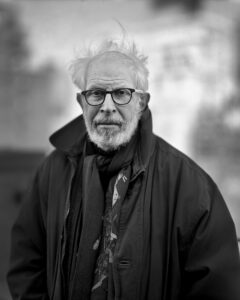
Stephen Shore
Shared publisher: MACK, Nazraeli Press
14 photobook(s) in the library
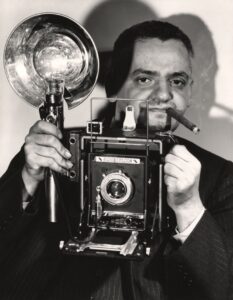
Weegee
Shared publisher: 5 Continents Editions, Presentation House Gallery
14 photobook(s) in the library
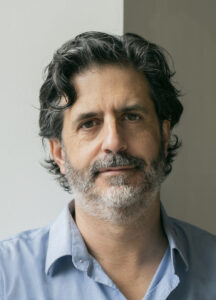
Alec Soth
Shared publisher: MACK, Nazraeli Press
13 photobook(s) in the library
COMMUNITY DISCUSSION
Discuss this entry
Share interpretations, reading notes, and source-aware questions. For catalog corrections, use the feedback form below.
No discussion yet. Start the first focused conversation.
Sign in to join the discussion.
Optionally receive a digest when related photobooks are added to the catalog.
See something incorrect? Sign in to suggest a correction or report an issue.