Photographer
Nick Brandt
Nick Brandt (born 1964 in London) is a British photographer known for his monumental environmental and wildlife photography, focusing on the accelerating destruction of the natural world and the vulnerable communities who inhabit it. After studying painting and film at Saint Martin’s School of Art, he moved to California in 1992, directing award-winning music videos for artists such as Michael Jackson, Whitney Houston, and Moby. It was during the filming of Michael Jackson’s “Earth Song” in Tanzania in 1995 that Brandt developed a deep connection to East Africa and its wildlife.
Beginning in 2001, Brandt embarked on what would become his acclaimed East Africa trilogy—On This Earth, A Shadow Falls, and Across the Ravaged Land—photographed on medium-format film without telephoto lenses. His close-up, large-format animal portraits portray elephants, lions, and other species as dignified, sentient beings, challenging traditional wildlife photography and emphasizing their vulnerability in a rapidly vanishing world.
Brandt’s later conceptual projects confront human-driven environmental devastation more directly. Inherit the Dust (2016) placed life-size portraits of animals into landscapes destroyed by industrial expansion. This Empty World (2019), his first major color series, overlays images of animals and humans shot weeks apart, revealing a world overwhelmed by unrestrained development. Since 2021, his global series The Day May Break has portrayed people and animals affected by climate change across Zimbabwe, Kenya, Bolivia, and Fiji.
In 2010, Brandt co-founded Big Life Foundation, a major conservation organization protecting wildlife and ecosystems across Kenya and Tanzania. His work has been exhibited internationally in major cities worldwide, and he is recognized as one of the leading photographic voices documenting the climate crisis and the Anthropocene.
Nick Brandt (born 1964) is a British photographer noted for his black-and-white, large-format portraits of East African wildlife. Initially a music video director, he took up photography in the mid-1990s, capturing animals in dramatic natural settings. His major series include ‘On This Earth’ (2005), ‘A Shadow Falls’ (2009), and ‘Across the Ravaged Land’ (2013). In 2010, he co-founded the Big Life Foundation to support conservation. His work has been exhibited worldwide and published in several monographs, highlighting his advocacy for the environment.


Selected Works & Key Projects
A source-backed introduction to individual photographs and significant bodies of work.
Key projects

Project · 2014–2015
Inherit the Dust
Conceived in early 2014, Inherit the Dust places life-size photographic panels of animals in East African sites where those animals once lived but no longer roam because of human environmental impact. The project turns a photographic print into a deliberately conspicuous stand-in for vanished wildlife, making absence visible within expanding towns, factories, and altered landscapes. It merits selection because it marks a decisive shift in Brandt’s practice: rather than only portraying animals in situ, he constructs an encounter between archival-scale animal portraits and the built environments that have displaced them. The project was published as a 2016 monograph.
View source ↗
Project · 2018–2019
This Empty World
This Empty World is Brandt’s 2019 color project about wildlife and people pressed by development in East Africa. Each final image combines two exposures made weeks apart from almost the same camera position: first an animal in its savannah setting, then a large constructed set—such as a roadwork, bridge, bus-station, or gas-station scene—filled with people. The project is significant within Brandt’s oeuvre because it was his first move into color photography and digital production, using a film-production scale to make human expansion physically occupy the animals’ habitat. Its 2019 monograph presents 84 photographs.
View source ↗Selected photographs

2007 · Amboseli, Kenya
Elephant Drinking, Amboseli, 2007
This frontal elephant portrait is one of the defining images of A Shadow Falls. In the official foreword, Vicki Goldberg identifies its centered, symmetrical structure—an elephant’s trunk descending directly into water—as the source of its exceptional formal force, likening the living animal to an emblem or statue. Its later history intensifies its importance: Brandt records that the elephant, named Igor by the Amboseli Elephant Research Project, was killed by poachers in 2009. The photograph therefore condenses Brandt’s early monumental animal portraiture and the conservation elegy that became central to his subsequent work.
Work source ↗
2011 · Amboseli, Kenya
Ranger with Tusks of Killed Elephant, Amboseli, 2011
Ranger with Tusks of Killed Elephant, Amboseli, 2011 belongs to Across the Ravaged Land, Brandt’s final volume in his East Africa trilogy. The official artwork page identifies the photograph by title, place, and year, while Brandt’s accompanying account documents the project’s turn toward the consequences of poaching and anti-poaching work in the Amboseli ecosystem. It merits selection because the image replaces the isolated animal portrait with a human conservation witness: the ranger and confiscated or recovered ivory make the violence behind wildlife loss materially present. It is an important bridge between Brandt’s photographic practice and conservation advocacy.
Work source ↗2007 · Amboseli, Kenya
Abandoned Ostrich Egg, Amboseli, 2007
Abandoned Ostrich Egg, Amboseli, 2007 is identified on Brandt’s official Inherit the Dust project page, where it accompanies the project’s account of wildlife disappearance in East Africa. The photograph is significant as a compact image of absence within a body of work otherwise built from life-size panels of animals placed in transformed environments. Its subject is not an animal portrait but an abandoned remnant, making it especially apt for a project concerned with places where animals once moved freely and with the prospect that future generations may inherit only traces of a formerly abundant living world. It supplies a quiet, materially grounded counterpoint to the project’s monumental installations.
Work source ↗-
1995
Career milestone
First photographic trip to East Africa
While directing a music video in Tanzania, Brandt was moved by the region's wildlife and landscape. This experience led him to return as a photographer, abandoning his previous career as a music video director. It became the foundation of his lifelong artistic and environmental focus, reshaping his creative direction toward documenting East Africa's animals and people.
Source: Wikipedia Verified Sep 5, 2026
-
2005
Photobook
Publication of 'On This Earth'
First volume of his East African trilogy. The book established Brandt's signature style: intimate, dramatic black-and-white portraits of wildlife using a medium-format camera. It was praised for its romantic yet realistic portrayal of animals, raising public awareness about conservation and gaining international recognition, setting a new standard for wildlife photography.
Source: Wikipedia Verified Sep 5, 2026
-
2009
Photobook
Publication of 'A Shadow Falls'
Second book of the trilogy with a more melancholic tone, documenting the growing human encroachment on wilderness. Brandt employed muted tones and often shot from a distance with a telephoto lens, visually separating animal from environment. This deepened his commentary on the fragile state of Africa's landscapes and the increasing isolation of wildlife.
Source: Wikipedia Verified Sep 5, 2026
-
2010
Career milestone
Co-founded the Big Life Foundation
In response to the plight of elephants and other wildlife, Brandt co-founded the Big Life Foundation to support rangers and anti-poaching efforts across the Amboseli ecosystem in Kenya and Tanzania. This move connected his photography to direct conservation action, reflecting his belief that documenting wildlife without intervening was insufficient.
Source: Wikipedia Verified Sep 5, 2026
-
2013
Photobook
Publication of 'Across the Ravaged Land'
Final volume of the trilogy, depicting ecosystems severely degraded by human activity and climate change. Brandt now photographed animals in manipulated or man-made environments, often desaturated, to confront the grim reality of species loss. This work broke from traditional wildlife photography and was internationally acclaimed for its bold, unsettling vision.
Source: Wikipedia Verified Sep 5, 2026
-
2016
Photobook
Publication of 'Inherit the Dust'
In this project, Brandt placed large-scale portraits of endangered animals in urban and industrial settings in Kenya, highlighting the displacement of wildlife by expanding human development. The images were exhibited on the actual sites, making the work an intervention as much as documentation. It powerfully conveys habitat destruction and species isolation.
Source: Wikipedia Verified Sep 5, 2026
-
2019
Photobook
Publication of 'This Empty World'
This work broadens Brandt's scope to include human figures and altered landscapes, reflecting on the consequences of environmental exploitation. His formal, sometimes staged compositions present a world where nature is controlled and diminished. The title evokes a melancholic sense of loss, continuing his transition toward examining the Anthropocene.
Source: Wikipedia Verified Sep 5, 2026
Representation
Fahey/Klein Gallery
Fahey/Klein Gallery in Los Angeles has represented Nick Brandt since 2001, hosting multiple solo exhibitions. It remains his primary commercial gallery in the United States, providing a major venue for selling and exhibiting his large-format wildlife portraits.
Verified 2026-09-05Fahey/Klein Gallery artist page
Foundation
Big Life Foundation
Nick Brandt co-founded Big Life Foundation in 2010, a conservation nonprofit focused on East Africa. As co-founder and trustee, he extends his photographic commitment to wildlife protection, using proceeds and awareness to support rangers and anti-poaching efforts.
Verified 2026-09-05Big Life Foundation – Nick Brandt bio
Publishing relationship
Abrams Books
Abrams Books has published Nick Brandt's principal monographs, including 'On This Earth' (2005), 'A Shadow Falls' (2009), 'Across the Ravaged Land' (2013), and 'The Day May Break' (2021). These volumes chronical his photographic series and are a key public record of his work.
Verified 2026-09-05Abrams Books author page
Collection
National Museum of African Art, Smithsonian Institution
Nick Brandt’s photographs are held in the permanent collection of the National Museum of African Art, Smithsonian Institution. This acquisition reflects the museum's recognition of his work as significant within contemporary African-related photographic arts, focusing on East African wildlife and landscapes.
Verified 2026-09-05Smithsonian National Museum of African Art – online collections
Collection
Museum of Fine Arts, Houston
The Museum of Fine Arts, Houston also holds Nick Brandt's works in its permanent collection. The museum's photography department actively collects contemporary landscape and wildlife imagery, making Brandt a notable addition due to his distinctive large-format portraits.
Verified 2026-09-05Museum of Fine Arts, Houston – collection search
Representation
Edwynn Houk Gallery
Edwynn Houk Gallery in New York has represented Nick Brandt for the Eastern United States, contributing to his exposure in a major contemporary photography market. The gallery has organized solo shows and featured his work in key art fairs.
Verified 2026-09-05Edwynn Houk Gallery – artists
Nick Brandt – Wikipedia (opens a new site)
Nick Brandt is a British photographer and film director known for large-format black-and-white portraits of East African wildlife. He began his career directing music videos, including Michael Jackson's 'Earth Song' (1995). In the late 1990s, Brandt turned to fine-art photography, focusing on animals in Tanzania's national parks. His trilogy 'On This Earth', 'A Shadow Falls', and 'Across the Ravaged Land' spans nearly two decades and combines documentary accuracy with cinematic composition. The Wikipedia entry documents his life, exhibitions, and conservation advocacy, highlighting his place as a significant figure in wildlife photography.
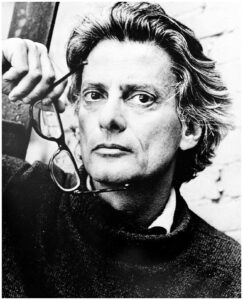
Richard Avedon
Shared publisher: Harry N. Abrams, Hatje Cantz
8 photobook(s) in the library

Walter Niedermayr
Shared publisher: Hatje Cantz, Skira
15 photobook(s) in the library
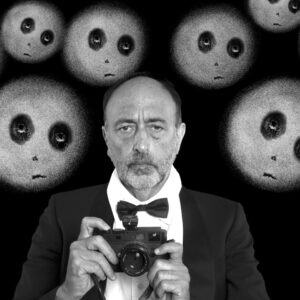
Roger Ballen
Shared publisher: Hatje Cantz, Thames & Hudson
9 photobook(s) in the library
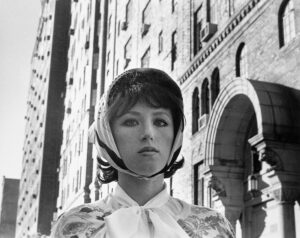
Cindy Sherman
Shared publisher: Hatje Cantz, Thames & Hudson
6 photobook(s) in the library
COMMUNITY DISCUSSION
Discuss this entry
Share interpretations, reading notes, and source-aware questions. For catalog corrections, use the feedback form below.
No discussion yet. Start the first focused conversation.
Sign in to join the discussion.
Optionally receive a digest when related photobooks are added to the catalog.
See something incorrect? Sign in to suggest a correction or report an issue.