Photographer
Joan Fontcuberta
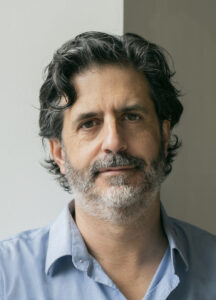
Joan Fontcuberta is a Spanish conceptual artist and photographer, born on 24 February 1955. He is also active as a writer, editor, teacher, and curator. His work is known for examining the truthfulness of photography, often using the medium to question the very evidence it appears to provide. In a career that spans several decades, he has become a central figure in conversations about photographic representation, documentary authority, and the construction of knowledge.
Rather than recording the world, Fontcuberta constructs elaborate fictions that mimic scientific, journalistic, or archival forms. His images often look like field research, museum specimens, or space agency documentation, but they are carefully staged inventions. This approach differs from traditional documentary photography: where a documentary photographer might seek to reveal reality, Fontcuberta uses the language of documentation to expose how easily reality can be fabricated. His visual language is characterized by a deadpan, pseudo-scientific style, with captions and texts that reinforce the illusion. The humor and unease in his work come from the viewer’s realization that the evidence is not what it seems.
Among his best-known works are Fauna and Sputnik. Fauna presents a series of invented animals, photographed as if they were real biological specimens, complete with taxonomic names and scientific descriptions. Sputnik explores the myths and narratives surrounding space exploration, using fabricated documents and images to question the authenticity of historical records. Both projects examine the truthfulness of photography, showing how the medium can be used to create credible falsehoods. They matter because they challenge the viewer’s trust in images, a concern that has become only more urgent in the digital age.
Fontcuberta emerged in the context of postmodern critiques of representation, alongside artists who questioned the neutrality of the photographic image. As a curator and editor, he has also contributed to photographic discourse, organizing exhibitions and publications that explore similar themes. His work has been exhibited internationally, and he has taught at various institutions. Rather than pursuing a single signature style, he adopts different personas and disguises, treating each project as a conceptual investigation. This chameleon-like approach has made him an influential figure in contemporary photography, though his work is often discussed more in art contexts than in traditional photojournalism.
For photobook collectors, Fontcuberta’s publications are of particular interest because the book form is integral to his conceptual projects. The sequencing of images, the design of captions, and the overall structure often work together to sustain the fiction. Fauna, for example, is not just a collection of photographs but a complete scientific catalogue, and its impact depends on the reader’s immersion in that fictional world. Collectors should pay attention to how the book’s materiality—paper, typography, layout—supports the hoax. A useful entry point is Fauna, which clearly demonstrates his method and remains one of his most discussed works.
Critically, Fontcuberta’s work can be seen as both playful and serious. He uses humor to engage viewers, but the underlying questions about truth, trust, and power are profound. While some may find his conceptual approach challenging, his projects are accessible because they rely on familiar visual languages. His influence is evident in the work of later artists who explore post-truth and fake news through photography. For anyone interested in the relationship between photography and truth, his work is essential.
The Catalan-language Viquipèdia article provides a biography of Joan Fontcuberta rooted in his Catalan context and language, covering his birth and formation in Barcelona, his dual career as artist and academic, and his role in shaping contemporary photography in Spain. It documents his conceptual strategies — fabricated documents, invented scientists and travellers, and parodic scientific imagery — alongside awards, publications and teaching posts. Because it is written in Catalan, it often preserves local institutional and biographical detail not present in English-language accounts.
The English-language Wikipedia entry introduces Joan Fontcuberta as a Catalan photographer, conceptual artist, teacher and writer whose work interrogates photographic truth, authorship and scientific authority. It outlines his career in Barcelona, his practice of constructing fictive archives and fictional protagonists that masquerade as documentary evidence, his parallel activity as curator, critic and professor, and major recognition such as the Hasselblad Award. It also indexes his publications and exhibition record, making it a broad orientation to his life and standing in photography.
The Spanish-language Wikipedia entry presents Fontcuberta’s biography for a Hispanophone readership, summarising his training, his long teaching career at universities in Barcelona and abroad, and his writing on photography. It surveys the projects in which he fabricates evidence and questions the documentary contract of the medium, together with the prizes and honours attached to his career. Its bibliography and external links point to further institutional and editorial sources, which is useful for verifying dates and affiliations independently.
The artist’s own website functions as a primary biographical and bibliographic reference maintained in his name. It gathers project documentation, texts, exhibition and publication histories, and biographical notes, and is therefore the most direct available source for confirming how Fontcuberta himself frames his practice, its conceptual premises and its chronology. Because it is self-published it should be read alongside institutional sources, but it anchors titles, series and statements that secondary accounts frequently paraphrase.


Selected Works & Key Projects
A source-backed introduction to individual photographs and significant bodies of work.
Key projects
Project · 1982–1985
Herbarium
Herbarium is Fontcuberta’s staged collection of singular plants, photographed in close-up against neutral backgrounds. It adopts the visual language of early twentieth-century scientific plant repertoires, specifically recalling Karl Blossfeldt’s herbarium, while the MoMA catalogue states that its subjects were built from found organic and inorganic materials. The resulting mismatch between a sober descriptive style and constructed specimens makes the project a sustained test of documentary authority. It merits selection because institutional presentations identify it as one of Fontcuberta’s principal projects and because the complete series entered the Reina Sofía collection as a key work in the 1980s critique of representation.
View source ↗Project · 1985–1989
Fauna
Made with Pere Formiguera, Fauna is a large multi-part installation presented as the recovered archive of the invented German zoologist Peter Ameisenhaufen. MACBA documents its photographs, field studies, notes, X-rays, skeleton dissections, taxidermied specimen, and animal recordings—evidence arranged to authenticate imaginary creatures and a fabricated scientific history. By using the display conventions of a science museum, the project directly tests the credibility of scientific discourse, museum objectivity, and photography’s claim to truth. It merits selection for the force of that institutional critique and for its documented reception: at its 1989 Barcelona Zoology Museum presentation, 27% of surveyed university-educated visitors believed the animals were real.
View source ↗Project · 1996–1998
Sputnik
Sputnik constructs the story of Ivan Istochnikov, a Soviet astronaut said to have disappeared after his 1968 mission failed. The Museo Universidad de Navarra places the project within Fontcuberta’s long-running inquiry into photography’s unstable status as evidence, describing its “photographic camouflage” as an oscillation between information and fiction. The project’s significance is project-wide: rather than relying on one image, it builds a persuasive historical narrative through photographs and the authority of space-race documentation. It merits selection because major institutional surveys list it among Fontcuberta’s principal cycles, while a 2001 Palazzo delle Esposizioni exhibition dated the series to 1996–1998 and presented it as part of his challenge to pre-packaged truths.
View source ↗Selected photographs
1982
Guillumeta polymorpha
Guillumeta polymorpha is identified by the Museo Universidad de Navarra as a 1982 image from Herbarium and credited to Joan Fontcuberta. Its importance is best understood as that of a single named specimen within the project’s mock-scientific system rather than as an autonomous documentary study. The project presents strange plants in close-up on neutral grounds and models itself on early scientific repertoires; MoMA further records that the apparent specimens were assembled from found organic and inorganic materials. This photograph merits selection because it gives a dated, titled entry point into the series’ central photographic proposition: authoritative botanical presentation can make a constructed object appear evidentiary.
Work source ↗-
1955
Career milestone
Born in Barcelona
Joan Fontcuberta was born in Barcelona in 1955. Growing up in a city with a dense photographic and publishing culture shaped the conceptual, archive-based and book-oriented approach he later applied to the medium. This date anchors a career that would span advertising, teaching, curating and more than four decades of exhibited and published photographic projects.
Source: Wikipedia Verified Nov 22, 2026
-
1970s
Education
Studies in communication sciences in Barcelona
Fontcuberta studied communication sciences at the Universitat Autònoma de Barcelona, where he also encountered advertising and mass-media theory. Training in how images are produced, circulated and believed became the intellectual foundation of his later fabricated-archive projects, and helps explain why his work is discussed as media critique rather than conventional documentary photography.
Source: Wikipedia Verified Nov 22, 2026
-
1970s–c. 1980
Career milestone
Work in advertising and marketing
Before devoting himself fully to photography, Fontcuberta worked in advertising and marketing in Spain. That commercial experience gave him direct knowledge of how images are built to persuade, a mechanism he later turned against itself in projects that imitate scientific, corporate and journalistic visual languages in order to present invented evidence as fact.
Source: Wikipedia Verified Nov 22, 2026
-
1985–1987
Series
Fauna (with Pere Formiguera)
Made with Pere Formiguera from 1985 and published as a book in 1987, Fauna presents a scientific archive credited to the invented zoologist Peter Ameisenhaufen: fake specimens, field notes, photographs and documents describing animals that never existed. It established Fontcuberta's method of forging institutional evidence and remains the clearest early demonstration of photographic authority turned against itself. As a project it matters because it set the template later reused across his career.
Source: Wikipedia Verified Nov 22, 2026
-
1989
Photobook
Herbarium
Herbarium (1989) composes pressings of plants that do not exist, photographed so they read as botanical specimens in a natural-history collection. Where Fauna built an entire narrative archive, this project isolates a single institutional convention — the specimen photograph — and shows how little visual evidence is needed to produce scientific credibility. Published as a book and widely exhibited, it is among his most cited bodies of work.
Source: Wikipedia Verified Nov 22, 2026
-
1993
Award
Chevalier de l'Ordre des Arts et des Lettres
France named Fontcuberta a Chevalier de l'Ordre des Arts et des Lettres in 1993, recognising his contribution to photography and visual culture. The honour marks the point at which his conceptual, archive-based practice was being acknowledged well beyond Spain, alongside a growing international record of exhibitions, publications and museum acquisitions.
Source: Wikipedia Verified Nov 22, 2026
-
1997
Series
Sputnik
Sputnik (1997) recounts the invented Soviet cosmonaut Ivan Istochnikov, supposedly erased from the record after a fatal spaceflight. Fontcuberta assembled photographs, press cuttings and documents in Russian and Spanish, and the work has repeatedly been mistaken for real history. It demonstrates how photographs acquire credibility through context — captions, archives, publications — rather than through the image alone, and extended his method from natural history into Cold War media mythology.
Source: Wikipedia Verified Nov 22, 2026
-
1998
Award
Premio Nacional de Fotografía (Spain)
In 1998 Fontcuberta received Spain's Premio Nacional de Fotografía, the state's principal photography prize. The award recognised a body of work that had made photography's documentary claims its own subject, and confirmed his standing within Spanish cultural institutions at a moment when his fabricated archives were circulating internationally in books and exhibitions.
Source: Wikipedia Verified Nov 22, 2026
-
2013
Award
Hasselblad International Award
The Hasselblad Foundation presented Fontcuberta with its International Award in 2013, the most prominent international recognition of his career. Given by the Swedish foundation that administers the Hasselblad estate and is associated with the Hasselblad Center in Gothenburg, the prize placed his conceptual, archive-based practice within the mainstream history of the medium and brought his work to wider audiences outside Europe.
Source: Wikipedia Verified Nov 22, 2026
Collection
Museo Nacional Centro de Arte Reina Sofía
The museum’s artist collection page lists multiple works by Joan Fontcuberta, including Bombcat, Museo de Zoología, Barcelona, Rasputina Eclectica, and Las rosas.
Verified 2026-11-22Museo Nacional Centro de Arte Reina Sofía
Collection
San Francisco Museum of Modern Art
SFMOMA identifies works by Joan Fontcuberta in its collection, including Brachypoda Frustrata, Port of Las Palmas, Canary Islands, and Cascallus Ferragasus.
Verified 2026-11-22SFMOMA
Collection
The Metropolitan Museum of Art
The Metropolitan Museum of Art records Fontcuberta’s 1978 gelatin silver print Untitled in its collection. The object entered the museum as a gift of the artist in 1978.
Verified 2026-11-22The Metropolitan Museum of Art
Collection
Museum of Fine Arts, Houston
The Museum of Fine Arts, Houston’s collection search returns 17 photographs by Joan Fontcuberta. The records include works from several bodies of work, such as botanical studies and photographs titled The Museum of Natural History, New York and Lavandula angustifolia.
Verified 2026-11-22Museum of Fine Arts, Houston
Collection
National Gallery of Art / Corcoran Collection
The National Gallery of Art’s online record identifies Fontcuberta’s 1984 gelatin silver print Costa Llobera Garden, Montjuic, Barcelona as part of the Corcoran Collection, accession 2015.19.4933.
Verified 2026-11-22National Gallery of Art
Joan Fontcuberta — Viquipèdia (Catalan) (opens a new site)
Catalan-language encyclopedia entry on Joan Fontcuberta, covering the Barcelona-based photographer, writer and academic whose work interrogates the documentary claims of the photographic image. The entry situates his practice within Catalan and Spanish cultural institutions and lists his principal projects and professional activity. Valuable for Catalan-language titles of works, exhibitions and institutions, which are frequently the original forms and are often altered or lost in translation elsewhere.
Joan Fontcuberta — Wikipedia (Spanish) (opens a new site)
Spanish-language encyclopedia entry on Joan Fontcuberta, written from the perspective of the Spanish and Catalan art context in which he trained and worked. It outlines his career as a photographer, teacher and writer, his sustained questioning of photographic truth and authorship, and the projects and recognition that established his standing in contemporary photography. Useful for Spanish-language spellings, institutional names and exhibition references that English-language sources often transliterate or omit.
Joan Fontcuberta — Wikipedia (opens a new site)
English-language encyclopedia entry on the Catalan photographer, writer and teacher Joan Fontcuberta. It covers his biography and career, his conceptual practice centred on photography's relationship to truth, evidence, science and documentary authority, and his best-known bodies of work such as the fictitious natural-history archive Fauna and the botanical project Herbarium. It also records exhibition and award activity. Best used as an orienting overview that should be checked against museum, publisher and estate sources before citing dates or titles.

COMMUNITY DISCUSSION
Discuss this entry
Share interpretations, reading notes, and source-aware questions. For catalog corrections, use the feedback form below.
No discussion yet. Start the first focused conversation.
Sign in to join the discussion.
Optionally receive a digest when related photobooks are added to the catalog.
See something incorrect? Sign in to suggest a correction or report an issue.