Photographer
Roman Vishniac
Roman Vishniac (1897–1990) was a Russian-born American photographer and biologist whose career joined two seemingly separate fields: documenting Jewish life in Eastern Europe before the Holocaust and using photomicrography to reveal an invisible biological world. Born in Pavlovsk and raised in Moscow, he studied biology and zoology. After the upheavals of the Russian Revolution, his family eventually settled in the United States, where he developed a double practice as scientist and photographer.
Between 1935 and 1938, Vishniac traveled through Poland, Romania, Hungary, and other parts of Eastern Europe, working on behalf of Jewish relief organizations. He photographed markets, synagogues, families, children, and elderly people, often in difficult and dangerous conditions. Using available light and an unobtrusive method, he made images marked by directness and empathy, holding dignity and vulnerability together. Rather than relying on dramatic gesture or exoticism, he found meaning in small movements and ordinary settings, registering the precarious life of communities facing annihilation.
The best-known publication from this work is A Vanished World, first issued in 1983 from a selection of his Eastern European negatives. The photographs are not simply nostalgic records: they were made under the shadow of impending catastrophe, and Vishniac later described his purpose as preserving evidence of a world about to disappear. Although the book was widely celebrated and reprinted, its editing and sequencing have also been examined because many negatives remained unpublished for decades. The 2010s retrospective project Roman Vishniac Rediscovered brought previously unseen images to light and complicated the established view of his archive.
Vishniac’s other major body of work emerged from his scientific practice. From the 1950s onward, he devoted much of his career to photomicrography, producing images of biological specimens and natural phenomena. These photographs were more than utilitarian records: through structure, texture, and form, they often approached an abstract beauty. This work places Vishniac among photographers who connected art and science, although it remains less familiar than his images of Jewish communities during the Holocaust era. His importance lies in this ability to move between disciplines, treating photography as an instrument of both memory and knowledge.
His archive is held by institutions including the United States Holocaust Memorial Museum, which has made many images accessible online to researchers and the public. Retrospectives in the UK and US have continued to reassess his documentary achievement alongside his scientific imagery. For photobook collectors, A Vanished World remains a landmark, but its layout and selection belong to a particular editorial moment. Exhibition catalogues and scholarly publications associated with Roman Vishniac Rediscovered offer a broader view, including unseen prints and archival context. The book is essential, yet only one part of a multifaceted legacy still expanded by the digitization of his negatives.
〔PBL-BIO/2〕


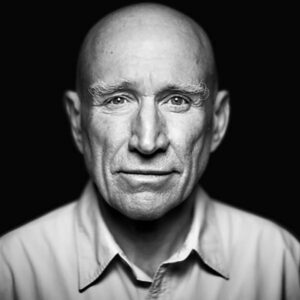
Sebastiao Salgado
Shared publisher: Prestel, University of California Press
21 photobook(s) in the library
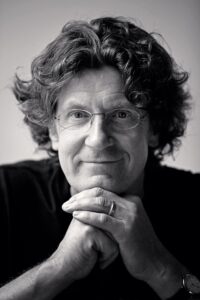
Michael Kenna
Shared publisher: Prestel
22 photobook(s) in the library
Antoine D'Agata
Shared publisher: Prestel
22 photobook(s) in the library
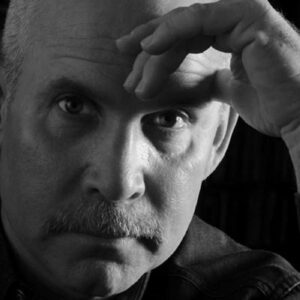
Steve McCurry
Shared publisher: Prestel
18 photobook(s) in the library
COMMUNITY DISCUSSION
Discuss this entry
Share interpretations, reading notes, and source-aware questions. For catalog corrections, use the feedback form below.
No discussion yet. Start the first focused conversation.
Sign in to join the discussion.
Optionally receive a digest when related photobooks are added to the catalog.
See something incorrect? Sign in to suggest a correction or report an issue.