Photographer
Abbas
Abbas Attar (1944–2018), who worked under the single name Abbas, was an Iranian photographer based in Paris and a longtime member of Magnum Photos. His career developed within the international tradition of documentary photography, but its geographic and intellectual range was unusually broad. From the 1970s onward, he photographed political upheaval, war, revolution, and the social forces surrounding them, working across Africa, Asia, and the Middle East rather than identifying himself with a single conflict or country.
Abbas generally approached history through people caught inside it: demonstrators, soldiers, religious figures, mourners, and ordinary citizens negotiating unstable public life. Sources identify the 35mm camera as his principal tool, well suited to movement and close observation. Yet his pictures were not simply records of fast events. His recurring concern was how ideology, collective belief, and political power become visible through gesture, ritual, crowds, and the use of public space. This gave his work a reflective dimension that distinguished it from news photography designed only to explain an immediate incident.
His early reporting from Biafra, Vietnam, and South Africa established him as a witness to some of the defining conflicts and liberation struggles of the 1970s. These bodies of work matter not merely because Abbas reached places of historical importance, but because together they show him comparing different forms of violence, authority, and resistance. His photographs of the Iranian Revolution became another central achievement. As an Iranian living in Paris, he occupied a complicated position between personal connection and critical distance, recording a transformation whose religious symbolism and political consequences would inform much of his later thinking.
Across a career described by the British Journal of Photography as spanning six decades, Abbas moved from frontline photojournalism toward sustained inquiry into the political and social life of societies in conflict. Religion became an especially important framework for understanding collective identity and power, rather than a subject isolated from politics. His Magnum affiliation placed this work within the cooperative tradition of independent photographic authorship, while his movement between rapid reporting and long-form projects demonstrated how a photojournalist could develop a coherent personal argument over time.
Photobook collectors should approach Abbas through the relationships among these major geographic and thematic bodies rather than through isolated iconic images. His work rewards sequencing: crowd scenes, intimate encounters, symbols, and aftermaths accumulate into arguments about how history is experienced. The Magnum profile provides a useful initial overview before seeking project-based publications or retrospective volumes. When evaluating such books, attention should be paid to whether the edit preserves geographic and historical context, and whether reproduction maintains the tonal and compositional clarity on which his documentary narratives depend.
〔PBL-BIO/2〕
Abbas Attar (29 March 1944–25 April 2018), known professionally as Abbas, was an Iranian photographer based in Paris. His photojournalism covered conflicts and political upheaval in locations including Biafra, Bangladesh, Vietnam, South Africa, Chile, Cuba, Northern Ireland and the Middle East. He photographed the Iranian Revolution from 1978 to 1980 and revisited Iran in 1997 after 17 years in exile.
Abbas belonged to Sipa Press from 1971 to 1973 and Gamma from 1974 to 1980, joining Magnum Photos in 1981. During the 1980s he undertook an extended study of Mexico, later published as “Return to Mexico” (1992). His subsequent long-term projects examined Islam, Christianity, animism, Buddhism and Hinduism; his books included “Allah O Akbar” (1994), “Faces of Christianity” (2000), “IranDiary 1971–2002” (2002), “In Whose Name?” (2009) and “Les Enfants du lotus” (2011).
In his final years, Abbas was documenting Jewish communities around the world. Filming for director Kamy Pakdel’s documentary “Abbas by Abbas” was completed shortly before the photographer died in Paris on 25 April 2018, aged 74.


Selected Works & Key Projects
A source-backed introduction to individual photographs and significant bodies of work.
Key projects
Project · 1978–1980
Iran, la révolution confisquée
Iran, la révolution confisquée brings together Abbas’s sustained, street-level coverage of the Iranian Revolution and its immediate aftermath from 1978 to 1980. Published in 1980 as his first book, it assembled black-and-white photographs of demonstrations, the return of Ayatollah Khomeini, the fall of the Shah’s regime, and the revolution’s rapidly changing public face. The project’s title frames the work as more than a chronological news record: it registers Abbas’s critical reading of a revolution he saw being taken over. Its reception had concrete consequences—its critique of the new regime contributed to his long absence from Iran. It merits selection as the foundation for his later, decades-long photographic reckoning with Iranian history, politics, and belief.
View source ↗
Project · 1983–1986
Return to Mexico: Journeys Beyond the Mask
Return to Mexico: Journeys Beyond the Mask grew from Abbas’s repeated travels through Mexico between 1983 and 1986. Rather than constructing a conventional national survey, he approached the country “as a novelist might write,” building meaning through unexpected encounters, landscapes, ceremonies, objects, and fragments of daily life. The later exhibition and 1992 book combined photographs with passages from his travel journal, giving the work a deliberately literary sequence rather than a purely reportorial one. The Abbas archive identifies the project as formative in defining his photographic aesthetic. It merits selection because it shows the decisive expansion of his practice from urgent political reportage toward reflective, open-ended visual narrative.
View source ↗Selected photographs

1972 · Belfast, Northern Ireland
Fine Print: A burning building crumbles. Belfast, Northern Ireland, 1972
Made during Abbas’s 1972 coverage of Northern Ireland, this photograph catches a Belfast building in the instant of collapse after a fire associated in Magnum’s caption with a suspected IRA attack. Rather than showing a settled ruin, it fixes destruction as unstable movement: masonry, smoke, and the failing façade make violence visible through the city’s fabric. The Irish Museum of Modern Art has collected the image, recognizing its place within international photography of the Troubles. It merits selection because it condenses Abbas’s conflict reporting into a sharply timed, formally forceful image without reducing the conflict to a portrait of combatants.
Work source ↗
1984 · State of Guerrero, Mexico
Fine Print: Man under a table in the desert, State of Guerrero, Mexico, 1984
Photographed in the village of San Agustín de Oapan, Guerrero, this image places a man beneath a table in open, arid terrain. The improbable conjunction of body, furniture, and landscape turns an observed situation into a compact visual riddle, demonstrating Abbas’s move in Mexico away from event-driven reportage toward associative, novel-like observation. It belongs to the 1983–86 Mexican journeys that later became Return to Mexico: Journeys Beyond the Mask, a project the Abbas archive identifies as formative for his photographic aesthetic. The photograph merits selection as a particularly spare example of how he made everyday life suggest narrative without supplying a fixed explanation.
Work source ↗
1984 · Mexico City, Mexico
Fine Print: Day of the Dead, Mexico City, Mexico, November 1st, 1984
This photograph was made in Mexico City on 1 November 1984, during Día de los Muertos, within Abbas’s extended Mexican work of 1983–86. Its significance lies less in treating the festival as an isolated local spectacle than in placing a public encounter with death inside the photographer’s larger inquiry into Mexican social life, ritual, and modernity. Abbas described his Mexican approach as photographing as a novelist might write; the later book and exhibition Return to Mexico: Journeys Beyond the Mask helped define that aesthetic. Selected from the wider project, this image marks the sustained attention to ceremony and ambiguity that distinguishes his Mexico pictures from his frontline reporting.
Work source ↗
1989 · Jakarta, Indonesia
Fine Print: Friday prayer at the Al Azhar college, Jakarta, Indonesia, 1989
Students gathered for Friday prayer in the auditorium of Jakarta’s Al Azhar College form the subject of this 1989 photograph. Its achievement is to make collective worship legible as a social arrangement as well as a devotional act: the ordered congregation and institutional setting shift attention from an abstract idea of Islam to lived practice. The image belongs to Abbas’s 1987–94 study of Islam’s resurgence across many countries, later published and exhibited as Allah O Akbar: A Journey Through Militant Islam. That project received renewed attention after the attacks of 11 September 2001. This photograph merits selection for showing the breadth of Abbas’s inquiry beyond conflict imagery and beyond any single national setting.
Work source ↗
1997 · Shahr Rey, Iran
Four seater motorbike. Shahr Rey, Iran, 1997
Taken in Shahr Rey after Abbas returned to Iran in 1997 following seventeen years of voluntary exile, this photograph shows a young man carrying three veiled girls on one motorbike. Its visual economy is central: four figures compressed onto an ordinary vehicle turn daily transport into an alert observation of public life, dress, gender, and improvisation. The image belongs to Abbas’s later return to photographing Iran, when he pursued the country’s social contradictions beyond the revolutionary events for which he was already known. It merits selection because its apparently casual scene offers a concise counterpoint to his images of upheaval—an image of how history continues in everyday movement.
Work source ↗-
1978–1980
Series
Photographs the Iranian Revolution
From 1978 to 1980, Abbas photographed the Iranian Revolution, recording demonstrations, political upheaval and the revolution’s immediate aftermath.
Source: Fonds Abbas Photos Verified Aug 31, 2026
-
1980
Photobook
Iran, la Révolution confisquée
Published in 1980, Iran, la Révolution confisquée presented Abbas’s photographs of revolutionary Iran in book form. The Bibliothèque nationale de France identifies Abbas as the photographer.
Source: Bibliothèque nationale de France Verified Aug 31, 2026
-
1985
Representation
Becomes a Full Member of Magnum Photos
Abbas became a full member of the photographer-owned Magnum Photos cooperative in 1985, having joined the agency in 1981.
Source: Fonds Abbas Photos Verified Aug 31, 2026
-
1992
Photobook
Return to Mexico: Journeys Beyond the Mask
Return to Mexico: Journeys Beyond the Mask was published in 1992 following Abbas’s travels through Mexico from 1983 to 1986. The associated book and exhibition helped define his photographic aesthetic.
Source: Fonds Abbas Photos Verified Aug 31, 2026
-
2011
Exhibition
Abbas, 45 Years in Photography: From Crisis to Faith
The National Museum of Singapore presented this retrospective from June 18 to September 18, 2011. It surveyed Abbas’s work through 133 black-and-white photographs and four audiovisual presentations.
Source: National Heritage Board, Singapore Verified Aug 31, 2026
-
2013
Archive
Magnum Photos Photography Collection Gifted to the Harry Ransom Center
Magnum Photos’ New York bureau collection, including files of Abbas’s prints, became a gift to the Harry Ransom Center after being deposited there in 2010. The approximately 200,000-print archive is open for research.
Source: Harry Ransom Center, The University of Texas at Austin Verified Aug 31, 2026
-
2015–2016
Exhibition
Children of Abraham
The Arthur Ross Gallery at the University of Pennsylvania presented Children of Abraham from November 21, 2015, to March 20, 2016. The exclusive U.S. venue displayed 66 black-and-white photographs addressing Christianity, Judaism and Islam.
Source: University of Pennsylvania Almanac Verified Aug 31, 2026
-
2017
Collection acquisition
Museum Wales Acquires Summer Afternoon in Djerba, Tunisia
Amgueddfa Cymru–Museum Wales received Abbas’s 2014 digital pigment print Summer Afternoon in Djerba, Tunisia as a gift from David Hurn on April 25, 2017.
Source: Amgueddfa Cymru – Museum Wales Verified Aug 31, 2026
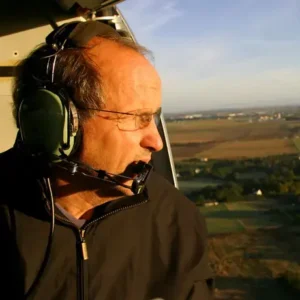
Alex MacLean
Shared publisher: Abrams, Thames & Hudson
12 photobook(s) in the library
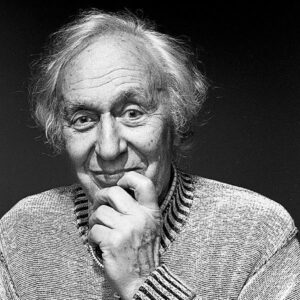
William Klein
Shared publisher: Abrams, Thames & Hudson
10 photobook(s) in the library
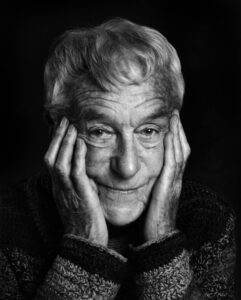
Jacques Henri Lartigue
Shared publisher: Abrams, Thames & Hudson
6 photobook(s) in the library
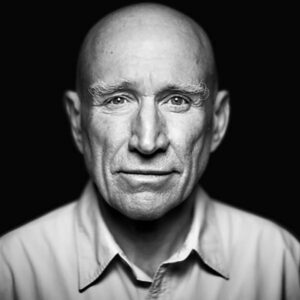
Sebastiao Salgado
Shared publisher: Phaidon
21 photobook(s) in the library
COMMUNITY DISCUSSION
Discuss this entry
Share interpretations, reading notes, and source-aware questions. For catalog corrections, use the feedback form below.
No discussion yet. Start the first focused conversation.
Sign in to join the discussion.
Optionally receive a digest when related photobooks are added to the catalog.
See something incorrect? Sign in to suggest a correction or report an issue.