Photographer
Eli Reed
Eli Reed, born Ellis Reed in 1946, is an American photojournalist who has spent more than five decades documenting the complexities of social and political life. Beginning as a freelance photographer in 1970, he gained international recognition through his coverage of Central American conflicts, which led to his invitation to join Magnum Photos in 1982. Reed became the agency’s first full-time Black photographer, a milestone that placed him at the intersection of journalism and a broader cultural reckoning with race in America. He has also taught for years as a university professor at the Moody College of Communication at the University of Texas at Austin, shaping a younger generation of visual storytellers.
Reed’s visual language is marked by an intimate, unhurried sense of observation. He often worked in color at a time when many of his peers in documentary photography favored black-and-white, and his palette conveys both the warmth and the grit of everyday life. His street photography and portraits exhibit a strong inclination to ‘live in the moment,’ as he has stated in interviews, seeking the unexpected gesture or glance that reveals deeper truths. Unlike more distanced reportage, Reed’s approach is relational—he stays close to his subjects, offering a view that is both empathetic and direct.
A central thread in Reed’s career has been his long-term engagement with the Black experience in the United States. He spent decades photographing communities across the country, building an archive that captures ordinary resilience, civil rights struggles, cultural pride, and the slow transformations of American society. Alongside this personal project, he reported on conflict in Central America and other international stories for major publications. His work has been featured in numerous exhibitions, and his career was highlighted in the Sony Alpha film ‘Getting Closer: A Walk with Eli Reed,’ which documents his approach to seeing and walking through streets.
Reed’s significance extends beyond his archive. As the first full-time Black member of Magnum, he challenged assumptions about who could tell certain stories and from what vantage point. His presence opened doors for other photographers of color and widened the collective understanding of American life. His teaching practice has reinforced this legacy, as his students learn the ethical importance of respect and proximity. Over his long career, he has witnessed and recorded pivotal shifts in politics, social movements, and cultural identity, making his work a vital historical resource.
For collectors, Reed’s photographs offer a rich counterpoint to more homogenous narratives of mid-century documentary photography. His use of color, his sustained focus on Black life, and his position within a major agency all make his prints and books an entry point into important conversations about race, representation, and visual history. Those unfamiliar with his work may begin with his agency profile, which holds a broad selection of images spanning his reportage and personal series. Reed’s practice demonstrates that documentary photography can remain intimate while bearing witness to structural change—an enduring quality that continues to resonate.
〔PBL-BIO/2〕


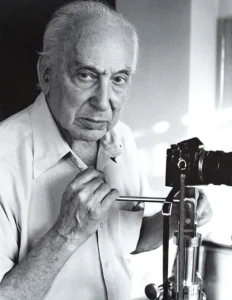
André Kertész
Shared publisher: W. W. Norton
8 photobook(s) in the library
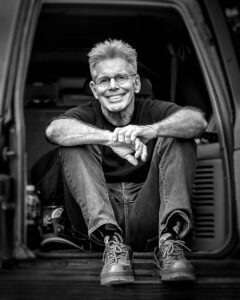
Keith Carter
Shared publisher: University of Texas Press
7 photobook(s) in the library

Berenice Abbott
Shared publisher: W. W. Norton
5 photobook(s) in the library

Aaron Siskind
Shared publisher: University of Texas Press
5 photobook(s) in the library
COMMUNITY DISCUSSION
Discuss this entry
Share interpretations, reading notes, and source-aware questions. For catalog corrections, use the feedback form below.
No discussion yet. Start the first focused conversation.
Sign in to join the discussion.
Optionally receive a digest when related photobooks are added to the catalog.
See something incorrect? Sign in to suggest a correction or report an issue.