Photographer
Susan Meiselas
Susan Meiselas, born in 1948, is an American documentary photographer whose work connects intimate human stories with wider historical upheaval. She is known for her coverage of political conflict in Central America during the 1970s and 1980s, and for long-term projects on American carnival life and communities. Based in New York, she has been a member of Magnum Photos since 1976 and serves as President of the Magnum Foundation, which supports documentary photography and visual storytellers. Across her career, she has returned to subjects and places over decades, making duration and continued engagement central to her practice.
Meiselas’s visual language combines direct observation with collaboration. She frequently places her photographs alongside interviews, archival material, found images, and the memories of the people she documents. In this way, she questions the authority traditionally assigned to the single documentary image and opens the work to multiple voices. She has described the camera as both a point of connection and separation: it allows her to enter spaces to which she may not otherwise belong while preserving a respectful distance. Long-term relationships and the active inclusion of subjects’ perspectives shape how her projects are authored and understood.
Carnival Strippers (1972–1975) is a landmark study of female carnival workers in New England. Combining photographs with recorded interviews, it gives the women a direct presence and established a pioneering multimedia form. Her documentation of the Nicaraguan Revolution and its aftermath was published most famously in Nicaragua (1981), affirming her reputation for empathetic and rigorous conflict photography. She later traced and re-photographed some of the same people, turning the archive into a continuing meditation on memory and history. Pruitt-Igoe (1976), made before the demolition of the St. Louis public housing complex, examined its social fabric and community life.
Meiselas occupies an important place in the development of contemporary documentary practice, particularly during debates over photojournalistic ethics and the supposedly detached observer. Her Central American work includes the widely reproduced image of a masked rebel throwing a Molotov cocktail, an image that became iconic without exhausting the complexity of the event. She received a MacArthur Fellowship in 1992, and her exhibitions and publications have appeared at major institutions worldwide, including the International Center of Photography. Through the Magnum Foundation and her wider mentorship, she has supported expanded forms of visual narrative and social engagement.
Her photobooks are especially important to collectors for their careful sequencing, design, and integration of text, interviews, and archival material. Carnival Strippers has been reissued with expanded content, while Nicaragua has been re-edited and republished, allowing different readings of its historical evidence. A useful entry point is a reissued Carnival Strippers or Susan Meiselas: In History (2008), the comprehensive monograph produced in connection with a major retrospective. These publications show how Meiselas treats the photobook as a space for memory, dialogue, and ethical inquiry, combining historical importance with intellectual rigor and a strong physical presence.
〔PBL-BIO/2〕



Martin Parr
Shared publisher: Aperture, Damiani
21 photobook(s) in the library

Nick Waplington
Shared publisher: Aperture, Damiani
18 photobook(s) in the library
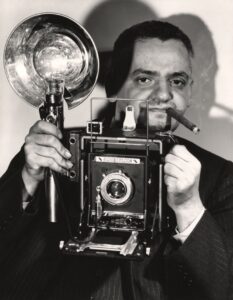
Weegee
Shared publisher: Aperture, Damiani
14 photobook(s) in the library

Joel Meyerowitz
Shared publisher: Aperture, Damiani
9 photobook(s) in the library
COMMUNITY DISCUSSION
Discuss this entry
Share interpretations, reading notes, and source-aware questions. For catalog corrections, use the feedback form below.
No discussion yet. Start the first focused conversation.
Sign in to join the discussion.
Optionally receive a digest when related photobooks are added to the catalog.
See something incorrect? Sign in to suggest a correction or report an issue.