Photographer
Nick Waplington
Nick Waplington (born 1965) is a British/American photographer whose career spans the late twentieth and early twenty-first centuries. His work is held in the permanent collections of the Solomon R. Guggenheim Museum in New York, the Victoria and Albert Museum and Government Art Collection in London, the National Gallery of Australia, the Philadelphia Museum of Art, and the Royal Library, Denmark. He has had solo exhibitions at Tate Britain and The Photographers’ Gallery in London, at the Philadelphia Museum of Art, and at the National Museum of Photography, Film & Television in Bradford.
Waplington’s practice is closely tied to the photobook as a primary form. His publications have appeared through Aperture, Cornerhouse, Mack, Phaidon, and Trolley, as well as through self-published editions. That mix of major photobook publishers and self-directed production suggests a career organized around long-form projects, sequencing, and the physical book, not only around individual exhibition prints. Because the available source record does not itemize individual titles, the most defensible reading is formal: his repeated publication across respected imprints indicates an artist who treats the book as a compositional and narrative structure.
In 1993 he was awarded the Infinity Award for Young Photographer by the International Center of Photography. That recognition places him among a generation of photographers who, in the late 1980s and 1990s, moved between documentary, fine art, and book-led practices. In London, solo presentations at Tate Britain and The Photographers’ Gallery suggest acceptance by both the national art museum and a specialist photography institution; in the United States, the Philadelphia Museum of Art provided another museum context. Group exhibitions at the Venice Biennale and Brooklyn Museum extend that institutional conversation beyond a single national scene.
His British/American identity and dual recognition in the UK and US are significant because they position him across two different photographic traditions: British documentary and American conceptual or street-oriented currents. The presence of his work in the Guggenheim, V&A, Government Art Collection, National Gallery of Australia, Philadelphia Museum of Art, and Royal Library, Denmark indicates long-term public preservation and research value. However, the search evidence remains a summary: it does not identify specific series, dates, editions, or individual book titles, so any stronger claim about particular projects would be unsupported.
For photobook collectors, the publisher list is a useful signal. Aperture, Mack, and Phaidon are known for high production standards in photographic publishing; Cornerhouse and Trolley represent more independent, project-driven currents. Self-published work can indicate direct artist involvement in design and sequencing. A prudent entry point is to begin with the books, catalogues, and collection records connected to these publishers and museum holdings, and to evaluate the physical volumes themselves—their image sequencing, paper, and design—rather than relying on scarcity claims. The record points to a photobook-led practice whose significance lies in sustained publication and institutional recognition over time.
〔PBL-BIO/2〕

Nick Waplington Comprehensive

Anaglypta 1980–2020

The Isaac Mizrahi Pictures: New York City 1989-1993

a Handful of Dust (Second Edition)

We Live as We Dream

Made Glorious Summer

Settlement

Alexander McQueen: Working Process

The Patriarch's Wardrobe

Double Dactyl

You Love Life

Learn how to Die the Easy Way

Truth or Consequences

Safety in Numbers

The Indecisive Memento

The Wedding

Other Edens

Living Room
Selected Works & Key Projects
A source-backed introduction to individual photographs and significant bodies of work.
Key projects
Project · 1987–1991
Living Room
Between 1987 and 1991, Nick Waplington documented the daily lives of several working-class families in the public housing estates of Nottingham, UK. Taking place mostly inside cramped living rooms, his color photographs capture intimate and unposed moments of domestic life—children playing, arguments, quiet solitude. The series was first published as a book in 1991 and has since become a landmark in British social documentary. Its significance lies in Waplington’s respectful proximity to his subjects and his ability to create complex, humane portraits that challenge stereotypes about impoverished communities. The project demonstrates the value of sustained, insider observation in documentary photography.
View source ↗
Project · 1990–1992
Circles of Civilization
Circles of Civilization is Waplington’s early panoramic landscape project, made as a deliberate contrast to the compressed domestic activity of Living Room. The Philadelphia Museum of Art described the pictures as wide, carefully orchestrated scenes in which Waplington places and superimposes his own body within locations ranging from Naples to Easter Island and Hiroshima. That use of staged self-presence turns landscape into a performative, constructed image rather than neutral scenery. It merits selection because it documents an important early expansion of his practice—from intimate social observation toward large-scale, internationally situated photographic tableaux.
View source ↗Project · 1999–2001
Truth or Consequences
In the late 1990s, Nick Waplington spent time in Truth or Consequences, a small town in New Mexico named after a 1950s quiz show. The town, once a bustling hot-spring resort, had fallen into quiet decline. Waplington photographed its residents in their homes and businesses, capturing aging community members, eccentric interiors, and the slower rhythms of life in a fading American town. The series melds documentary and portraiture with an empathetic but unflinching eye. Its importance lies in how Waplington treats a specific geographic and social context without sensationalism, providing a nuanced record of an overlooked region and people at the turn of the millennium.
View source ↗Selected photographs
1989 · New York City, New York, United States
UNTITLED (WDM 192)
UNTITLED (WDM 192) is a named, editioned photograph selected by Hamiltons for its 2025 presentation of We Dance in Mysteries: The Isaac Mizrahi Photographs. The gallery dates the work to 1989–1995 and identifies it as a C-print on Fuji Matt Crystal Archive paper mounted to aluminium. Its individual importance lies in providing a fixed catalogue entry within a body of work otherwise defined by movement between studio life and club culture. It merits selection as a directly documented, exhibition-specific work through which the broader project can be represented without reducing that project to a single celebrity portrait.
Work source ↗
1990 · New York City, New York, United States
Self Portrait with Cindy Crawford and Isaac Mizrahi
This 1990 photograph places Waplington himself with Cindy Crawford and Isaac Mizrahi, making the photographer’s presence explicit within the fashion-world access that underpins We Dance in Mysteries. Hamiltons identifies it as an image made during Waplington’s backstage access to Mizrahi’s fitting sessions, where he photographed models and the designer’s working environment. The picture merits individual selection because its self-portrait format condenses the project’s central relation: the photographer is neither detached observer nor conventional fashion-image maker, but a participant navigating a creative network in downtown New York.
Work source ↗1990
Untitled colour photograph of a man fixing a car in the street whilst children play on the pavement
From: Living Room
This circa-1990 colour photograph isolates a street-level episode: a man repairs a car while children play on the pavement. The Science Museum Group’s unusually descriptive collection title directs attention to the coexistence of labour, care, play, and traffic in one ordinary residential setting. It merits selection as an individual image because it condenses the social observation central to Waplington’s early work without converting its subjects into symbols. The broad colour print and horizontal format allow everyday action to unfold across the frame, making the street an extension of domestic life.
Work source ↗1995
Dead Farmer
Dead Farmer is a colour print catalogued by the Science Museum Group as part of Waplington’s Death series and acquired from the 1995 exhibition The Dead. The museum record establishes the photograph as an individual work within a tightly focused series rather than merely an untitled image from a larger archive. It merits inclusion because it documents Waplington’s engagement with death as a photographic subject while retaining his commitment to colour printmaking. Its exhibition and collection history give this otherwise little-published image a clear institutional place in the artist’s mid-1990s work.
Work source ↗2004
Thetan Feet
Thetan Feet is a dated 2004 photograph included in Double Dactyl. Its deliberately opaque title is characteristic of a project that declines the explanatory certainty often expected from documentary captions. Selected as an individual work, it gives a concentrated entry into Waplington’s shift from social observation toward pictures whose meanings are activated by title, juxtaposition, and sequence. The photograph merits catalog inclusion not as a stand-alone claim about its subject, but because the agency identifies it as a named work within the Whitechapel-era project that questioned photographic authority and reality.
Work source ↗-
1990
Award
British and European Kodak Award
Waplington received the British and European Kodak Award in 1990, during the period when his Living Room work was emerging.
Source: Philadelphia Museum of Art Verified Sep 5, 2026
-
1991
Photobook
Living Room
Aperture published Living Room in 1991, Waplington’s first book. It documented the lives of families and neighbors on Nottingham’s Broxtowe housing estate through photographs made during the 1980s.
Source: Aperture Verified Sep 5, 2026
-
25 April–28 June 1992
Exhibition
Photographs by Nick Waplington: The “Living Room” and “Circles of Civilization” Series
The Philadelphia Museum of Art presented Living Room and Circles of Civilization from 25 April to 28 June 1992. The exhibition was Waplington’s first one-person museum exhibition in the United States.
Source: Philadelphia Museum of Art Verified Sep 5, 2026
-
October 2006
Collection acquisition
Random Growth Without Loss of Stability
The UK Government Art Collection acquired Waplington’s C-type print Random Growth Without Loss of Stability from Museum 52 in October 2006.
Source: Government Art Collection Verified Sep 5, 2026
-
2007
Series
Walking out to the Sun
Waplington’s Double Dactyl series was exhibited at Whitechapel Gallery in 2007, extending his practice into history painting, landscape photography, digital manipulation, and questions of photographic reality.
Source: Whitechapel Gallery Verified Sep 5, 2026
-
September 2014
Photobook
Settlement
MACK published Settlement in September 2014, presenting work made during Waplington’s residence in Jerusalem from 2008 to 2013 and his visits to more than 350 Jewish settlements in the West Bank. The book formed part of Frédéric Brenner’s This Place project.
Source: MACK Verified Sep 5, 2026
-
10 March–17 May 2015
Exhibition
Nick Waplington / Alexander McQueen: Working Process
Tate Britain presented Waplington’s photographs of Alexander McQueen in an exhibition running from 10 March to 17 May 2015.
Source: Tate Archive Verified Sep 5, 2026
-
August 2020
Photobook
Anaglypta: 1980–2020
Jesus Blue published Anaglypta: 1980–2020 in August 2020. The volume contains 512 previously unpublished photographs made across three continents and four decades.
Source: Jesus Blue Verified Sep 5, 2026
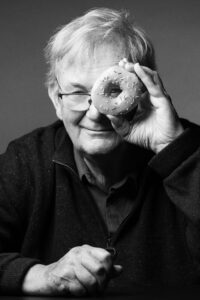
Martin Parr
Shared publisher: Aperture, Damiani
21 photobook(s) in the library

Stephen Shore
Shared publisher: Aperture, MACK
14 photobook(s) in the library
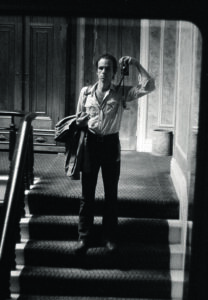
Joel Meyerowitz
Shared publisher: Aperture, Damiani
9 photobook(s) in the library
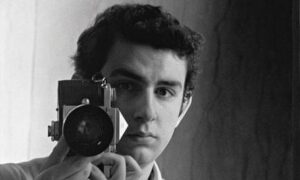
Danny Lyon
Shared publisher: Aperture, Damiani
6 photobook(s) in the library
COMMUNITY DISCUSSION
Discuss this entry
Share interpretations, reading notes, and source-aware questions. For catalog corrections, use the feedback form below.
No discussion yet. Start the first focused conversation.
Sign in to join the discussion.
Optionally receive a digest when related photobooks are added to the catalog.
See something incorrect? Sign in to suggest a correction or report an issue.