Photographer
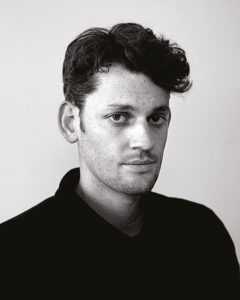
Sim Chi Yin
Sim Chi Yin (b. 1978, Singapore) is a Singaporean photographer, artist, and filmmaker whose work explores history, memory, and the legacy of conflict, particularly in relation to China and Southeast Asia. A former photojournalist, she brings a deeply researched and investigative approach to her long-term projects.
Her practice combines documentary photography with archival research, performance, and installation, often interrogating official histories and uncovering suppressed or overlooked narratives. Her work frequently engages with themes of war, migration, and identity, linking personal stories with broader geopolitical contexts.
Her photobook She Never Rode That Trishaw Again and related projects have been recognized for their conceptual depth and narrative complexity. For collectors, Sim’s work stands out for its rigorous research, cross-disciplinary approach, and its significant contribution to contemporary photography that bridges documentary and conceptual practices.
Sim Chi Yin (born 1978) is a Singaporean photojournalist and documentary photographer. She is known for her conceptually driven bodies of work that engage with historical memory, displacement, and the complexities of modern Asia. She was named a Magnum nominee in 2018 and a Nieman Fellow at Harvard in 2019. Her series ‘Where Are They Now?’ and ‘Shifting Tides’ have been exhibited solo at venues such as the International Center of Photography in New York. The article also notes her contributions to editorial publications and her role as a fellow at the Columbia University School of the Arts.


Selected Works & Key Projects
A source-backed introduction to individual photographs and significant bodies of work.
Key projects

Project · 2015
One Day We’ll Understand
This ongoing, multi-chapter project reconstructs suppressed histories of the anti-colonial war in British Malaya through photography, moving image, sound, archival research, objects, books, and performance. Its starting point is Sim Chi Yin’s grandfather, whose political life and death had been erased within her family. The photographic chapter Remnants combines landscapes at sites associated with the war and still-life studies of material traces; Requiem records elderly leftists singing songs of political participation, deportation, and exile. It merits selection as the artist’s principal long-term investigation of how personal inheritance, colonial archives, and public historical narratives shape one another.
View source ↗
Project · 2017
Shifting Sands
Shifting Sands is an ongoing, multi-country photographic research project on sand extraction, urbanisation, land reclamation, and their unequal regional consequences. Sim Chi Yin maps the movement of this resource across Singapore, Malaysia, and China, framing sand as both a material basis for construction and a means through which wealthier states reshape territory at poorer neighbours’ expense. The project is significant within her practice because it connects landscape photography to extraction and geopolitical disparity rather than treating terrain as neutral scenery. Its documented support from the Pulitzer Center, National Geographic Magazine, The New York Times Magazine, and the Exactly Foundation further marks its reach across art and editorial contexts.
View source ↗
Project
The Rat Tribe
The Rat Tribe photographs and contextualises young Beijing residents living in low-cost underground rooms in former air-raid shelters and basements. The project identifies these dwellings as a precarious housing system: many units are technically illegal, yet their rents are far below comparable accommodation above ground, leaving residents vulnerable to eviction. Its photographic importance lies in making the city’s concealed residential infrastructure central to the picture of aspiration and inequality in China’s capital. Rather than isolating a single subject, the project encompasses a socially diverse population of recent arrivals seeking a foothold in Beijing, making underground life legible as an urban condition.
View source ↗Selected photographs
2017 · Singapore
Shifting Sands #9
Shifting Sands #9 records newly made parcels of artificial land built from mountains of sand on Singapore’s westernmost coast. The National Museum of Singapore identifies the site as land designated for the Tuas Mega Port project, a container-port development to be built partly on reclaimed land. Within Shifting Sands, this photograph is a particularly clear selection because it makes the project’s central photographic problem concrete: sand is shown not as an abstract commodity but as the visible mass from which new territory is formed. Its accession into the National Museum of Singapore gives this image a documented institutional place in the country’s photographic collection.
Work source ↗2017 · Lim Chu Kang, northwestern Singapore
Shifting Sands #12
Shifting Sands #12 depicts a mountain of sand behind hoarding at an industrial waste-dump site near Lim Chu Kang in northwestern Singapore. The National Museum of Singapore notes that such stockpiles are used for land-reclamation works and situates the image in Sim Chi Yin’s series on sand’s social, environmental, and political effects in Singapore and the region. The photograph merits selection for its restrained treatment of a consequential infrastructure material: the hoarded stockpile makes the supply chain of territorial expansion visible without depicting the finished city. It is held by the National Museum of Singapore as a digital fine-art photographic print.
Work source ↗2017 · Punggol, Singapore
Shifting Sands #14
Shifting Sands #14 photographs a sand depot in Punggol, in northeastern Singapore. The National Museum of Singapore links the work to the country’s long history of land reclamation and identifies sand as indispensable to that process. As part of Sim Chi Yin’s wider series, it documents the material infrastructure behind Singapore’s changing terrain while connecting the depot to social, environmental, and political questions in the region. This is a strong individual selection because the image concentrates the project’s broad research into a single functional site: a depot where sand is stored before it can be mobilised for territorial transformation. The museum holds the work in its collection.
Work source ↗
2016
One Day We’ll Understand—Remnants 9
One Day We’ll Understand—Remnants 9 is a 2016 giclée print on cotton rag paper in the M+ Collection. It belongs to Remnants, the photographic installation chapter of Sim Chi Yin’s long-running One Day We’ll Understand project. The larger project assembles landscapes, objects, archival material, and testimony around the anti-colonial war in British Malaya; Remnants specifically places photographic sites and material traces within that alternative historical record. This individual work merits selection because M+ has catalogued and collected it as an autonomous photograph, while its series placement preserves the central method of the project: using photographic evidence and atmosphere to address histories that have been obscured or excluded.
Work source ↗
2019
One Day We’ll Understand—Interventions: Aerial Sighting
One Day We’ll Understand—Interventions: Aerial Sighting is a 2019 photograph made as a pigment print with foil on glass and held by M+. It is part of Interventions, a chapter of One Day We’ll Understand that arose from British photographs of the Malayan war in the Imperial War Museums archive. The broader chapter questions how archival systems determine the representation and remembrance of war. This work merits selection because its material construction—photographic print, foil, and glass—marks a deliberate move beyond conventional print presentation while remaining rooted in photography. M+’s collection record also establishes it as a distinct, publicly catalogued work within this major project.
Work source ↗Representation
Magnum Photos
Sim Chi Yin was admitted as a nominee member of Magnum Photos, the international photographic cooperative founded in 1947. Membership places her among a select group of documentary photographers whose work is distributed through the agency's established editorial and exhibition channels. As a nominee, her long-term projects on historical memory, migration, and aftermaths of war receive institutional visibility and global circulation. The nomination reflects recognition of her sustained body of work by peers within the cooperative. This connection is documented in her biography in independent reference works rather than being inferred from exhibition catalogues.
Verified 2026-09-04Wikipedia – Sim Chi Yin
Foundation
Nieman Foundation for Journalism at Harvard University
Sim Chi Yin was selected as a Nieman Fellow at Harvard University's Nieman Foundation for Journalism, a mid-career fellowship established in 1938 for working journalists. The fellowship provided her with an academic year of study and research, supporting her transition from daily newspaper photojournalism toward in-depth, independent visual storytelling on historical and geopolitical themes. The program is among the most prestigious journalism fellowships internationally, and her selection documents the institutional recognition of her reporting experience. This connection is sourced from consolidated biographical references rather than speculative sources.
Verified 2026-09-04Wikipedia – Sim Chi Yin
Sim Chi Yin – Wikipedia (opens a new site)
Sim Chi Yin is a Singaporean documentary photographer recognized for her long-term investigations into historical memory and conflict. Her multi-year projects explore the Korean War's legacy, including forensic re-photography of battlefields and interviews with aging refugees. She has received international fellowships and awards, and her work has been exhibited in museums and festivals globally. This encyclopedic entry provides a factual overview of her biography, career highlights, and major exhibitions, serving as a reliable starting point for understanding her contribution to photography.
Max Pinckers
Shared publisher: self-published
10 photobook(s) in the library

Elina Brotherus
Shared publisher: self-published
6 photobook(s) in the library

Rania Matar
Shared publisher: White Lion Publishing
6 photobook(s) in the library

Sohrab Hura
Shared publisher: self-published
5 photobook(s) in the library
COMMUNITY DISCUSSION
Discuss this entry
Share interpretations, reading notes, and source-aware questions. For catalog corrections, use the feedback form below.
No discussion yet. Start the first focused conversation.
Sign in to join the discussion.
Optionally receive a digest when related photobooks are added to the catalog.
See something incorrect? Sign in to suggest a correction or report an issue.