Photographer
Jacques Henri Lartigue
Jacques Henri Lartigue (1894–1986) was a French photographer and painter whose reputation rests on an unusually long, intimate record of twentieth-century life. He made his first photograph in 1900, at the age of six, and continued photographing friends, relatives, leisure, travel and fashionable society. Yet he remained largely unknown as a photographer until 1963. That late recognition transformed material created first as a personal chronicle into a major photographic archive, reportedly comprising more than 100,000 images.
Lartigue’s visual language is defined by spontaneity, buoyant movement and an alertness to fleeting pleasure. Automobile races, early airplanes, people jumping or running, and elegantly dressed women became opportunities to test how a still image might convey speed. Tilting vehicles, airborne bodies and wind-blown clothing give many pictures a centrifugal energy. Unlike photographers working primarily through commissions or social reportage, Lartigue often photographed within his own affluent social world. This access produced remarkable informality, but it also imposed limits: his record is selective, favoring recreation, novelty and style over a comprehensive account of French society.
His childhood and family photographs form the foundational body of work. They matter because technical curiosity and play are inseparable within them; the camera appears not as an instrument of solemn documentation but as a device for preserving astonishment. A second defining group concerns automobiles and aviation, subjects that embody the speed and mechanical experimentation of early twentieth-century France. His photographs of fashionable women and Parisian social life constitute another sustained strand, joining close observation of gesture to an interest in clothing, display and modern identity. Later attention to his color photographs, including work associated with Opio in southern France, complicates the familiar view of Lartigue as exclusively a black-and-white photographer.
The pivotal year was 1963, when his photography emerged from relative obscurity and quickly attracted international attention. His subsequent standing demonstrates how photographic history can be revised when private albums and archives enter public view. Lartigue’s pictures connect vernacular family photography, amateur experimentation and modernist fascination with speed, yet they retain the emotional directness of a diary. Their apparent ease should not conceal their formal intelligence: timing, viewpoint and the distribution of bodies across the frame repeatedly turn ordinary recreation into graphic spectacle.
Photobook collectors should approach Lartigue through the tension between individual iconic images and the larger chronology from which they came. Publications that preserve album-like sequencing can reveal repetitions, family relationships and changes in technology that disappear in a greatest-hits selection. It is also useful to compare books centered on childhood, motion or fashionable society with treatments of his color work. Reproduction quality is especially important: tonal detail determines the vitality of the early monochrome photographs, while sensitive color printing helps recover a less familiar dimension of his practice. An archive-based survey is therefore the most useful entry point before pursuing narrower thematic volumes.
〔PBL-BIO/2〕


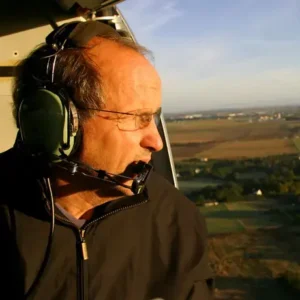
Alex MacLean
Shared publisher: Abrams, Thames & Hudson
12 photobook(s) in the library

William Klein
Shared publisher: Abrams, Thames & Hudson
10 photobook(s) in the library

Marc Riboud
Shared publisher: Atelier EXB, Flammarion
6 photobook(s) in the library
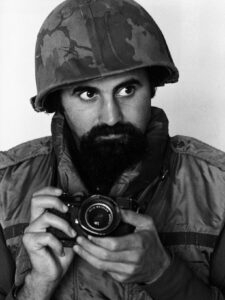
Abbas
Shared publisher: Abrams, Thames & Hudson
4 photobook(s) in the library
COMMUNITY DISCUSSION
Discuss this entry
Share interpretations, reading notes, and source-aware questions. For catalog corrections, use the feedback form below.
No discussion yet. Start the first focused conversation.
Sign in to join the discussion.
Optionally receive a digest when related photobooks are added to the catalog.
See something incorrect? Sign in to suggest a correction or report an issue.