Photographer
Michael Light
Michael Light (born 1963) is an American photographer and bookmaker based in San Francisco. His work centers on landscape, the environment, and the complex relationship between contemporary American culture and the land. Light’s practice is distinctive for its use of aerial photography, often drawing on archival sources and historical imagery to examine how the American West has been perceived, exploited, and mythologized. He is considered one of the pre-eminent aerial photographers of his generation, a reputation built on a series of conceptually rigorous photobooks that combine found photographs with his own images to create layered narratives about power, technology, and nature.
Light’s visual language is characterized by an unflinching yet poetic engagement with vast landscapes, from high-altitude desert expanses to the industrialized edges of the American West. Unlike traditional landscape photographers who may romanticize the sublime, Light often foregrounds the marks of human intervention—military testing grounds, mining operations, and suburban sprawl—revealing the ecological and cultural tensions embedded in the terrain. His methods involve extensive research into archives, such as those of NASA and the U.S. military, and a meticulous approach to sequencing and printing that gives his books the feel of cinematic or documentary projects.
Three major bodies of work define his career. “Full Moon” (1999) compiled over 100 photographs taken during the Apollo lunar missions, using original NASA negatives to create a sweeping, human-scaled view of the moon and Earth from space. “100 Suns” (2003) starkly documented 100 photographs of atmospheric nuclear tests, presenting them with a cool, archival precision that juxtaposes their terrifying power with the bureaucratic aesthetics of the military record. “Lake Las Vegas” (2014) turned his lens toward the artificial lakes and luxury developments of the Nevada desert, using a grid-style layout and night photography to expose the absurdity of water-intensive real estate in an arid climate. These projects demonstrate his ability to transform raw data and found imagery into compelling visual arguments about modernity’s impact on the earth.
Light has exhibited internationally, with shows at museums such as the San Francisco Museum of Modern Art (SFMOMA) and representation by Danziger Gallery. He has received a Guggenheim Fellowship for photography, and his work is held in major public collections. His career reflects a broader trend in contemporary photography toward conceptual, research-driven practice that blurs the line between artist and archivist. By recontextualizing historical imagery, he has influenced younger generations of photographers interested in environmental politics and the visual culture of the Anthropocene.
For photobook collectors, Light’s books are noteworthy for their production values and editorial rigor. Collaborating on first editions with publishers like Aperture and Radius Books, Light has insisted on exacting reproductions and innovative design, such as the use of stitched bindings or gatefolds that echo the sweeping scale of his subjects. “Full Moon” and “100 Suns” are landmark publications that have become benchmarks for photographic bookmaking, while later titles like “Lake Las Vegas” show a more intimate and sustained engagement with a single site. A useful entry point is “100 Suns,” whose compact format and unsettling subject matter exemplify Light’s ability to make a powerful statement through careful sequencing and minimal captions, offering collectors a chance to engage with a key work without the scale of his earlier productions.
〔PBL-BIO/2〕



Debbie Fleming Caffery
Shared publisher: Radius Books, Twin Palms Publishers
5 photobook(s) in the library
Bill Jacobson
Shared publisher: Radius Books, Twin Palms Publishers
3 photobook(s) in the library
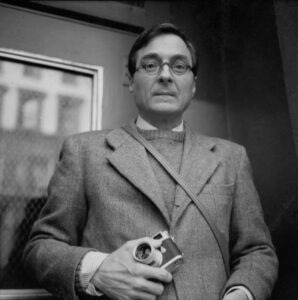
William Eggleston
Shared publisher: Twin Palms Publishers
26 photobook(s) in the library
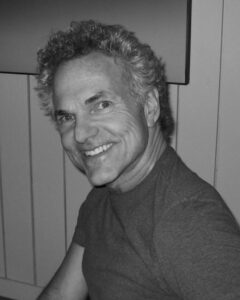
Richard Misrach
Shared publisher: Radius Books
18 photobook(s) in the library
COMMUNITY DISCUSSION
Discuss this entry
Share interpretations, reading notes, and source-aware questions. For catalog corrections, use the feedback form below.
No discussion yet. Start the first focused conversation.
Sign in to join the discussion.
Optionally receive a digest when related photobooks are added to the catalog.
See something incorrect? Sign in to suggest a correction or report an issue.